
Spectating the Win32:Zbot-TMR [Cryp] detection means that your system is in big danger. This computer virus can correctly be identified as ransomware – virus which encrypts your files and asks you to pay for their decryption. Deleteing it requires some unusual steps that must be taken as soon as possible.
Win32:Zbot-TMR [Cryp] detection is a virus detection you can spectate in your system. It generally shows up after the provoking actions on your PC – opening the dubious email, clicking the banner in the Web or setting up the program from dubious sources. From the moment it appears, you have a short time to act until it starts its malicious activity. And be sure – it is better not to wait for these harmful things.
What is Win32:Zbot-TMR [Cryp] virus?
Win32:Zbot-TMR [Cryp] Summary
In summary, Win32:Zbot-TMR [Cryp] malware actions in the infected PC are next:
- The binary contains an unknown PE section name indicative of packing;
- The binary likely contains encrypted or compressed data.;
- Authenticode signature is invalid;
- Anomalous binary characteristics;
- Encrypting the documents located on the target’s disk drives — so the victim cannot use these documents;
- Blocking the launching of .exe files of anti-malware programs
- Blocking the launching of installation files of security tools
Ransomware has been a horror story for the last 4 years. It is challenging to picture a more hazardous virus for both individual users and corporations. The algorithms used in Win32:Zbot-TMR [Cryp] (typically, RHA-1028 or AES-256) are not hackable – with minor exclusions. To hack it with a brute force, you need a lot more time than our galaxy actually exists, and possibly will exist. However, that malware does not do all these horrible things instantly – it can take up to several hours to cipher all of your files. Therefore, seeing the Win32:Zbot-TMR [Cryp] detection is a clear signal that you need to start the clearing process.
Where did I get the Win32:Zbot-TMR [Cryp]?
Usual methods of Win32:Zbot-TMR [Cryp] spreading are common for all other ransomware variants. Those are one-day landing sites where users are offered to download and install the free program, so-called bait e-mails and hacktools. Bait e-mails are a relatively modern strategy in malware distribution – you receive the email that mimics some standard notifications about deliveries or bank service conditions changes. Within the email, there is a corrupted MS Office file, or a link which leads to the exploit landing site.
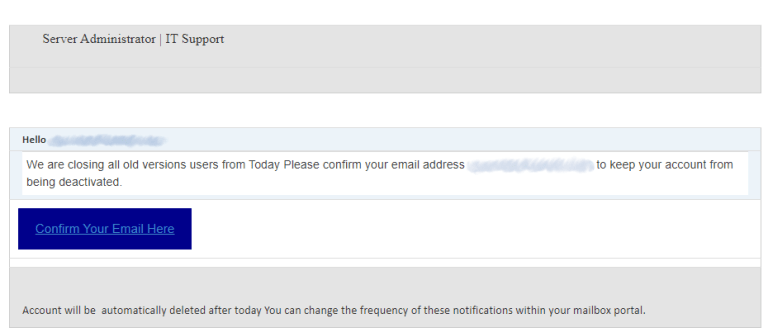
Malicious email message. This one tricks you to open the phishing website.
Preventing it looks fairly simple, however, still needs a lot of recognition. Malware can hide in different spots, and it is better to stop it even before it gets into your PC than to trust in an anti-malware program. Simple cybersecurity knowledge is just an essential item in the modern world, even if your interaction with a computer remains on YouTube videos. That may keep you a great deal of money and time which you would spend while seeking a fixing guide.
Win32:Zbot-TMR [Cryp] malware technical details
File Info:
name: E09AA19F5F660F2E2EDD.mlwpath: /opt/CAPEv2/storage/binaries/6e5708e17ec3208a855044869d689ed0813d6e33953a564ae5dfd77c2b53d321crc32: C1E041B3md5: e09aa19f5f660f2e2edd1be76323880bsha1: 0cc0e99d8ae9bfbc5bed37527c7c259f2df31ee2sha256: 6e5708e17ec3208a855044869d689ed0813d6e33953a564ae5dfd77c2b53d321sha512: e2f7e0d26c1ed8128b5f90796dfbff11fc8ee2390bd37499e56665b3de7bfb803c3eb328a972f96072f07994be9f032e16ad272645321fc20465bd3eacb97a15ssdeep: 3072:nz7ecj6Znz2I1tQsXWMYHUcfSu8il3ws/iwf:nPeaOrQsjY0hB2type: PE32 executable (GUI) Intel 80386, for MS Windowstlsh: T18DD336CE918C9AA1C0D7C57AC9FE517A66B244D6FB20A50F2848D38D51FEEB075372C8sha3_384: 68151d6a3951d4aa52f348c8f8ce5a7cabe591cd133536017de699d05db4ae8eb249b6403b92200efb57b0446f4ae54dep_bytes: 5589e583ec08c7042402000000ff1554timestamp: 2012-12-29 11:22:08Version Info:
CompanyName: FileVersion: FileDescription: InternalName: LegalCopyright: LegalTrademarks: OriginalFilename: ProductName: ProductVersion: Translation: 0x041c 0x04e4
Win32:Zbot-TMR [Cryp] also known as:
| Bkav | W32.AIDetect.malware2 |
| Lionic | Trojan.Win32.Generic.4!c |
| Elastic | malicious (high confidence) |
| Cynet | Malicious (score: 100) |
| FireEye | Generic.mg.e09aa19f5f660f2e |
| CAT-QuickHeal | Trojan.Ransom.A |
| McAfee | Injection Dropper.B |
| VIPRE | Trojan.Win32.Reveton.a (v) |
| Sangfor | Trojan.Win32.Injector.AAQK |
| K7AntiVirus | Trojan ( 0040f03f1 ) |
| Alibaba | VirTool:Win32/CeeInject.5035d476 |
| K7GW | Trojan ( 0040f03f1 ) |
| CrowdStrike | win/malicious_confidence_100% (W) |
| VirIT | Trojan.Win32.Generic.CANP |
| Cyren | W32/Zbot.IF.gen!Eldorado |
| Symantec | Trojan.Ransomlock!g41 |
| ESET-NOD32 | a variant of Win32/Injector.AAQK |
| APEX | Malicious |
| Paloalto | generic.ml |
| Kaspersky | HEUR:Trojan.Win32.Generic |
| BitDefender | Gen:Variant.Ulise.140697 |
| NANO-Antivirus | Trojan.Win32.Zbot.bfuovy |
| MicroWorld-eScan | Gen:Variant.Ulise.140697 |
| Avast | Win32:Zbot-TMR [Cryp] |
| Tencent | Win32.Trojan.Ransom.Airq |
| Ad-Aware | Gen:Variant.Ulise.140697 |
| Comodo | TrojWare.Win32.Injector.AAQK@4t33un |
| DrWeb | Trojan.PWS.Stealer.1932 |
| Zillya | Trojan.Injector.Win32.163723 |
| TrendMicro | TROJ_RANSOM.SMCB |
| Emsisoft | Gen:Variant.Ulise.140697 (B) |
| Ikarus | Trojan-Downloader.Win32.Andromeda |
| GData | Gen:Variant.Ulise.140697 |
| Jiangmin | Trojan/Generic.arjit |
| Webroot | W32.Rogue.Gen |
| MAX | malware (ai score=100) |
| Antiy-AVL | Trojan/Generic.ASMalwS.135774 |
| Microsoft | PWS:Win32/Zbot |
| AhnLab-V3 | Spyware/Win32.Zbot.R52346 |
| Acronis | suspicious |
| ALYac | Gen:Variant.Ulise.140697 |
| VBA32 | Trojan.EA.01671 |
| Malwarebytes | Trojan.Agent |
| TrendMicro-HouseCall | TROJ_RANSOM.SMCB |
| Rising | HackTool.CeeInject!8.B22 (CLOUD) |
| Yandex | Trojan.GenAsa!LODoIQMJCbI |
| SentinelOne | Static AI – Malicious PE |
| MaxSecure | Trojan.Malware.4969031.susgen |
| Fortinet | W32/Zbot.AAU!tr |
| AVG | Win32:Zbot-TMR [Cryp] |
| Panda | Trj/Genetic.gen |


Leave a Comment