
Spectating the Win32:SMSSend-ADN [Trj] malware detection usually means that your computer is in big danger. This malware can correctly be named as ransomware – sort of malware which ciphers your files and forces you to pay for their decryption. Deleteing it requires some unusual steps that must be taken as soon as possible.
Win32:SMSSend-ADN [Trj] detection is a virus detection you can spectate in your system. It generally appears after the provoking activities on your PC – opening the dubious e-mail, clicking the banner in the Internet or setting up the program from unreliable resources. From the moment it shows up, you have a short time to take action until it starts its malicious activity. And be sure – it is far better not to wait for these destructive things.
What is Win32:SMSSend-ADN [Trj] virus?
Win32:SMSSend-ADN [Trj] Summary
In summary, Win32:SMSSend-ADN [Trj] ransomware activities in the infected computer are next:
- Behavioural detection: Executable code extraction – unpacking;
- Sample contains Overlay data;
- Yara rule detections observed from a process memory dump/dropped files/CAPE;
- Reads data out of its own binary image;
- CAPE extracted potentially suspicious content;
- The binary likely contains encrypted or compressed data.;
- Authenticode signature is invalid;
- Anomalous binary characteristics;
- Encrypting the documents located on the target’s drive — so the victim cannot open these documents;
- Blocking the launching of .exe files of security tools
- Blocking the launching of installation files of anti-virus programs
Ransomware has actually been a horror story for the last 4 years. It is challenging to picture a more harmful virus for both individuals and corporations. The algorithms utilized in Win32:SMSSend-ADN [Trj] (generally, RHA-1028 or AES-256) are not hackable – with minor exclusions. To hack it with a brute force, you need to have more time than our galaxy currently exists, and possibly will exist. However, that virus does not do all these bad things instantly – it can take up to several hours to cipher all of your files. Hence, seeing the Win32:SMSSend-ADN [Trj] detection is a clear signal that you need to begin the removal process.
Where did I get the Win32:SMSSend-ADN [Trj]?
Routine ways of Win32:SMSSend-ADN [Trj] spreading are basic for all other ransomware examples. Those are one-day landing web pages where users are offered to download and install the free program, so-called bait e-mails and hacktools. Bait e-mails are a pretty new tactic in malware spreading – you receive the email that simulates some regular notifications about deliveries or bank service conditions changes. Within the e-mail, there is an infected MS Office file, or a link which opens the exploit landing page.
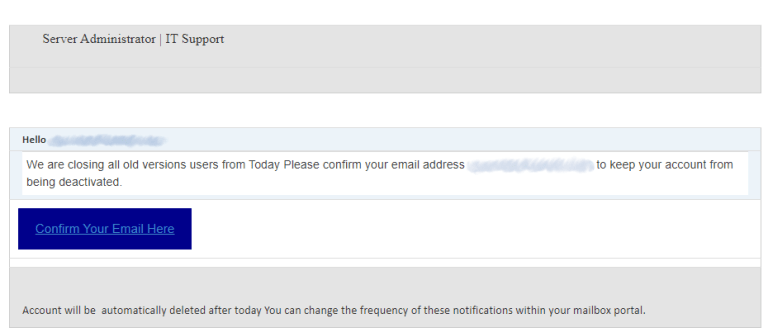
Malicious email message. This one tricks you to open the phishing website.
Avoiding it looks quite simple, however, still requires a lot of recognition. Malware can hide in different places, and it is far better to stop it even before it invades your system than to depend on an anti-malware program. Simple cybersecurity knowledge is just an essential item in the modern-day world, even if your interaction with a PC stays on YouTube videos. That can keep you a great deal of money and time which you would spend while searching for a fixing guide.
Win32:SMSSend-ADN [Trj] malware technical details
File Info:
name: 3D999A0C8EB3DEE416EC.mlwpath: /opt/CAPEv2/storage/binaries/92f6c8bb8cef9281837c5b0e17c244b7440581c249ab5554a19a14243f0d6219crc32: A43CEA29md5: 3d999a0c8eb3dee416ec27bb94707f77sha1: 09f5b3cb205a3bdb0b35467c0abd0074c6cebd13sha256: 92f6c8bb8cef9281837c5b0e17c244b7440581c249ab5554a19a14243f0d6219sha512: 36a9792a587719a3149b87e66d72a67dc6a38170bf687c7e25475878e7a6f705f8082304f91d4b9af38a105114d68f9988eb02ecf4636c23997099faf2e03869ssdeep: 3072:XS7X9S2p694KVcrW14CeDj0/YHskAviKcwOuKJDS7K0XfLAbkiRb33:2XZu14TyrkluKJDEzDiRztype: PE32 executable (GUI) Intel 80386, for MS Windowstlsh: T16344BF0AB20C9F25C41F36B461930B1C53336CA796B17B8B518A703F66EEAD119F7267sha3_384: 76b3f7fd1b2fb7d1f6022528b6f19e4cacd9c5acfaa70f9057fac6585cbd68164a7eecd50366f9abd25019df544c6520ep_bytes: 558bc3418b0d9d334100892c24a16a98timestamp: 2012-08-24 15:47:48Version Info:
0: [No Data]
Win32:SMSSend-ADN [Trj] also known as:
| Bkav | W32.AIDetect.malware2 |
| Lionic | Hacktool.Win32.ArchSMS.3!c |
| Elastic | malicious (high confidence) |
| DrWeb | Trojan.PWS.Panda.1981 |
| MicroWorld-eScan | Gen:Variant.Lazy.211204 |
| FireEye | Generic.mg.3d999a0c8eb3dee4 |
| CAT-QuickHeal | Trojan.Pameseg.Gen |
| McAfee | PWS-Zbot.gen.amr |
| Cylance | Unsafe |
| Zillya | Trojan.ArchSMS.Win32.8733 |
| Sangfor | Suspicious.Win32.Save.a |
| K7AntiVirus | Spyware ( 0055e3db1 ) |
| Alibaba | TrojanPSW:Win32/EncPk.ccde7440 |
| K7GW | Spyware ( 0055e3db1 ) |
| CrowdStrike | win/malicious_confidence_100% (W) |
| BitDefenderTheta | Gen:NN.ZexaF.34592.qq1@aKQHLUe |
| Cyren | W32/S-549d42a9!Eldorado |
| Symantec | ML.Attribute.HighConfidence |
| ESET-NOD32 | Win32/Spy.Zbot.AAO |
| APEX | Malicious |
| TrendMicro-HouseCall | TROJ_FAKEAV_BK0837A7.TOMC |
| ClamAV | Win.Trojan.Archsms-1152 |
| Kaspersky | HEUR:Trojan.Win32.Generic |
| BitDefender | Gen:Variant.Lazy.211204 |
| NANO-Antivirus | Riskware.Win32.ArchSMS.xpyeh |
| SUPERAntiSpyware | Trojan.Agent/Gen-Falprod |
| Avast | Win32:SMSSend-ADN [Trj] |
| Tencent | Malware.Win32.Gencirc.114c2edd |
| Ad-Aware | Gen:Variant.Lazy.211204 |
| Emsisoft | Gen:Variant.Lazy.211204 (B) |
| Comodo | TrojWare.Win32.PWS.ZBot.ATA@4sqc1n |
| VIPRE | Gen:Variant.Lazy.211204 |
| TrendMicro | TROJ_FAKEAV_BK0837A7.TOMC |
| McAfee-GW-Edition | PWS-Zbot.gen.amr |
| Trapmine | malicious.high.ml.score |
| Sophos | ML/PE-A + Mal/EncPk-AHK |
| SentinelOne | Static AI – Malicious PE |
| GData | Gen:Variant.Lazy.211204 |
| Jiangmin | Hoax.ArchSMS.ndi |
| Webroot | W32.Malware.Gen |
| Detected | |
| Avira | TR/Crypt.ZPACK.Gen8 |
| MAX | malware (ai score=89) |
| Antiy-AVL | Trojan/Generic.ASMalwS.113 |
| Arcabit | Trojan.Lazy.D33904 |
| Microsoft | PWS:Win32/Zbot!CI |
| Cynet | Malicious (score: 100) |
| Acronis | suspicious |
| VBA32 | Hoax.ArchSMS.ot |
| ALYac | Gen:Variant.Lazy.211204 |
| TACHYON | Joke/W32.ArchSMS.267264 |
| Malwarebytes | Ransom.Agent.ED |
| Rising | [email protected] (RDML:3uNIOoQMDwGOG2yaKcSz3Q) |
| Yandex | Trojan.ArchSMS!2h2BOyIO4NY |
| Ikarus | Trojan-PWS.Win32.Zbot |
| MaxSecure | Trojan.Malware.300983.susgen |
| Fortinet | W32/Zbot.AQV!tr |
| AVG | Win32:SMSSend-ADN [Trj] |
| Panda | Trj/Genetic.gen |


Leave a Comment