
Seeing the Win32:ReposFxg-F [Trj] malware detection usually means that your system is in big danger. This virus can correctly be named as ransomware – sort of malware which ciphers your files and forces you to pay for their decryption. Stopping it requires some specific steps that must be done as soon as possible.
Win32:ReposFxg-F [Trj] detection is a malware detection you can spectate in your system. It frequently appears after the provoking actions on your computer – opening the suspicious e-mail messages, clicking the advertisement in the Web or mounting the program from dubious sources. From the second it shows up, you have a short time to do something about it until it starts its malicious action. And be sure – it is better not to await these malicious things.
What is Win32:ReposFxg-F [Trj] virus?
Win32:ReposFxg-F [Trj] Summary
Summarizingly, Win32:ReposFxg-F [Trj] malware activities in the infected system are next:
- SetUnhandledExceptionFilter detected (possible anti-debug);
- Creates RWX memory;
- Dynamic (imported) function loading detected;
- Reads data out of its own binary image;
- Attempts to modify Internet Explorer’s start page;
- The binary contains an unknown PE section name indicative of packing;
- The binary likely contains encrypted or compressed data.;
- The executable is compressed using UPX;
- Creates an autorun.inf file;
- Authenticode signature is invalid;
- A process attempted to delay the analysis task by a long amount of time.;
- Encrypting the files located on the target’s disk — so the victim cannot open these documents;
- Blocking the launching of .exe files of anti-malware apps
- Blocking the launching of installation files of security tools
Ransomware has actually been a nightmare for the last 4 years. It is difficult to realize a more dangerous virus for both individual users and companies. The algorithms used in Win32:ReposFxg-F [Trj] (typically, RHA-1028 or AES-256) are not hackable – with minor exclusions. To hack it with a brute force, you need more time than our galaxy already exists, and possibly will exist. However, that virus does not do all these horrible things without delay – it can take up to several hours to cipher all of your documents. Therefore, seeing the Win32:ReposFxg-F [Trj] detection is a clear signal that you have to start the removal procedure.
Where did I get the Win32:ReposFxg-F [Trj]?
Usual methods of Win32:ReposFxg-F [Trj] spreading are typical for all other ransomware variants. Those are one-day landing web pages where victims are offered to download and install the free app, so-called bait e-mails and hacktools. Bait emails are a quite modern method in malware spreading – you receive the email that imitates some routine notifications about shippings or bank service conditions shifts. Inside of the email, there is a corrupted MS Office file, or a web link which opens the exploit landing page.
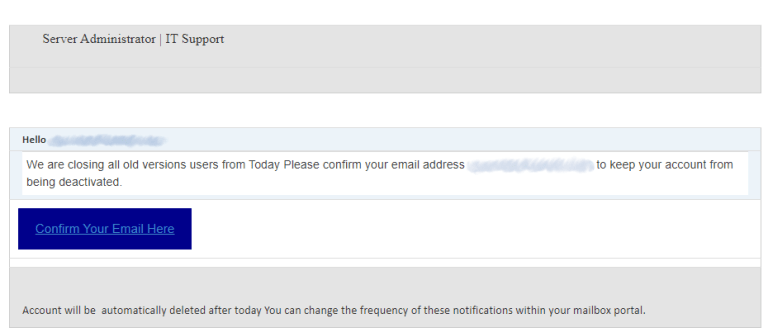
Malicious email message. This one tricks you to open the phishing website.
Preventing it looks quite uncomplicated, however, still requires a lot of awareness. Malware can hide in various spots, and it is better to stop it even before it goes into your computer than to rely upon an anti-malware program. Common cybersecurity awareness is just an essential thing in the modern world, even if your relationship with a PC stays on YouTube videos. That may save you a great deal of time and money which you would certainly spend while trying to find a solution.
Win32:ReposFxg-F [Trj] malware technical details
File Info:
name: B771059DDC687EEAE4DF.mlwpath: /opt/CAPEv2/storage/binaries/f79d571aa585aacd2999fe9e876f02c130422e0752bc9f2c15db1c91fd5a0919crc32: E4969D89md5: b771059ddc687eeae4df4e20703b4e74sha1: d26353d11cfc73e5a3171f6ea0c95cd5579c56e6sha256: f79d571aa585aacd2999fe9e876f02c130422e0752bc9f2c15db1c91fd5a0919sha512: 7f959503cd9ed9051e218d0b4378b414a0c033f326b0b65341d73754b3185274f54825e20382f2e181b7bfc46fd768a4d71ac4e91734c4655f1c7df300c307edssdeep: 98304:RojuflJoU1iuQXKs9+06eDqFeLF5anaTk0U:Yuf7Qbc0qEFonaI0Utype: PE32+ executable (console) x86-64, for MS Windowstlsh: T132363392AED18DA6F56580F97E138992B0F99039FA435420B3F5FE44314CDA673D6F08sha3_384: 086342f84cb132681fc88f52ea8d00816d6eb80f247d462a01d58c7684a16edfa615aefedac627644c3c238a6f9fcc33ep_bytes: 53565755488d351a9fbbff488dbedb2ftimestamp: 2019-09-27 22:05:56Version Info:
0: [No Data]
Win32:ReposFxg-F [Trj] also known as:
| Elastic | malicious (high confidence) |
| MicroWorld-eScan | Gen:Variant.Razy.560460 |
| FireEye | Generic.mg.b771059ddc687eea |
| McAfee | Trickbot-FRE!B771059DDC68 |
| Cylance | Unsafe |
| Zillya | Trojan.Kryptik.Win64.6810 |
| Sangfor | Trojan.Win32.Save.a |
| K7AntiVirus | Trojan ( 0055e5891 ) |
| K7GW | Trojan ( 0055e5891 ) |
| Cybereason | malicious.ddc687 |
| Cyren | W64/ReposFxg.A.gen!Eldorado |
| Symantec | Trojan.Gen.2 |
| ESET-NOD32 | a variant of Win64/CoinMiner.AEF.gen |
| APEX | Malicious |
| ClamAV | Win.Malware.Tofsee-7057860-0 |
| Kaspersky | Trojan-Ransom.Win32.PornoAsset.dicb |
| BitDefender | Gen:Variant.Razy.560460 |
| Avast | Win32:ReposFxg-F [Trj] |
| Tencent | Malware.Win32.Gencirc.10b4d174 |
| Ad-Aware | Gen:Variant.Razy.560460 |
| Emsisoft | Gen:Variant.Razy.560460 (B) |
| DrWeb | Trojan.Packed2.42620 |
| TrendMicro | Ransom.Win64.PORNOASSET.SM1.hp |
| McAfee-GW-Edition | BehavesLike.Win64.Trickbot.rc |
| Sophos | ML/PE-A + Mal/HckPk-S |
| SentinelOne | Static AI – Malicious PE |
| GData | Gen:Variant.Razy.560460 |
| Jiangmin | Trojan.PornoAsset.gic |
| Avira | TR/Crypt.ULPM.Gen |
| Antiy-AVL | Trojan/Generic.ASMalwS.2C7B08B |
| Arcabit | Trojan.Razy.D88D4C |
| Microsoft | Trojan:Win32/SmokeLoader |
| Cynet | Malicious (score: 100) |
| AhnLab-V3 | Trojan/Win64.Agent.C3487739 |
| Acronis | suspicious |
| BitDefenderTheta | Gen:NN.ZexaF.34084.luW@aq5RFHdi |
| ALYac | Gen:Variant.Razy.560460 |
| MAX | malware (ai score=88) |
| Malwarebytes | Trojan.BitCoinMiner |
| TrendMicro-HouseCall | Ransom.Win64.PORNOASSET.SM1.hp |
| Rising | Trojan.Kryptik!1.C31C (CLASSIC) |
| Yandex | Trojan.GenAsa!ljywjnZY6TE |
| Ikarus | Trojan-Banker.TrickBot |
| MaxSecure | Trojan.Malware.121218.susgen |
| Fortinet | W64/Kryptik.BTT!tr |
| AVG | Win32:ReposFxg-F [Trj] |
| CrowdStrike | win/malicious_confidence_100% (D) |


Leave a Comment