
Spectating the Win32:MalOb-CA [Cryp] detection means that your computer is in big danger. This virus can correctly be identified as ransomware – virus which encrypts your files and forces you to pay for their decryption. Deleteing it requires some specific steps that must be done as soon as possible.
Win32:MalOb-CA [Cryp] detection is a malware detection you can spectate in your computer. It generally shows up after the preliminary actions on your PC – opening the dubious email messages, clicking the banner in the Internet or installing the program from untrustworthy sources. From the second it appears, you have a short time to take action until it starts its malicious activity. And be sure – it is much better not to await these harmful effects.
What is Win32:MalOb-CA [Cryp] virus?
Win32:MalOb-CA [Cryp] Summary
In summary, Win32:MalOb-CA [Cryp] malware activities in the infected computer are next:
- Behavioural detection: Executable code extraction – unpacking;
- Yara rule detections observed from a process memory dump/dropped files/CAPE;
- CAPE extracted potentially suspicious content;
- Unconventionial language used in binary resources: Russian;
- Authenticode signature is invalid;
- Encrypting the documents located on the target’s disk drives — so the victim cannot check these files;
- Blocking the launching of .exe files of security tools
- Blocking the launching of installation files of anti-virus apps
Ransomware has actually been a nightmare for the last 4 years. It is challenging to imagine a more hazardous virus for both individuals and companies. The algorithms used in Win32:MalOb-CA [Cryp] (generally, RHA-1028 or AES-256) are not hackable – with minor exclusions. To hack it with a brute force, you need to have more time than our galaxy currently exists, and possibly will exist. However, that virus does not do all these unpleasant things without delay – it may take up to a few hours to cipher all of your files. Thus, seeing the Win32:MalOb-CA [Cryp] detection is a clear signal that you should start the removal procedure.
Where did I get the Win32:MalOb-CA [Cryp]?
Usual methods of Win32:MalOb-CA [Cryp] spreading are common for all other ransomware variants. Those are one-day landing sites where users are offered to download the free program, so-called bait emails and hacktools. Bait e-mails are a pretty new tactic in malware spreading – you receive the email that simulates some regular notifications about shippings or bank service conditions shifts. Inside of the e-mail, there is a corrupted MS Office file, or a link which opens the exploit landing page.
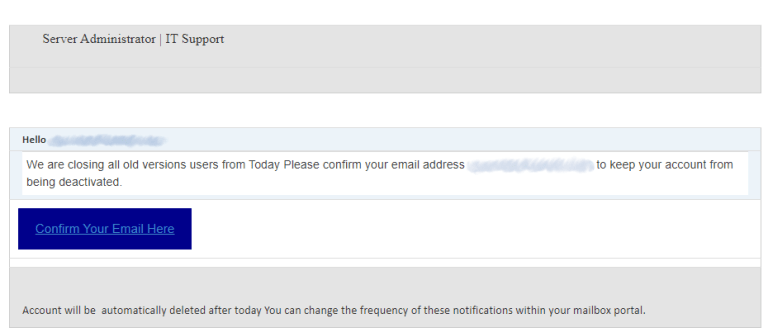
Malicious email message. This one tricks you to open the phishing website.
Preventing it looks pretty easy, however, still demands a lot of awareness. Malware can hide in different places, and it is far better to prevent it even before it invades your PC than to depend on an anti-malware program. Basic cybersecurity awareness is just an essential item in the modern-day world, even if your relationship with a computer remains on YouTube videos. That can keep you a great deal of time and money which you would spend while searching for a fixing guide.
Win32:MalOb-CA [Cryp] malware technical details
File Info:
name: 72E418F456EA465C671F.mlwpath: /opt/CAPEv2/storage/binaries/f59e7963e6a2a5bfa7b953fdf5b020d122bcab6640cae40f023dc1864f4a2a91crc32: 79350B75md5: 72e418f456ea465c671fae2670250eefsha1: 0bc76d74ec4ce91a85d2abc453603aaa68bfee87sha256: f59e7963e6a2a5bfa7b953fdf5b020d122bcab6640cae40f023dc1864f4a2a91sha512: 3f453f6653bba52ddc329efdbe154d713b70ae28b6fab9f35abf1fd2764dc00cc239a5821a670aaf8cf10d1d190632969201d0b1c6768dc922965e6e06f0b682ssdeep: 6144:VCkAzolDR52aZZDB8xZ9GeLIbgLVWuonNmIOY7Gw4CTaXEzZ/fz2U:rAsV2gZDBgZRIbgLVzRw4E3NLtype: PE32 executable (GUI) Intel 80386, for MS Windowstlsh: T171F41246EB514E5AC0541534CCEB8AFDB9723CAAED075B5B33D4BF2736722148E12D24sha3_384: aff48a430345320924c6ed7ae4740924c38578c202f0c53cfa2df9d11b2baecf71e7ff12a18f5d968f40e415d4fc8087ep_bytes: 558bec6afe6878554a0068a043480064timestamp: 2011-03-05 18:49:31Version Info:
CompanyName: TorcltFileDescription: TorFileVersion: 1.0.4.6InternalName: tor.exeLegalCopyright: Copyright (C) 2011OriginalFilename: tor.exeProductName: TorcltProductVersion: 1.0.4.6Translation: 0x000a 0x04b0
Win32:MalOb-CA [Cryp] also known as:
| Bkav | W32.AIDetect.malware2 |
| Lionic | Heuristic.File.Generic.00×1!p |
| DrWeb | Trojan.Winlock.5553 |
| MicroWorld-eScan | Gen:Variant.Zusy.431103 |
| FireEye | Generic.mg.72e418f456ea465c |
| McAfee | PWS-Zbot.gen.fa |
| Cylance | Unsafe |
| VIPRE | Gen:Variant.Zusy.431103 |
| Sangfor | Trojan.Win32.Save.a |
| CrowdStrike | win/malicious_confidence_70% (W) |
| BitDefenderTheta | Gen:NN.ZexaF.34698.SC0@aSIFK3ck |
| Symantec | ML.Attribute.HighConfidence |
| Elastic | malicious (high confidence) |
| APEX | Malicious |
| TrendMicro-HouseCall | TROJ_RANSOM.JM |
| Kaspersky | HEUR:Trojan.Win32.Generic |
| BitDefender | Gen:Variant.Zusy.431103 |
| Avast | Win32:MalOb-CA [Cryp] |
| Ad-Aware | Gen:Variant.Zusy.431103 |
| Sophos | Mal/FakeAV-LX |
| Comodo | Suspicious@#2gr5yhyhotm2i |
| Zillya | Trojan.PornoBlocker.Win32.2106 |
| TrendMicro | TROJ_RANSOM.JM |
| McAfee-GW-Edition | BehavesLike.Win32.ZBot.bz |
| Trapmine | malicious.high.ml.score |
| Emsisoft | Gen:Variant.Zusy.431103 (B) |
| SentinelOne | Static AI – Malicious PE |
| Webroot | W32.Trojan.Gen |
| Detected | |
| Avira | TR/Crypt.XPACK.Gen |
| MAX | malware (ai score=82) |
| Antiy-AVL | Trojan/Generic.ASMalwS.294 |
| Microsoft | Ransom:Win32/LockScreen.AO |
| GData | Gen:Variant.Zusy.431103 |
| Cynet | Malicious (score: 100) |
| AhnLab-V3 | Trojan/Win32.Zbot.R4949 |
| Acronis | suspicious |
| VBA32 | BScope.Trojan.Winlock |
| ALYac | Gen:Variant.Zusy.431103 |
| Rising | Malware.Undefined!8.C (TFE:4:BWy4YAxxK5E) |
| Ikarus | Trojan-Spy.Win32.Zbot |
| Fortinet | W32/PornoBlocker.XED!tr |
| AVG | Win32:MalOb-CA [Cryp] |
| Cybereason | malicious.456ea4 |
| Panda | Generic Malware |


Leave a Comment