
Win32Hoax.Renos.HX is a detection that appears in the web browser scam. Frausters show you a McAfee scan page on the website, assuring that you have several dangerous viruses in your system. In fact, all they want is to make you pay for the McAfee license.
Most often, the page that contains a fake McAfee scam with the Win32Hoax.Renos.HX detection is the result of adware activity. This page often blocks any input from you, forcing the interaction with the contents. And the interaction there is not diverse – the main thing fraudsters are trying to achieve there is to make you buy the license for McAfee antivirus.
Win32Hoax.Renos.HX Overview
The Win32Hoax.Renos.HX is not a real detection. None of antivirus engines use or have ever used such detection names. Apparently, hackers simply made it up so it will look convincing. Adware that is most likely guilty for this site’s appearance can show you different variations of the scam page. While having questionable justification of why the McAfee scan results appear in the web browser, they give its victims no chance to skip the questionable page. It is not possible to lock the screen, but through expanding the page to the full screen, this scam achieves similar effects. Inexperienced users can’t help but follow the guidance from this fraudulent page.

Example of McAfee fake scan page
Adware that causes the appearance of this scam page is a very nasty thing. This malware shows you an extraordinary amount of ads. Have you ever visited the doorway sites? They are filled up only with banners – blinking, poorly made and with weird information. Adware does the equivalent thing to all websites you open. That malware brings revenue to its developers in a very sly way. You see the banners – they get profit. In addition, these banners frequently have fraudulent and explicit content. Penis enlargement, pornography sites advertisements, offers to purchase an iPhone for $50 – all these things are usual for adware.
Adware Summary:
| Name | Adware |
| Damage | Display in-browser ads and scam pages. |
| Similar | Wodpw Co In, Gleemsub Notification Removal, 2lovers Online Notification, Sisbeensaw.live Notification, Stormhammer Top Notification, Curvyalpaca Cc Ads, News Gesoxu Ads, Alukizeiasnin Popup |
| Fix Tool | See If Your System Has Been Affected by Adware |
Is Adware dangerous?
Adware like one that causes Win32Hoax.Renos.HX fake detection is not something contrasty, compared to other advertising malware. However, as it was specified, the banners it shows to you are pretty often full of phony information. Even if you can identify fraud from adware – do you really like seeing advertisements for free? Especially ones that cover your web browser window and distract you from your working task? It seems that we actually know the reply.
How did I get this virus?
It is hard to line the origins of malware on your PC. Nowadays, things are mixed up, and distribution methods utilized by adware 5 years ago may be used by spyware these days. But if we abstract from the exact spreading way and will think about why it has success, the answer will be very basic – low level of cybersecurity awareness. Individuals click on advertisements on weird sites, open the pop-ups they get in their browsers, call the “Microsoft tech support” thinking that the weird banner that says about malware is true. It is very important to understand what is legit – to stay away from misunderstandings when trying to determine a virus.
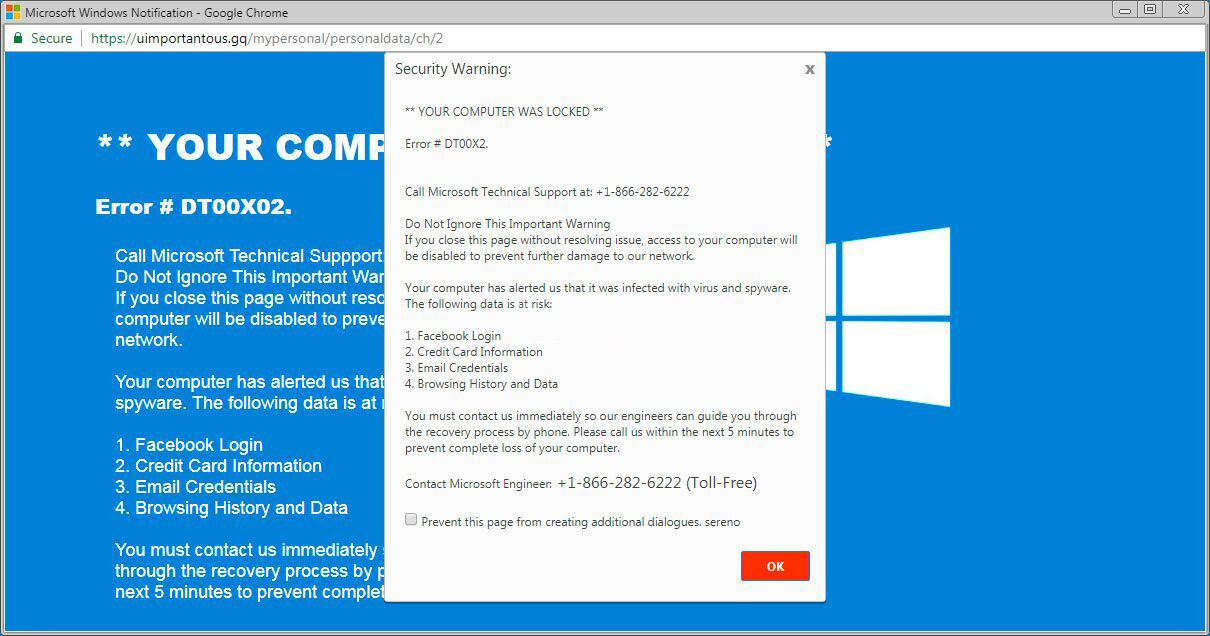
The example of Microsoft Tech support scam banner
Nowadays, there are two of the most extensive tactics of malware spreading – bait e-mails and also injection into a hacked program. While the first one is not so easy to avoid – you must know a lot to recognize a fake – the second one is simple to get rid of: just don’t utilize cracked programs. Torrent-trackers and various other providers of “totally free” applications (which are, in fact, paid, but with a disabled license checking) are really a giveaway place of malware.
References
- Official Microsoft guide for hosts file reset.


Leave a Comment