
Seeing the Win32:AceCrypter-Y [Cryp] detection name usually means that your computer is in big danger. This malware can correctly be named as ransomware – type of malware which ciphers your files and asks you to pay for their decryption. Removing it requires some unusual steps that must be taken as soon as possible.
Win32:AceCrypter-Y [Cryp] detection is a malware detection you can spectate in your computer. It frequently appears after the provoking actions on your PC – opening the suspicious e-mail messages, clicking the advertisement in the Web or setting up the program from dubious resources. From the instance it shows up, you have a short time to take action before it begins its malicious action. And be sure – it is far better not to wait for these malicious effects.
What is Win32:AceCrypter-Y [Cryp] virus?
Win32:AceCrypter-Y [Cryp] Summary
In total, Win32:AceCrypter-Y [Cryp] malware activities in the infected PC are next:
- SetUnhandledExceptionFilter detected (possible anti-debug);
- Behavioural detection: Executable code extraction – unpacking;
- Yara rule detections observed from a process memory dump/dropped files/CAPE;
- Creates RWX memory;
- Dynamic (imported) function loading detected;
- Performs HTTP requests potentially not found in PCAP.;
- CAPE extracted potentially suspicious content;
- Unconventionial language used in binary resources: Uzbek (Latin);
- The binary likely contains encrypted or compressed data.;
- Authenticode signature is invalid;
- Deletes its original binary from disk;
- Steals private information from local Internet browsers;
- Spoofs its process name and/or associated pathname to appear as a legitimate process;
- Creates a hidden or system file;
- CAPE detected the Loki malware family;
- Creates a copy of itself;
- Harvests credentials from local FTP client softwares;
- Harvests information related to installed instant messenger clients;
- Harvests information related to installed mail clients;
- Collects information to fingerprint the system;
- Ciphering the files kept on the target’s disk — so the victim cannot use these documents;
- Blocking the launching of .exe files of anti-malware programs
- Blocking the launching of installation files of anti-malware programs
Ransomware has actually been a horror story for the last 4 years. It is hard to realize a more harmful malware for both individual users and corporations. The algorithms used in Win32:AceCrypter-Y [Cryp] (typically, RHA-1028 or AES-256) are not hackable – with minor exclusions. To hack it with a brute force, you need to have a lot more time than our galaxy actually exists, and possibly will exist. However, that virus does not do all these unpleasant things instantly – it may require up to a few hours to cipher all of your files. Hence, seeing the Win32:AceCrypter-Y [Cryp] detection is a clear signal that you must start the elimination procedure.
Where did I get the Win32:AceCrypter-Y [Cryp]?
General ways of Win32:AceCrypter-Y [Cryp] injection are usual for all other ransomware variants. Those are one-day landing web pages where users are offered to download and install the free app, so-called bait emails and hacktools. Bait emails are a relatively modern strategy in malware distribution – you receive the e-mail that imitates some routine notifications about deliveries or bank service conditions shifts. Within the email, there is a corrupted MS Office file, or a link which leads to the exploit landing site.
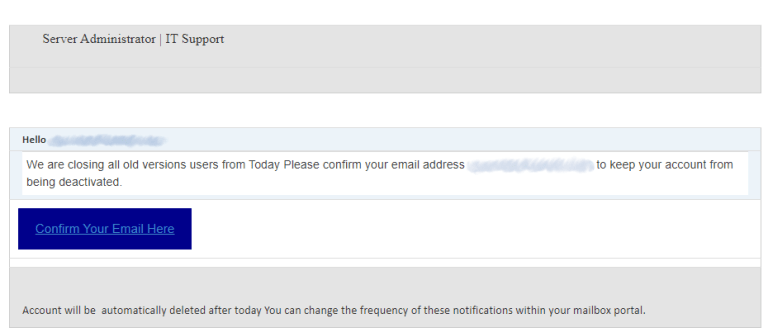
Malicious email message. This one tricks you to open the phishing website.
Avoiding it looks fairly easy, but still needs a lot of awareness. Malware can hide in different spots, and it is much better to prevent it even before it invades your system than to rely upon an anti-malware program. Basic cybersecurity awareness is just an important item in the modern-day world, even if your relationship with a computer remains on YouTube videos. That may keep you a lot of money and time which you would certainly spend while searching for a fixing guide.
Win32:AceCrypter-Y [Cryp] malware technical details
File Info:
name: B38C5B7363ACF4D9FFD6.mlwpath: /opt/CAPEv2/storage/binaries/ac6f7571c4ce13a3cac40119e91c79961abdf578b2f085af53c316c6943ffbb5crc32: 93637272md5: b38c5b7363acf4d9ffd6b221dcd03de7sha1: 7d031cc74805b63c064cea04e6b9ac4c76e5bbb5sha256: ac6f7571c4ce13a3cac40119e91c79961abdf578b2f085af53c316c6943ffbb5sha512: 27b439dd58809f35ae9bbba14ec0cafb947488dff49d787387c867d10973491618d62f83e505f84a8683311725364b96f0280ce26c2f647398c42958dad9670fssdeep: 6144:WSrvUuRxSBjC4KvUaZ5psyw8tWh2MT65UchSdDlclTno:vIkINTKMapsywJT9dDlcBtype: PE32 executable (GUI) Intel 80386, for MS Windowstlsh: T1ED449E10BBA0D035F0B712F4597A83A9BA2E7EA19B2441CB62D43BEE57356D4EC31317sha3_384: 27cb7852aa8bcb989782eea1a6f69dbfb8aecea8f6af7a60cc8f0ba99706e0d5f43788dacbcbd278a0b05d10af4044f9ep_bytes: 8bff558bece826aa0000e8110000005dtimestamp: 2021-02-12 14:30:05Version Info:
Translations: 0x0203 0x02bc
Win32:AceCrypter-Y [Cryp] also known as:
| Bkav | W32.AIDetect.malware2 |
| Lionic | Trojan.Win32.Androm.m!c |
| Elastic | malicious (high confidence) |
| MicroWorld-eScan | Trojan.GenericKD.50267005 |
| FireEye | Generic.mg.b38c5b7363acf4d9 |
| CAT-QuickHeal | Ransom.Stop.P5 |
| McAfee | Packed-GDT!B38C5B7363AC |
| Cylance | Unsafe |
| Sangfor | Trojan.Win32.Save.a |
| CrowdStrike | win/malicious_confidence_100% (W) |
| BitDefender | Trojan.GenericKD.50267005 |
| K7GW | Trojan ( 005944151 ) |
| K7AntiVirus | Trojan ( 005944151 ) |
| VirIT | Trojan.Win32.Genus.LFT |
| Cyren | W32/Kryptik.GNZ.gen!Eldorado |
| tehtris | Generic.Malware |
| ESET-NOD32 | Win32/PSW.Fareit.L |
| APEX | Malicious |
| Paloalto | generic.ml |
| ClamAV | Win.Malware.Pwsx-9950009-0 |
| Kaspersky | HEUR:Backdoor.Win32.Androm.gen |
| Alibaba | Backdoor:Win32/Raccrypt.d848a702 |
| NANO-Antivirus | Trojan.Win32.Stealer.jpaesm |
| Avast | Win32:AceCrypter-Y [Cryp] |
| Tencent | Trojan.Win32.Agent.zaj |
| Ad-Aware | Trojan.GenericKD.50267005 |
| TACHYON | Trojan/W32.Agent.269312.JM |
| Sophos | Mal/Generic-S + Troj/Krypt-FV |
| Comodo | Malware@#lqwr6qxwfvqx |
| DrWeb | Trojan.DownLoader44.58969 |
| Zillya | Trojan.Fareit.Win32.38754 |
| TrendMicro | TrojanSpy.Win32.LOKI.PUHBAZCLTB |
| McAfee-GW-Edition | BehavesLike.Win32.Rontokbro.dh |
| Trapmine | malicious.high.ml.score |
| Emsisoft | Trojan.GenericKD.50267005 (B) |
| SentinelOne | Static AI – Malicious PE |
| GData | Win32.Trojan.PSE.1400VVW |
| Jiangmin | Backdoor.Androm.bdgx |
| Avira | TR/Crypt.ZPACK.rwucr |
| Kingsoft | Win32.Hack.Undef.(kcloud) |
| Arcabit | Trojan.Generic.D2FF037D |
| ZoneAlarm | HEUR:Backdoor.Win32.Androm.gen |
| Microsoft | Trojan:Win32/Raccrypt.GJ!MTB |
| Cynet | Malicious (score: 100) |
| AhnLab-V3 | Trojan/Win.MalPE.R491209 |
| Acronis | suspicious |
| ALYac | Spyware.LokiBot |
| MAX | malware (ai score=85) |
| VBA32 | Backdoor.Androm |
| Malwarebytes | Trojan.MalPack.GS |
| TrendMicro-HouseCall | TrojanSpy.Win32.LOKI.PUHBAZCLTB |
| Rising | Trojan.Kryptik!8.8 (KTSE) |
| Ikarus | Trojan.Crypter |
| MaxSecure | Trojan.Malware.73688777.susgen |
| Fortinet | W32/Packed.GEE!tr |
| AVG | Win32:AceCrypter-Y [Cryp] |
| Cybereason | malicious.74805b |
| Panda | Trj/RansomGen.A |


Leave a Comment