
Spectating the Win32:AceCrypter-B [Cryp] detection name means that your PC is in big danger. This computer virus can correctly be identified as ransomware – sort of malware which encrypts your files and asks you to pay for their decryption. Removing it requires some specific steps that must be taken as soon as possible.
Win32:AceCrypter-B [Cryp] detection is a malware detection you can spectate in your system. It usually shows up after the preliminary procedures on your computer – opening the dubious email messages, clicking the advertisement in the Internet or setting up the program from dubious sources. From the moment it appears, you have a short time to act until it starts its destructive activity. And be sure – it is better not to await these harmful effects.
What is Win32:AceCrypter-B [Cryp] virus?
Win32:AceCrypter-B [Cryp] Summary
Summarizingly, Win32:AceCrypter-B [Cryp] ransomware actions in the infected system are next:
- SetUnhandledExceptionFilter detected (possible anti-debug);
- Behavioural detection: Executable code extraction – unpacking;
- Yara rule detections observed from a process memory dump/dropped files/CAPE;
- Creates RWX memory;
- Possible date expiration check, exits too soon after checking local time;
- Dynamic (imported) function loading detected;
- A process created a hidden window;
- CAPE extracted potentially suspicious content;
- The binary contains an unknown PE section name indicative of packing;
- Authenticode signature is invalid;
- Behavioural detection: Injection (Process Hollowing);
- Executed a process and injected code into it, probably while unpacking;
- Behavioural detection: Injection (inter-process);
- Created a process from a suspicious location;
- Encrypting the files located on the target’s disk drives — so the victim cannot open these files;
- Blocking the launching of .exe files of security tools
- Blocking the launching of installation files of security tools
Ransomware has been a horror story for the last 4 years. It is challenging to imagine a more dangerous malware for both individual users and corporations. The algorithms utilized in Win32:AceCrypter-B [Cryp] (typically, RHA-1028 or AES-256) are not hackable – with minor exclusions. To hack it with a brute force, you need more time than our galaxy actually exists, and possibly will exist. However, that virus does not do all these unpleasant things without delay – it can require up to several hours to cipher all of your documents. Thus, seeing the Win32:AceCrypter-B [Cryp] detection is a clear signal that you must start the clearing process.
Where did I get the Win32:AceCrypter-B [Cryp]?
Typical ways of Win32:AceCrypter-B [Cryp] distribution are standard for all other ransomware examples. Those are one-day landing sites where users are offered to download the free software, so-called bait emails and hacktools. Bait e-mails are a pretty modern method in malware distribution – you get the email that imitates some normal notifications about deliveries or bank service conditions changes. Within the e-mail, there is a corrupted MS Office file, or a link which leads to the exploit landing site.
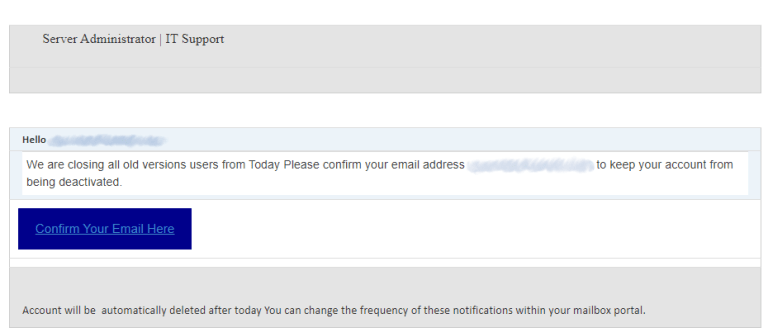
Malicious email message. This one tricks you to open the phishing website.
Preventing it looks pretty simple, however, still demands a lot of recognition. Malware can hide in different spots, and it is much better to prevent it even before it goes into your system than to depend on an anti-malware program. Simple cybersecurity knowledge is just an important item in the modern-day world, even if your interaction with a PC remains on YouTube videos. That may keep you a lot of time and money which you would spend while looking for a fixing guide.
Win32:AceCrypter-B [Cryp] malware technical details
File Info:
name: 305E96F02AD52489D580.mlwpath: /opt/CAPEv2/storage/binaries/42aeb50e9bda226e893372f32deb8d295ef6efb896b96c7b8eb0c15539edddaacrc32: 35841E40md5: 305e96f02ad52489d58025948f433f00sha1: 468de6c72f30ffd6af082dee03462d0a1d46540fsha256: 42aeb50e9bda226e893372f32deb8d295ef6efb896b96c7b8eb0c15539edddaasha512: 9d5e1c1ec3519b98a3d2a66f796ada6dfce3b941fb6f7a6345b6ec794938e27eee1e5d67c2164eb8422cd3407327add96155ee3a131202d3a1b33bbe832b74b8ssdeep: 1536:eFGZQkskqDXPwxO+ct8q0QO2zzNrKly+jbMAemotchI2WkLnYKMhs0g:pRz0Wct8WOoNrr+jQAHotchikLnMhstype: PE32 executable (GUI) Intel 80386, for MS Windowstlsh: T19534AE1276E0F832F5A215344874D6976E3BF9526A24D08F77583BAE6F322805F36372sha3_384: 35d4adc6b578d47c539db0c8bad0497e7b33250e9480736f34a14e662dbf5611da4e5c8ed91d48767fd2125dd9eb98f8ep_bytes: e8e0330000e978feffffcccccccccccctimestamp: 2021-07-09 06:38:16Version Info:
InternationalName: bomgvioci.iwaCopyright: Copyrighz (C) 2021, fudkortProjectVersion: 3.14.70.77Translation: 0x0129 0x0794
Win32:AceCrypter-B [Cryp] also known as:
| Bkav | W32.AIDetect.malware1 |
| Lionic | Trojan.Win32.Agent.4!c |
| Elastic | malicious (high confidence) |
| MicroWorld-eScan | Trojan.GenericKD.47830185 |
| FireEye | Generic.mg.305e96f02ad52489 |
| CAT-QuickHeal | Trojan.AgentPMF.S26014015 |
| McAfee | Packed-GEE!305E96F02AD5 |
| Cylance | Unsafe |
| Zillya | Trojan.Smokeloader.Win32.649 |
| Sangfor | Trojan.Win32.Save.a |
| K7AntiVirus | Trojan ( 00577cca1 ) |
| Alibaba | Ransom:Win32/StopCrypt.40a424c4 |
| K7GW | Trojan ( 00577cca1 ) |
| Cybereason | malicious.72f30f |
| Cyren | W32/Kryptik.FWV.gen!Eldorado |
| Symantec | ML.Attribute.HighConfidence |
| ESET-NOD32 | Win32/Smokeloader.F |
| APEX | Malicious |
| Paloalto | generic.ml |
| Kaspersky | HEUR:Trojan.Win32.Agent.gen |
| BitDefender | Trojan.GenericKD.47830185 |
| Avast | Win32:AceCrypter-B [Cryp] |
| Tencent | Win32.Trojan.Agent.Lgtq |
| Ad-Aware | Trojan.GenericKD.47830185 |
| Sophos | Mal/Generic-S + Mal/Agent-AWV |
| Comodo | Malware@#3tzks2fw8fsu7 |
| DrWeb | Trojan.Siggen16.26270 |
| Emsisoft | Trojan.Crypt (A) |
| SentinelOne | Static AI – Suspicious PE |
| GData | Win32.Trojan.BSE.16VOW5Z |
| Jiangmin | Trojan.Agent.dtxp |
| eGambit | Unsafe.AI_Score_79% |
| Avira | TR/Crypt.XPACK.sbees |
| ViRobot | Trojan.Win32.S.Dropper.252416 |
| ZoneAlarm | HEUR:Trojan.Win32.Agent.gen |
| Microsoft | Ransom:Win32/StopCrypt.MZE!MTB |
| TACHYON | Trojan/W32.Agent.252416.IR |
| AhnLab-V3 | Trojan/Win.MalPE.R462691 |
| Acronis | suspicious |
| BitDefenderTheta | Gen:NN.ZexaF.34182.puW@aenoVEjK |
| ALYac | Trojan.GenericKD.47830185 |
| MAX | malware (ai score=88) |
| VBA32 | BScope.TrojanSpy.Convagent |
| Malwarebytes | Trojan.MalPack |
| Rising | Trojan.Agent!8.B1E (CLOUD) |
| Yandex | Trojan.Smokeloader!ay2jDceEs8k |
| Ikarus | Trojan.Win32.Raccrypt |
| Fortinet | W32/Kryptik.HOCG!tr |
| Webroot | W32.Trojan.Gen |
| AVG | Win32:AceCrypter-B [Cryp] |
| Panda | Trj/GdSda.A |
| CrowdStrike | win/malicious_confidence_100% (W) |


Leave a Comment