
Spectating the Win32.Virlock.Gen.4 detection name means that your computer is in big danger. This virus can correctly be identified as ransomware – virus which encrypts your files and asks you to pay for their decryption. Removing it requires some peculiar steps that must be done as soon as possible.
Win32.Virlock.Gen.4 detection is a malware detection you can spectate in your system. It often shows up after the preliminary procedures on your computer – opening the suspicious e-mail, clicking the advertisement in the Internet or mounting the program from unreliable sources. From the moment it shows up, you have a short time to do something about it until it begins its harmful action. And be sure – it is much better not to wait for these malicious actions.
What is Win32.Virlock.Gen.4 virus?
Win32.Virlock.Gen.4 Summary
In summary, Win32.Virlock.Gen.4 virus actions in the infected system are next:
- The binary likely contains encrypted or compressed data.;
- Authenticode signature is invalid;
- Anomalous binary characteristics;
- Ciphering the files kept on the target’s drives — so the victim cannot use these documents;
- Blocking the launching of .exe files of anti-virus programs
- Blocking the launching of installation files of anti-malware programs
Ransomware has been a headache for the last 4 years. It is challenging to picture a more hazardous virus for both individual users and organizations. The algorithms utilized in Win32.Virlock.Gen.4 (generally, RHA-1028 or AES-256) are not hackable – with minor exclusions. To hack it with a brute force, you need more time than our galaxy actually exists, and possibly will exist. But that virus does not do all these terrible things immediately – it can take up to a few hours to cipher all of your files. Therefore, seeing the Win32.Virlock.Gen.4 detection is a clear signal that you have to begin the removal process.
Where did I get the Win32.Virlock.Gen.4?
Usual methods of Win32.Virlock.Gen.4 injection are usual for all other ransomware examples. Those are one-day landing websites where users are offered to download the free software, so-called bait emails and hacktools. Bait e-mails are a pretty modern strategy in malware spreading – you get the email that imitates some routine notifications about shippings or bank service conditions shifts. Inside of the email, there is a malicious MS Office file, or a web link which leads to the exploit landing site.
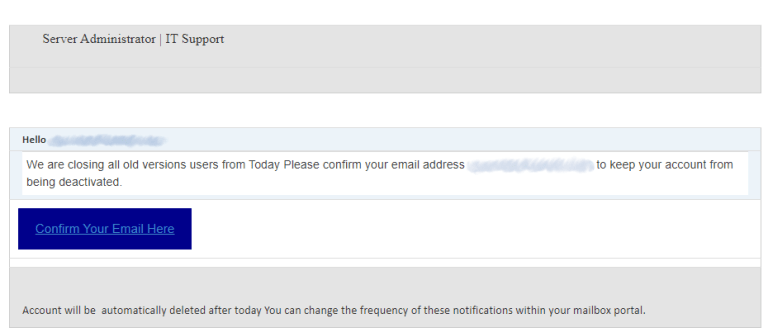
Malicious email message. This one tricks you to open the phishing website.
Avoiding it looks pretty simple, however, still demands a lot of attention. Malware can hide in various spots, and it is much better to stop it even before it invades your system than to trust in an anti-malware program. Standard cybersecurity knowledge is just an essential item in the modern-day world, even if your interaction with a computer remains on YouTube videos. That may keep you a lot of time and money which you would certainly spend while searching for a fix guide.
Win32.Virlock.Gen.4 malware technical details
File Info:
name: C5C5FCE24A6CC5EDBD89.mlwpath: /opt/CAPEv2/storage/binaries/d18459f0927c1407397eb1bcb50e7375313bc66af14c41f97aa56be79b8f5174crc32: 77C3D51Cmd5: c5c5fce24a6cc5edbd89c6ad04b91930sha1: 9b15a7700af57fd07cc8fdc3ea9825d865c29561sha256: d18459f0927c1407397eb1bcb50e7375313bc66af14c41f97aa56be79b8f5174sha512: 801b0b9674a1535b6e3adb79014e41d0f33d3cfe8591d6c6d4deb5c5f9fbaedf6e5678860c9aaa056f088c74cd3c158c7c621ebf36ea38529a9f5a11e316a507ssdeep: 3072:10e/wupstCIFUd9hCjHF/iXvSLKj+wypC9o6fyoI6uZQD+GTa3eKx8:1NI4ssIFUd9hiSvfy7pCJXuZQ+ia3type: PE32 executable (GUI) Intel 80386, for MS Windowstlsh: T110140A34FB9FD70A601B3FF446C5FC8B09DF7CD96B3B6A58752604C893291258892B29sha3_384: 910313b2938714d261745a36c345364b1c97dcfa5a10876e4bc3c211804a57ba73c5ee8ee2982d923f8bbbd1d3b658bcep_bytes: b9720c0d00bacd8f0d0081e909130500timestamp: 1970-01-01 00:02:03Version Info:
0: [No Data]
Win32.Virlock.Gen.4 also known as:
| Bkav | W32.AIDetectMalware |
| Lionic | Virus.Win32.PolyRansom.19!c |
| Elastic | malicious (high confidence) |
| MicroWorld-eScan | Trojan.GenericKD.67619290 |
| ClamAV | BC.Win.Virus.Ransom-9157.A |
| FireEye | Generic.mg.c5c5fce24a6cc5ed |
| McAfee | W32/VirRansom |
| Cylance | unsafe |
| Zillya | Virus.PolyRansom.Win32.1 |
| Sangfor | Suspicious.Win32.Save.a |
| K7AntiVirus | Virus ( 0040f99f1 ) |
| Alibaba | Ransom:Win32/Polyransom.A |
| K7GW | Virus ( 0040f99f1 ) |
| Cybereason | malicious.24a6cc |
| BitDefenderTheta | AI:FileInfector.30FD658313 |
| VirIT | Win32.CryptorGen.B |
| Cyren | W32/S-accd10d9!Eldorado |
| Symantec | W32.Virlock |
| tehtris | Generic.Malware |
| ESET-NOD32 | a variant of Win32/Virlock.A |
| APEX | Malicious |
| Cynet | Malicious (score: 100) |
| Kaspersky | Virus.Win32.PolyRansom.a |
| BitDefender | Trojan.GenericKD.67619290 |
| NANO-Antivirus | Trojan.Win32.PolyRansom.exypia |
| Avast | Win32:VirLock [Inf] |
| Tencent | Virus.Win32.VirLocker.b |
| TACHYON | Virus/W32.VirRansom.C |
| Emsisoft | Trojan.GenericKD.67619290 (B) |
| Baidu | Win32.Virus.Virlock.a |
| F-Secure | Trojan.TR/Crypt.ZPACK.Gen |
| DrWeb | Win32.VirLock.1 |
| VIPRE | Win32.Virlock.Gen.4 |
| TrendMicro | PE_VIRLOCK.F-O |
| McAfee-GW-Edition | BehavesLike.Win32.VirRansom.cc |
| Trapmine | malicious.high.ml.score |
| Sophos | W32/VirRnsm-A |
| SentinelOne | Static AI – Malicious PE |
| GData | Trojan.GenericKD.67619290 |
| Avira | TR/Crypt.ZPACK.Gen |
| Antiy-AVL | Virus/Win32.PolyRansom.a |
| Xcitium | Packed.Win32.Graybird.B@5hgpd5 |
| Arcabit | Trojan.Generic.D407C9DA |
| ZoneAlarm | Virus.Win32.PolyRansom.a |
| Microsoft | Ransom:Win32/ContiCrypt.LOD!MTB |
| Detected | |
| AhnLab-V3 | Trojan/Win32.Nabucur.C622804 |
| VBA32 | BScope.Trojan.Fuerboos |
| ALYac | Win32.Virlock.Gen.4 |
| MAX | malware (ai score=81) |
| Malwarebytes | Trojan.VirLock |
| Panda | Trj/RansomGen.A |
| TrendMicro-HouseCall | PE_VIRLOCK.F-O |
| Rising | Virus.VirLock!1.A08A (CLASSIC) |
| Yandex | Virus.Virlock.Gen.AAJ |
| Ikarus | Trojan.Agent |
| MaxSecure | Virus.PolyRansom.a |
| Fortinet | W32/Virlock.E |
| AVG | Win32:VirLock [Inf] |
| DeepInstinct | MALICIOUS |
| CrowdStrike | win/malicious_confidence_100% (W) |


Leave a Comment