
Seeing the Win32/Virlock.F malware detection means that your computer is in big danger. This malware can correctly be named as ransomware – sort of malware which encrypts your files and asks you to pay for their decryption. Removing it requires some unusual steps that must be done as soon as possible.
Win32/Virlock.F detection is a malware detection you can spectate in your computer. It usually appears after the preliminary activities on your PC – opening the dubious email messages, clicking the banner in the Internet or installing the program from dubious sources. From the instance it shows up, you have a short time to do something about it until it begins its malicious action. And be sure – it is better not to await these destructive actions.
What is Win32/Virlock.F virus?
Win32/Virlock.F Summary
In summary, Win32/Virlock.F virus actions in the infected computer are next:
- The binary likely contains encrypted or compressed data.;
- Authenticode signature is invalid;
- Anomalous binary characteristics;
- Ciphering the documents kept on the victim’s disk — so the victim cannot open these files;
- Blocking the launching of .exe files of security tools
- Blocking the launching of installation files of security tools
Ransomware has actually been a nightmare for the last 4 years. It is challenging to picture a more harmful malware for both individual users and organizations. The algorithms utilized in Win32/Virlock.F (usually, RHA-1028 or AES-256) are not hackable – with minor exclusions. To hack it with a brute force, you need to have more time than our galaxy actually exists, and possibly will exist. But that virus does not do all these bad things without delay – it may take up to several hours to cipher all of your documents. Hence, seeing the Win32/Virlock.F detection is a clear signal that you need to begin the elimination process.
Where did I get the Win32/Virlock.F?
Routine methods of Win32/Virlock.F injection are common for all other ransomware examples. Those are one-day landing sites where users are offered to download the free software, so-called bait emails and hacktools. Bait emails are a quite modern method in malware distribution – you receive the email that imitates some regular notifications about shipments or bank service conditions updates. Within the email, there is an infected MS Office file, or a web link which opens the exploit landing site.
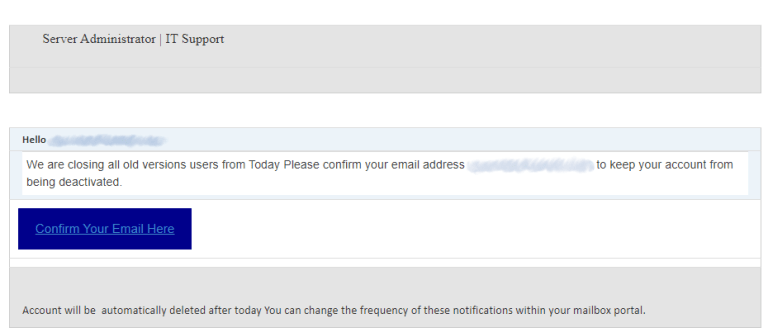
Malicious email message. This one tricks you to open the phishing website.
Avoiding it looks pretty simple, but still requires a lot of attention. Malware can hide in different places, and it is far better to stop it even before it invades your system than to trust in an anti-malware program. Common cybersecurity knowledge is just an essential item in the modern-day world, even if your interaction with a PC remains on YouTube videos. That can save you a lot of money and time which you would certainly spend while looking for a fixing guide.
Win32/Virlock.F malware technical details
File Info:
name: 54DBC7FCE6C6EFA8AC05.mlwpath: /opt/CAPEv2/storage/binaries/fad96aedf8f7574ef1e00019837ad3172abdabcce28851610dafd2d9d838b737crc32: 5949050Emd5: 54dbc7fce6c6efa8ac059c0f01e26b3bsha1: e06270950ecad8c42777151b0903c0ccda8acb2dsha256: fad96aedf8f7574ef1e00019837ad3172abdabcce28851610dafd2d9d838b737sha512: 3c8ae9003f71a4619da20dc2580eeb81c243eeda0c6f63b886956de4e4f0e711e35d9c9b76db93caf6f8b168dc201d4d7c1513d3318339914e58c0ddc7281164ssdeep: 12288:SltZdlf/wA0vTJ7/6OYCeMfCA83kWmiuvcTgWfoeckZECRbL7O3QwW4GdJZD:cdlZ6TJ7/6OZfCdkuhUdkiuPmQDdJZDtype: PE32 executable (GUI) Intel 80386, for MS Windowstlsh: T16775CD62110CDE8ACC06143724ABED968ABB7AF425EC313D9D710249FB74BBA1D51E3Dsha3_384: 0e2aa2134f9c071739594c14130cd7ef7c6e07afe947ac8a22398ddda3562ca306ff884e714990bfe8649fa2d32ca17bep_bytes: 87fbc1c90523d62bc28bca87da81efedtimestamp: 2024-01-25 14:31:07Version Info:
0: [No Data]
Win32/Virlock.F also known as:
| Bkav | W32.AIDetectMalware |
| Elastic | malicious (high confidence) |
| MicroWorld-eScan | Win32.Virlock.Gen.5 |
| CAT-QuickHeal | Ransom.PolyRansom.B2 |
| Skyhigh | BehavesLike.Win32.VirRansom.tc |
| McAfee | W32/VirRansom |
| Malwarebytes | Trojan.VirLock |
| Zillya | Virus.PolyRansom.Win32.2 |
| Sangfor | Ransom.Win32.Save.a |
| K7AntiVirus | Virus ( 0040f99f1 ) |
| K7GW | Virus ( 0040f99f1 ) |
| CrowdStrike | win/malicious_confidence_100% (W) |
| Arcabit | Win32.Virlock.Gen.5 |
| Baidu | Win32.Virus.Virlock.a |
| VirIT | Win32.CryptorGen.A |
| Symantec | W32.Virlock |
| tehtris | Generic.Malware |
| ESET-NOD32 | Win32/Virlock.F |
| Cynet | Malicious (score: 100) |
| APEX | Malicious |
| ClamAV | BC.Win.Virus.Ransom-9157.B |
| Kaspersky | Virus.Win32.PolyRansom.a |
| BitDefender | Win32.Virlock.Gen.5 |
| NANO-Antivirus | Trojan.Win32.PolyRansom.exypia |
| Avast | Win32:VirLock [Inf] |
| Tencent | Virus.Win32.Polyransom.a |
| TACHYON | Virus/W32.VirRansom.C |
| Emsisoft | Win32.Virlock.Gen.5 (B) |
| F-Secure | Trojan.TR/Crypt.XPACK.Gen7 |
| DrWeb | Win32.VirLock.4 |
| VIPRE | Win32.Virlock.Gen.5 |
| TrendMicro | PE_VIRLOCK.E-O |
| FireEye | Generic.mg.54dbc7fce6c6efa8 |
| Sophos | W32/VirRnsm-A |
| Ikarus | Win32.Cryptor |
| Varist | W32/S-85d93908!Eldorado |
| Avira | TR/Crypt.XPACK.Gen7 |
| Antiy-AVL | Virus/Win32.PolyRansom.a |
| Xcitium | Packed.Win32.Graybird.B@5hgpd5 |
| Microsoft | Trojan:Win32/NabucurObfs |
| ZoneAlarm | Virus.Win32.PolyRansom.a |
| GData | Win32.Virlock.Gen.5 |
| Detected | |
| AhnLab-V3 | Win32/Nabucur.B |
| Acronis | suspicious |
| BitDefenderTheta | AI:FileInfector.47FA551513 |
| ALYac | Win32.Virlock.Gen.5 |
| MAX | malware (ai score=81) |
| VBA32 | BScope.Trojan.Fuerboos |
| Cylance | unsafe |
| Panda | Generic Suspicious |
| TrendMicro-HouseCall | PE_VIRLOCK.E-O |
| Rising | Virus.VirLock!1.A08A (CLASSIC) |
| SentinelOne | Static AI – Malicious PE |
| MaxSecure | Virus.PolyRansom.a |
| Fortinet | W32/Virlock.E |
| AVG | Win32:VirLock [Inf] |
| Cybereason | malicious.50ecad |
| DeepInstinct | MALICIOUS |


Leave a Comment