
Seeing the Win32/TrojanDownloader.Small.BKO malware detection usually means that your computer is in big danger. This malware can correctly be named as ransomware – type of malware which ciphers your files and asks you to pay for their decryption. Deleteing it requires some peculiar steps that must be taken as soon as possible.
Win32/TrojanDownloader.Small.BKO detection is a malware detection you can spectate in your system. It often shows up after the provoking procedures on your computer – opening the untrustworthy email messages, clicking the banner in the Internet or installing the program from unreliable resources. From the moment it appears, you have a short time to act until it begins its destructive activity. And be sure – it is better not to await these destructive actions.
What is Win32/TrojanDownloader.Small.BKO virus?
Win32/TrojanDownloader.Small.BKO Summary
Summarizingly, Win32/TrojanDownloader.Small.BKO malware activities in the infected computer are next:
- SetUnhandledExceptionFilter detected (possible anti-debug);
- Executed a command line with /C or /R argument to terminate command shell on completion which can be used to hide execution;
- Dynamic (imported) function loading detected;
- Authenticode signature is invalid;
- Uses Windows utilities for basic functionality;
- Created a process from a suspicious location;
- Installs itself for autorun at Windows startup;
- Creates a copy of itself;
- Ciphering the documents kept on the victim’s disk — so the victim cannot open these files;
- Blocking the launching of .exe files of security tools
- Blocking the launching of installation files of anti-virus programs
Ransomware has been a headache for the last 4 years. It is challenging to picture a more harmful virus for both individual users and organizations. The algorithms used in Win32/TrojanDownloader.Small.BKO (typically, RHA-1028 or AES-256) are not hackable – with minor exclusions. To hack it with a brute force, you need a lot more time than our galaxy actually exists, and possibly will exist. But that malware does not do all these terrible things instantly – it may take up to a few hours to cipher all of your documents. Therefore, seeing the Win32/TrojanDownloader.Small.BKO detection is a clear signal that you need to begin the elimination process.
Where did I get the Win32/TrojanDownloader.Small.BKO?
Routine methods of Win32/TrojanDownloader.Small.BKO injection are typical for all other ransomware variants. Those are one-day landing sites where victims are offered to download and install the free software, so-called bait emails and hacktools. Bait emails are a quite modern tactic in malware distribution – you get the email that simulates some standard notifications about deliveries or bank service conditions updates. Within the e-mail, there is an infected MS Office file, or a link which leads to the exploit landing page.
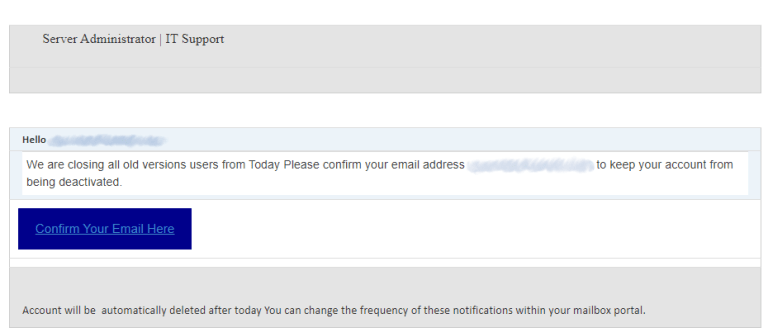
Malicious email message. This one tricks you to open the phishing website.
Preventing it looks fairly easy, but still demands a lot of attention. Malware can hide in various spots, and it is much better to stop it even before it goes into your PC than to rely on an anti-malware program. Common cybersecurity awareness is just an essential thing in the modern-day world, even if your relationship with a PC remains on YouTube videos. That can save you a great deal of time and money which you would spend while searching for a fixing guide.
Win32/TrojanDownloader.Small.BKO malware technical details
File Info:
name: BFB2DB2DAAF52D8DB972.mlwpath: /opt/CAPEv2/storage/binaries/71ff49a897b67789b2b978757091d1cd2a3c0ef907211fe93cf89f56291fc4d2crc32: 4B3B31E3md5: bfb2db2daaf52d8db9723728cf1794d7sha1: f7b3763f4049fcc5acf5c508f193a16407734748sha256: 71ff49a897b67789b2b978757091d1cd2a3c0ef907211fe93cf89f56291fc4d2sha512: aca7402f24aa65958348969685f4a4fe7879202f5059120f05bef0f630de9d84dc32029892614923c8ee41123cf2bb39280bc25e30c3618c04ba6fe17c9fe679ssdeep: 384:zFKY/XBsdnSYacfN2+aqDGeil5uOwsofcVm6v7NjvzKJuGDkJuLflOxp/K:hbBsdzzaWhEmfcVH7wJuGDkJuLflOzKtype: PE32 executable (console) Intel 80386, for MS Windowstlsh: T1BDA24B13FB468B32E91062F525B6BBB6817F7924BF6042CB93C49D3F0A151E16D3681Esha3_384: 4ea72f7e93f347229f9e672281c7656c74593fb1c071b6f6d19c1bfe9119148e8b7b67405976d36188088e647430a968ep_bytes: e8d7050000e974feffff558bec6a00fftimestamp: 2021-11-29 17:53:12Version Info:
0: [No Data]
Win32/TrojanDownloader.Small.BKO also known as:
| Bkav | W32.AIDetect.malware2 |
| MicroWorld-eScan | Trojan.GenericKD.38141399 |
| FireEye | Generic.mg.bfb2db2daaf52d8d |
| McAfee | Artemis!BFB2DB2DAAF5 |
| Cylance | Unsafe |
| K7AntiVirus | Trojan-Downloader ( 0058b5551 ) |
| K7GW | Trojan-Downloader ( 0058b5551 ) |
| Symantec | ML.Attribute.HighConfidence |
| ESET-NOD32 | a variant of Win32/TrojanDownloader.Small.BKO |
| APEX | Malicious |
| Kaspersky | HEUR:Trojan-Ransom.Win32.Foreign.gen |
| BitDefender | Trojan.GenericKD.38141399 |
| Avast | Win32:Malware-gen |
| Ad-Aware | Trojan.GenericKD.38141399 |
| Emsisoft | Trojan.GenericKD.38141399 (B) |
| TrendMicro | Ransom_Foreign.R03FC0WL321 |
| McAfee-GW-Edition | Artemis |
| Sophos | Mal/Generic-S |
| Ikarus | Trojan-Downloader.Win32.Small |
| Avira | TR/Foreign.kcihk |
| Microsoft | Trojan:Win32/Sabsik.FL.B!ml |
| GData | Trojan.GenericKD.38141399 |
| Cynet | Malicious (score: 100) |
| VBA32 | BScope.TrojanRansom.Foreign |
| ALYac | Trojan.GenericKD.38141399 |
| MAX | malware (ai score=83) |
| TrendMicro-HouseCall | Ransom_Foreign.R03FC0WL321 |
| Rising | [email protected] (RDMK:LwTrE1XQSelBJHHiV3UIcg) |
| Fortinet | W32/Malicious_Behavior.VEX |
| AVG | Win32:Malware-gen |
| Panda | Trj/GdSda.A |
| CrowdStrike | win/malicious_confidence_70% (W) |


Leave a Comment