
Spectating the Win32/Packed.Themida.BRQ detection usually means that your PC is in big danger. This computer virus can correctly be named as ransomware – virus which encrypts your files and forces you to pay for their decryption. Removing it requires some peculiar steps that must be done as soon as possible.
Win32/Packed.Themida.BRQ detection is a malware detection you can spectate in your computer. It generally shows up after the provoking procedures on your computer – opening the suspicious e-mail messages, clicking the advertisement in the Web or installing the program from suspicious resources. From the instance it appears, you have a short time to do something about it until it starts its destructive action. And be sure – it is better not to wait for these harmful actions.
What is Win32/Packed.Themida.BRQ virus?
Win32/Packed.Themida.BRQ Summary
In total, Win32/Packed.Themida.BRQ malware actions in the infected system are next:
- Behavioural detection: Executable code extraction – unpacking;
- Yara rule detections observed from a process memory dump/dropped files/CAPE;
- Creates RWX memory;
- NtSetInformationThread: attempt to hide thread from debugger;
- Dynamic (imported) function loading detected;
- Expresses interest in specific running processes;
- CAPE extracted potentially suspicious content;
- The binary contains an unknown PE section name indicative of packing;
- Authenticode signature is invalid;
- Checks for the presence of known windows from debuggers and forensic tools;
- The following process appear to have been packed with Themida: 0FBDAEE0CEEFEB9EB431.mlw;
- Checks for the presence of known devices from debuggers and forensic tools;
- Detects the presence of Wine emulator via registry key;
- Checks the version of Bios, possibly for anti-virtualization;
- Detects VirtualBox through the presence of a registry key;
- Attempted to write directly to a physical drive;
- Encrypting the documents kept on the victim’s drive — so the victim cannot use these documents;
- Blocking the launching of .exe files of anti-virus apps
- Blocking the launching of installation files of security tools
Ransomware has been a horror story for the last 4 years. It is difficult to imagine a more dangerous virus for both individuals and corporations. The algorithms used in Win32/Packed.Themida.BRQ (usually, RHA-1028 or AES-256) are not hackable – with minor exclusions. To hack it with a brute force, you need more time than our galaxy currently exists, and possibly will exist. However, that virus does not do all these terrible things instantly – it can require up to several hours to cipher all of your documents. Therefore, seeing the Win32/Packed.Themida.BRQ detection is a clear signal that you must start the removal process.
Where did I get the Win32/Packed.Themida.BRQ?
Routine methods of Win32/Packed.Themida.BRQ spreading are typical for all other ransomware variants. Those are one-day landing sites where users are offered to download and install the free program, so-called bait e-mails and hacktools. Bait e-mails are a relatively new method in malware distribution – you receive the e-mail that imitates some normal notifications about shipments or bank service conditions changes. Inside of the email, there is a corrupted MS Office file, or a web link which leads to the exploit landing site.
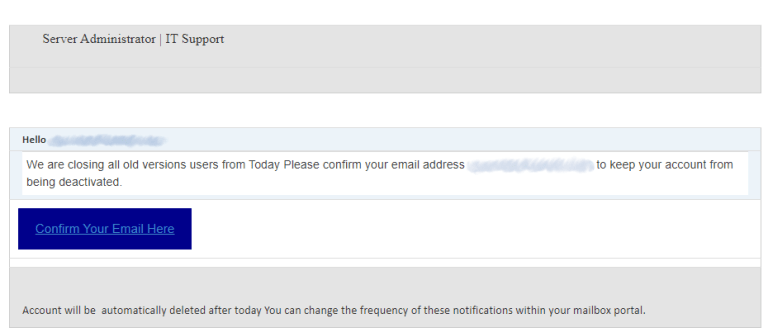
Malicious email message. This one tricks you to open the phishing website.
Avoiding it looks quite uncomplicated, however, still demands a lot of recognition. Malware can hide in different places, and it is better to prevent it even before it gets into your computer than to depend on an anti-malware program. Basic cybersecurity awareness is just an essential thing in the modern-day world, even if your relationship with a computer remains on YouTube videos. That can save you a lot of time and money which you would certainly spend while searching for a fix guide.
Win32/Packed.Themida.BRQ malware technical details
File Info:
name: 0FBDAEE0CEEFEB9EB431.mlwpath: /opt/CAPEv2/storage/binaries/27dc05ba56dc45a0282a2c0f9129c3f6361e27202ee9686316f0ac9d139dc445crc32: 398EF992md5: 0fbdaee0ceefeb9eb431553f17ec4db0sha1: 68013e146d8ba6dea9e57c70eb5e693f694efec9sha256: 27dc05ba56dc45a0282a2c0f9129c3f6361e27202ee9686316f0ac9d139dc445sha512: b0457ee3db74fd0e5233d23b62c511e9c41e8c29d3cd445c7e4aa29bb7812fe6a670e60bb57aa55060d49b2e17f4b772c2be0a62717bf7fcb3051a34fd5089f0ssdeep: 98304:qdWII0TAbkEvXSJRFTrBD70mS4s/b2SM8QS3:klId1XSdRzS4s/intype: PE32 executable (GUI) Intel 80386, for MS Windowstlsh: T1C4267DB23556A9CFC8A9D5B09827CC7E582CC7F54B304483BC2CA57DAF72CE025E9925sha3_384: f1475c050fe5e7651e8c32d0dba26ddc5b0d54b8b4b30cb336a7090fad7a49f7946e8526fcd2b3dca3be39da52577211ep_bytes: 565053e801000000cc5889c3402d00e0timestamp: 2021-11-29 06:39:12Version Info:
Translation: 0x0000 0x04b0Comments: CompanyName: FileDescription: Orders BotFileVersion: 1.0.0.0InternalName: Orders Bot.exeLegalCopyright: Copyright © 2018LegalTrademarks: OriginalFilename: Orders Bot.exeProductName: Orders BotProductVersion: 1.0.0.0Assembly Version: 1.0.0.0
Win32/Packed.Themida.BRQ also known as:
| Bkav | W32.AIDetect.malware1 |
| Elastic | malicious (high confidence) |
| MicroWorld-eScan | Trojan.GenericKD.38226150 |
| FireEye | Generic.mg.0fbdaee0ceefeb9e |
| ALYac | Trojan.GenericKD.38226150 |
| Cylance | Unsafe |
| K7AntiVirus | Trojan ( 0053ca911 ) |
| Alibaba | Ransom:Win32/Themida.7541d9d1 |
| K7GW | Trojan ( 0053ca911 ) |
| Cybereason | malicious.46d8ba |
| Symantec | ML.Attribute.HighConfidence |
| ESET-NOD32 | a variant of Win32/Packed.Themida.BRQ |
| APEX | Malicious |
| Paloalto | generic.ml |
| Kaspersky | Trojan-Ransom.Win32.Phpw.agu |
| BitDefender | Trojan.GenericKD.38226150 |
| Avast | Win32:Trojan-gen |
| Tencent | Win32.Packed.Themida.Jwn |
| Ad-Aware | Trojan.GenericKD.38226150 |
| Sophos | Mal/Generic-S |
| TrendMicro | Ransom_Phpw.R011C0WLB21 |
| McAfee-GW-Edition | BehavesLike.Win32.Backdoor.rh |
| Emsisoft | Trojan.GenericKD.38226150 (B) |
| Ikarus | Trojan.Win32.Themida |
| GData | Trojan.GenericKD.38226150 |
| Microsoft | Trojan:Win32/Sabsik.FL.B!ml |
| Cynet | Malicious (score: 100) |
| Acronis | suspicious |
| McAfee | Artemis!0FBDAEE0CEEF |
| MAX | malware (ai score=81) |
| VBA32 | TScope.Malware-Cryptor.SB |
| TrendMicro-HouseCall | Ransom_Phpw.R011C0WLB21 |
| SentinelOne | Static AI – Malicious PE |
| Fortinet | W32/PossibleThreat |
| BitDefenderTheta | Gen:NN.ZexaF.34084.@x0@aad8TAc |
| AVG | Win32:Trojan-gen |
| Panda | Trj/CI.A |
| CrowdStrike | win/malicious_confidence_70% (W) |


Leave a Comment