
Seeing the Win32/Injector.DKPK detection means that your system is in big danger. This virus can correctly be named as ransomware – virus which encrypts your files and asks you to pay for their decryption. Removing it requires some specific steps that must be done as soon as possible.
Win32/Injector.DKPK detection is a malware detection you can spectate in your computer. It generally shows up after the provoking activities on your computer – opening the suspicious e-mail messages, clicking the banner in the Internet or setting up the program from unreliable resources. From the moment it shows up, you have a short time to do something about it before it starts its destructive activity. And be sure – it is better not to wait for these destructive things.
What is Win32/Injector.DKPK virus?
Win32/Injector.DKPK Summary
In total, Win32/Injector.DKPK ransomware actions in the infected computer are next:
- Behavioural detection: Executable code extraction – unpacking;
- CAPE extracted potentially suspicious content;
- Authenticode signature is invalid;
- Behavioural detection: Injection (Process Hollowing);
- Behavioural detection: Injection (inter-process);
- CAPE detected the embedded win api malware family;
- Collects information to fingerprint the system;
- Anomalous binary characteristics;
- Yara detections observed in process dumps, payloads or dropped files;
- Ciphering the documents located on the target’s disk — so the victim cannot check these documents;
- Blocking the launching of .exe files of anti-malware apps
- Blocking the launching of installation files of security tools
Ransomware has been a major problem for the last 4 years. It is hard to realize a more hazardous malware for both individuals and businesses. The algorithms used in Win32/Injector.DKPK (typically, RHA-1028 or AES-256) are not hackable – with minor exclusions. To hack it with a brute force, you need more time than our galaxy already exists, and possibly will exist. But that malware does not do all these terrible things immediately – it may require up to several hours to cipher all of your files. Therefore, seeing the Win32/Injector.DKPK detection is a clear signal that you must begin the elimination process.
Where did I get the Win32/Injector.DKPK?
Typical tactics of Win32/Injector.DKPK distribution are typical for all other ransomware variants. Those are one-day landing sites where users are offered to download and install the free program, so-called bait e-mails and hacktools. Bait e-mails are a relatively modern method in malware distribution – you get the e-mail that mimics some normal notifications about deliveries or bank service conditions updates. Inside of the email, there is an infected MS Office file, or a link which leads to the exploit landing page.
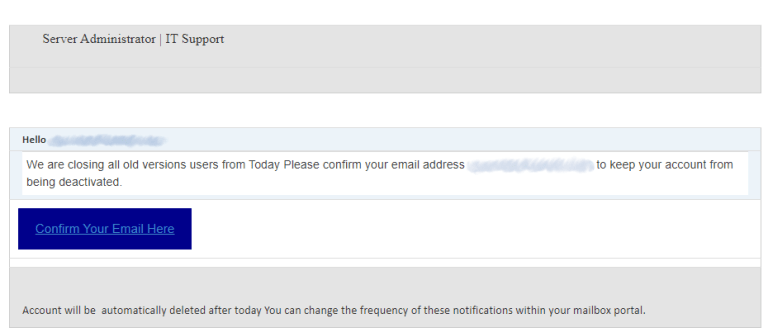
Malicious email message. This one tricks you to open the phishing website.
Avoiding it looks pretty simple, however, still requires a lot of awareness. Malware can hide in different places, and it is far better to stop it even before it gets into your system than to rely upon an anti-malware program. General cybersecurity knowledge is just an essential item in the modern world, even if your relationship with a PC remains on YouTube videos. That may keep you a lot of money and time which you would certainly spend while searching for a solution.
Win32/Injector.DKPK malware technical details
File Info:
name: 9DA66A7CF195036CB906.mlwpath: /opt/CAPEv2/storage/binaries/d214c89af1929af1171ac40999b14a4f6fbcfd13b88cade392853a2c61057122crc32: 17C18180md5: 9da66a7cf195036cb90606ef106e2234sha1: a76b850aa336dfb5c83c50e83f24a9c844641684sha256: d214c89af1929af1171ac40999b14a4f6fbcfd13b88cade392853a2c61057122sha512: e248cf310fb0eed95e2ce6997f07942929037621e65707366d7b5646270f518f8b899bd38f88765e0f3839d01786def357cdf473777c559df6c9a999f6fb3df9ssdeep: 3072:t3NAcZ8RGeKP686TRISLI++T13IHORVts5:hJmDy6/I++T1tOtype: PE32 executable (GUI) Intel 80386, for MS Windowstlsh: T1DB94BF143A5999F2CDCBD67661A8CD8CDDE03FC6A3D82E65B11079162F7211AC8CE7B0sha3_384: 937b01c5c68470f85e0cd627355f7d052fd15d89d5e6e1e907a4ca8fd0d255aaf48c80b1ee7a94ce42ee5118573f9dacep_bytes: 6840f94500e8eeffffff000000000000timestamp: 2017-01-30 00:12:03Version Info:
Translation: 0x0409 0x04b0CompanyName: BreakPoint Software LegalCopyright: PWI, Inc. LegalTrademarks: Yahoo! Inc. ProductName: DVDVideoSoft Ltd. FileVersion: 5.03.0005ProductVersion: 5.03.0005InternalName: Sistering7OriginalFilename: Sistering7.exe
Win32/Injector.DKPK also known as:
| Bkav | W32.Common.64781A1E |
| Lionic | Trojan.Win32.VBKryjetor.4!c |
| Elastic | malicious (high confidence) |
| MicroWorld-eScan | Gen:Variant.Ransom.Loki.22663 |
| Skyhigh | Packed-JO!9DA66A7CF195 |
| ALYac | Spyware.Pony |
| Cylance | unsafe |
| VIPRE | Gen:Variant.Ransom.Loki.22663 |
| Sangfor | Suspicious.Win32.Save.vb |
| K7AntiVirus | Trojan ( 00503e171 ) |
| BitDefender | Gen:Variant.Ransom.Loki.22663 |
| K7GW | Trojan ( 00503e171 ) |
| CrowdStrike | win/malicious_confidence_100% (W) |
| Arcabit | Trojan.Ransom.Loki.D5887 |
| VirIT | Trojan.Win32.VBZenPack_Heur |
| Symantec | ML.Attribute.HighConfidence |
| ESET-NOD32 | a variant of Win32/Injector.DKPK |
| APEX | Malicious |
| ClamAV | Win.Packed.Ponystealer-9527765-0 |
| Kaspersky | Trojan.Win32.VBKryjetor.bqo |
| Alibaba | Trojan:Win32/VBKryjetor.440e219c |
| NANO-Antivirus | Trojan.Win32.AD.elfvsy |
| ViRobot | Trojan.Win.Z.Vbkryjetor.409600 |
| Avast | Win32:Malware-gen |
| Rising | Trojan.VBKryjetor!8.778 (TFE:5:leIY7C0CxyF) |
| Sophos | Mal/FareitVB-I |
| F-Secure | Trojan.TR/Dropper.VB.Gen7 |
| Zillya | Trojan.Injector.Win32.1301445 |
| TrendMicro | TrojanSpy.Win32.LOKI.SM.hp |
| Trapmine | malicious.high.ml.score |
| FireEye | Generic.mg.9da66a7cf195036c |
| Emsisoft | Gen:Variant.Ransom.Loki.22663 (B) |
| SentinelOne | Static AI – Malicious PE |
| Jiangmin | Trojan.VBKryjetor.abuk |
| Webroot | W32.Trojan.Gen |
| Detected | |
| Avira | TR/Dropper.VB.Gen7 |
| Varist | W32/VBInject.HV.gen!Eldorado |
| Antiy-AVL | Trojan/Win32.VBKryjetor |
| Kingsoft | Win32.Troj.Unknown.a |
| Microsoft | PWS:Win32/Fareit |
| ZoneAlarm | Trojan.Win32.VBKryjetor.bqo |
| GData | Gen:Variant.Ransom.Loki.22663 |
| Cynet | Malicious (score: 100) |
| AhnLab-V3 | Win-Trojan/VBKrypt.RP.X1764 |
| McAfee | Packed-JO!9DA66A7CF195 |
| MAX | malware (ai score=100) |
| Malwarebytes | Backdoor.Bot |
| Panda | Trj/GdSda.A |
| TrendMicro-HouseCall | TrojanSpy.Win32.LOKI.SM.hp |
| Tencent | Win32.Trojan.Vbkryjetor.Simw |
| Yandex | Trojan.GenAsa!o/mY55DGIeE |
| Ikarus | Trojan.Win32.Krypt |
| MaxSecure | Trojan.Malware.10533364.susgen |
| Fortinet | W32/GenKryptik.SXB!tr |
| BitDefenderTheta | Gen:NN.ZevbaF.36744.zm0@aqg0D4li |
| AVG | Win32:Malware-gen |
| Cybereason | malicious.aa336d |
| DeepInstinct | MALICIOUS |


Leave a Comment