
Spectating the Win32/Injector.CFPU malware detection means that your computer is in big danger. This malware can correctly be identified as ransomware – virus which ciphers your files and asks you to pay for their decryption. Removing it requires some specific steps that must be taken as soon as possible.
Win32/Injector.CFPU detection is a malware detection you can spectate in your system. It often shows up after the preliminary activities on your PC – opening the dubious email, clicking the advertisement in the Internet or installing the program from unreliable resources. From the instance it appears, you have a short time to act until it begins its harmful activity. And be sure – it is much better not to wait for these destructive effects.
What is Win32/Injector.CFPU virus?
Win32/Injector.CFPU Summary
In total, Win32/Injector.CFPU virus activities in the infected PC are next:
- Reads data out of its own binary image;
- CAPE extracted potentially suspicious content;
- Drops a binary and executes it;
- The binary likely contains encrypted or compressed data.;
- Authenticode signature is invalid;
- Uses Windows utilities for basic functionality;
- Behavioural detection: Injection (Process Hollowing);
- Behavioural detection: Injection (inter-process);
- Attempts to modify proxy settings;
- Creates a copy of itself;
- Deletes executed files from disk;
- Attempts to ensure mapped drives are available from an elevated prompt or process with UAC enabled;
- Creates a known TeslaCrypt/AlphaCrypt ransomware decryption instruction / key file.;
- Uses suspicious command line tools or Windows utilities;
- Encrypting the documents located on the victim’s drive — so the victim cannot open these documents;
- Blocking the launching of .exe files of anti-virus apps
- Blocking the launching of installation files of security tools
Ransomware has actually been a nightmare for the last 4 years. It is hard to picture a more damaging malware for both individual users and companies. The algorithms used in Win32/Injector.CFPU (usually, RHA-1028 or AES-256) are not hackable – with minor exclusions. To hack it with a brute force, you need to have a lot more time than our galaxy already exists, and possibly will exist. However, that malware does not do all these horrible things without delay – it may require up to several hours to cipher all of your documents. Therefore, seeing the Win32/Injector.CFPU detection is a clear signal that you must begin the elimination procedure.
Where did I get the Win32/Injector.CFPU?
Standard methods of Win32/Injector.CFPU injection are basic for all other ransomware examples. Those are one-day landing websites where users are offered to download and install the free software, so-called bait emails and hacktools. Bait e-mails are a relatively new method in malware distribution – you get the e-mail that simulates some normal notifications about shipments or bank service conditions modifications. Inside of the e-mail, there is a corrupted MS Office file, or a link which leads to the exploit landing page.
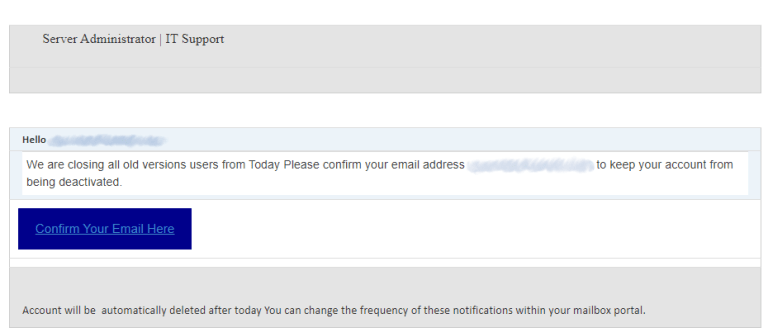
Malicious email message. This one tricks you to open the phishing website.
Avoiding it looks quite simple, however, still demands a lot of attention. Malware can hide in various places, and it is better to stop it even before it gets into your computer than to rely upon an anti-malware program. Basic cybersecurity knowledge is just an important thing in the modern-day world, even if your interaction with a PC stays on YouTube videos. That may keep you a lot of money and time which you would spend while searching for a fix guide.
Win32/Injector.CFPU malware technical details
File Info:
name: 611A6AED1E0512E6D05D.mlwpath: /opt/CAPEv2/storage/binaries/1cdacebd8738bb4f54243e8b29ffff66f775a5dede8a0b2faa57a04913965bdecrc32: 2B768B90md5: 611a6aed1e0512e6d05d9d9467737cc0sha1: 8494b9ad7cf8ae5b36b99e8b8ae09d5efecf8956sha256: 1cdacebd8738bb4f54243e8b29ffff66f775a5dede8a0b2faa57a04913965bdesha512: b88386464a81bcf9ba4ee2565a4a0eb417e4f2fda881590320562a0e302c7d0675e367e56cf99e52c60e0d26984a6921f0b887f3cb5f9eb274363ed526b667c7ssdeep: 6144:mjRDz/yATDbXlp5SgCYxxf80yaiAfgyESXahHaegInF05:mtDz6gDb1hCWfuATXah6a0type: PE32 executable (GUI) Intel 80386, for MS Windowstlsh: T140A4BFFB6444A8A6C517BEB46C17EEE3070678B586609BC76640D28E0E637F32D3705Bsha3_384: aad41d7c0dfc6d27bf718361da3c025fb3abb401cb4990f919e367d97452a7d21e15af2d8a942f0d141ed8bd96d73752ep_bytes: e8a5140000e97ffeffff558becff35a8timestamp: 2015-07-25 16:08:50Version Info:
0: [No Data]
Win32/Injector.CFPU also known as:
| Bkav | W32.AIDetect.malware1 |
| Lionic | Trojan.Win32.Bitman.j!c |
| Elastic | malicious (high confidence) |
| DrWeb | Trojan.AVKill.37459 |
| FireEye | Generic.mg.611a6aed1e0512e6 |
| Cylance | Unsafe |
| Zillya | Trojan.Bitman.Win32.311 |
| Sangfor | Trojan.Win32.Save.a |
| K7AntiVirus | Ransomware ( 00564f7e1 ) |
| Alibaba | Ransom:Win32/Bitman.3402b513 |
| K7GW | Ransomware ( 00564f7e1 ) |
| BitDefenderTheta | Gen:NN.ZexaF.34698.EqW@aebe5goi |
| Symantec | ML.Attribute.HighConfidence |
| ESET-NOD32 | a variant of Win32/Injector.CFPU |
| APEX | Malicious |
| Paloalto | generic.ml |
| Kaspersky | Trojan-Ransom.Win32.Bitman.us |
| NANO-Antivirus | Trojan.Win32.Bitman.duqovm |
| Avast | Win32:TeslaCrypt-M [Trj] |
| Tencent | Malware.Win32.Gencirc.10c87aed |
| Comodo | Malware@#3drhfqk94voih |
| TrendMicro | Ransom_Tescrypt.R067C0DJ422 |
| McAfee-GW-Edition | BehavesLike.Win32.Generic.gh |
| Trapmine | malicious.high.ml.score |
| Sophos | Mal/Generic-S |
| SentinelOne | Static AI – Malicious PE |
| Jiangmin | Trojan/Bitman.hd |
| Webroot | Trojan.Dropper.Gen |
| Detected | |
| Avira | HEUR/AGEN.1228660 |
| Antiy-AVL | Trojan/Generic.ASMalwS.411C |
| Kingsoft | Win32.Troj.Undef.(kcloud) |
| Microsoft | Ransom:Win32/Tescrypt.A |
| Cynet | Malicious (score: 100) |
| AhnLab-V3 | Trojan/Win32.Tescrypt.R160486 |
| McAfee | GenericR-ECO!611A6AED1E05 |
| MAX | malware (ai score=100) |
| VBA32 | Hoax.Bitman |
| Malwarebytes | Trojan.MalPack.GS |
| TrendMicro-HouseCall | Ransom_Tescrypt.R067C0DJ422 |
| Rising | [email protected] (RDML:VjRWgJXzp2GJv83wEsXecA) |
| Yandex | Trojan.Bitman!1MiPjVUuwbs |
| Ikarus | Trojan.Win32.Injector |
| Fortinet | W32/Injector.CFMW!tr |
| AVG | Win32:TeslaCrypt-M [Trj] |
| Cybereason | malicious.d1e051 |
| Panda | Generic Suspicious |


Leave a Comment