
Seeing the Win32/GenKryptik.CIAG detection name usually means that your PC is in big danger. This malware can correctly be identified as ransomware – type of malware which encrypts your files and asks you to pay for their decryption. Deleteing it requires some specific steps that must be taken as soon as possible.
Win32/GenKryptik.CIAG detection is a virus detection you can spectate in your system. It often shows up after the provoking actions on your computer – opening the dubious email messages, clicking the advertisement in the Internet or installing the program from unreliable resources. From the instance it appears, you have a short time to act until it begins its destructive action. And be sure – it is much better not to await these harmful actions.
What is Win32/GenKryptik.CIAG virus?
Win32/GenKryptik.CIAG Summary
In summary, Win32/GenKryptik.CIAG malware actions in the infected computer are next:
- SetUnhandledExceptionFilter detected (possible anti-debug);
- Behavioural detection: Executable code extraction – unpacking;
- Creates RWX memory;
- Dynamic (imported) function loading detected;
- Authenticode signature is invalid;
- Encrypting the documents located on the victim’s drive — so the victim cannot check these documents;
- Blocking the launching of .exe files of anti-virus apps
- Blocking the launching of installation files of security tools
Ransomware has actually been a headache for the last 4 years. It is difficult to realize a more dangerous virus for both individuals and companies. The algorithms used in Win32/GenKryptik.CIAG (usually, RHA-1028 or AES-256) are not hackable – with minor exclusions. To hack it with a brute force, you need to have a lot more time than our galaxy actually exists, and possibly will exist. However, that malware does not do all these horrible things instantly – it can take up to several hours to cipher all of your files. Therefore, seeing the Win32/GenKryptik.CIAG detection is a clear signal that you must begin the clearing procedure.
Where did I get the Win32/GenKryptik.CIAG?
Common ways of Win32/GenKryptik.CIAG distribution are basic for all other ransomware variants. Those are one-day landing sites where users are offered to download and install the free software, so-called bait e-mails and hacktools. Bait emails are a quite new strategy in malware spreading – you receive the email that simulates some regular notifications about shippings or bank service conditions modifications. Within the email, there is a corrupted MS Office file, or a link which opens the exploit landing page.
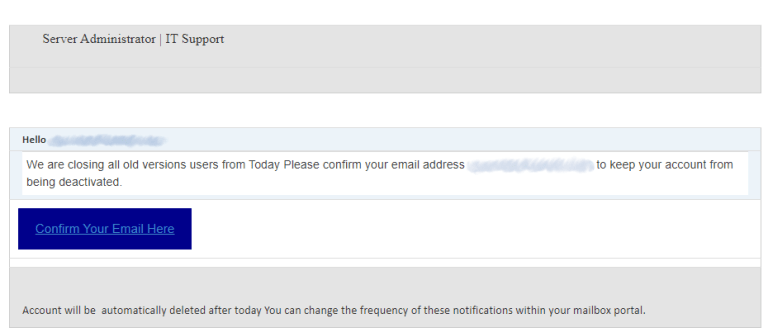
Malicious email message. This one tricks you to open the phishing website.
Preventing it looks fairly simple, however, still demands a lot of recognition. Malware can hide in various spots, and it is much better to prevent it even before it gets into your PC than to depend on an anti-malware program. Simple cybersecurity awareness is just an important item in the modern-day world, even if your interaction with a computer remains on YouTube videos. That can save you a lot of time and money which you would certainly spend while seeking a fixing guide.
Win32/GenKryptik.CIAG malware technical details
File Info:
name: DF8C7C00ABDD2ABEC0DE.mlwpath: /opt/CAPEv2/storage/binaries/048f76bc856b11bc622383eb413316468075cbf5cee0cc244841c1286f451d9bcrc32: C5C3BAE8md5: df8c7c00abdd2abec0def2577df10b5esha1: 39f63ac640fbbbb6ac28c5c9218cc12b489a2a61sha256: 048f76bc856b11bc622383eb413316468075cbf5cee0cc244841c1286f451d9bsha512: b73e10c1b6e892c6c1304c87302f7818ba4bd08706b722d1ebd5cce75018fc9c566b50e99db61c6b9b376d3c883d85eaf79983b92f1708a4165773a03f082c3fssdeep: 6144:ynrWQ1zD3OCmhr2BmW7W5xNyN4IiMbyVrvUHulqqoMTI:ynS033OCmhr2BmGW5xNyN4IiOy5XItype: PE32 executable (GUI) Intel 80386, for MS Windowstlsh: T1F6846C127380E032D5B725304E9AEB9297B8FC702960519FAB94F73DEA712D2D636707sha3_384: 927e3c2d7f3e7c904cd6b6ce0dbeecbfb5e6d28e767de81397567d5cc856b63fb1f1d5e758cecf1579c7320e0d5a996bep_bytes: e8d8b20000e978feffffcc68f0384200timestamp: 2018-08-13 12:29:31Version Info:
Languages: EnglishLegalTrademarks: Andrew Zhezherun ©. All rights reserved.Comments: Receptive Others' Volunteered AnnualCompanyName: Andrew ZhezherunPrivateBuild: 2.2.85.5Assembly Version: 2.2.85.5FileDescription: Receptive Others' Volunteered AnnualInternalName: EncodingFileVersion: 2.2.85.5LegalCopyright: Andrew Zhezherun ©. All rights reserved.OriginalFilename: EncodingProductName: EncodingProductVersion: 2.2.85.5Translation: 0x0409 0x04b0
Win32/GenKryptik.CIAG also known as:
| Lionic | Trojan.Win32.Godzilla.a!c |
| Elastic | malicious (high confidence) |
| Cynet | Malicious (score: 99) |
| FireEye | Generic.mg.df8c7c00abdd2abe |
| McAfee | Artemis!DF8C7C00ABDD |
| Zillya | Trojan.GenericKD.Win32.153166 |
| Sangfor | Trojan.Win32.Godzilla.qj |
| CrowdStrike | win/malicious_confidence_100% (W) |
| Alibaba | TrojanDownloader:Win32/Godzilla.e79da26f |
| K7GW | Trojan ( 0053a5dc1 ) |
| K7AntiVirus | Trojan ( 0053a5dc1 ) |
| Symantec | ML.Attribute.HighConfidence |
| ESET-NOD32 | a variant of Win32/GenKryptik.CIAG |
| APEX | Malicious |
| Paloalto | generic.ml |
| Kaspersky | Trojan-Downloader.Win32.Godzilla.qj |
| BitDefender | Gen:Variant.Ransom.Shade.27 |
| NANO-Antivirus | Trojan.Win32.Godzilla.fhokvs |
| SUPERAntiSpyware | Trojan.Agent/Gen-Crypt |
| MicroWorld-eScan | Gen:Variant.Ransom.Shade.27 |
| Avast | Win32:Malware-gen |
| Tencent | Win32.Trojan-downloader.Godzilla.Wvay |
| Ad-Aware | Gen:Variant.Ransom.Shade.27 |
| Comodo | Malware@#2cb15u5ltovfv |
| TrendMicro | TROJ_GEN.R002C0WIS21 |
| Emsisoft | Gen:Variant.Ransom.Shade.27 (B) |
| Ikarus | Trojan.Win32.Krypt |
| GData | Gen:Variant.Ransom.Shade.27 |
| Webroot | W32.Trojan.GenKD |
| Avira | TR/AD.MalwareCrypter.vfmhg |
| Antiy-AVL | Trojan/Generic.ASMalwS.27B15B6 |
| Arcabit | Trojan.Ransom.Shade.27 |
| Microsoft | Trojan:Win32/Occamy.C04 |
| AhnLab-V3 | Malware/Win32.Generic.C2665697 |
| VBA32 | TrojanDownloader.Godzilla |
| ALYac | Gen:Variant.Ransom.Shade.27 |
| MAX | malware (ai score=100) |
| TrendMicro-HouseCall | TROJ_GEN.R002C0WIS21 |
| Rising | Downloader.Godzilla!8.E3AB (CLOUD) |
| SentinelOne | Static AI – Suspicious PE |
| Fortinet | W32/GenKryptik.CIAG!tr |
| AVG | Win32:Malware-gen |
| Cybereason | malicious.0abdd2 |
| Panda | Trj/GdSda.A |


Leave a Comment