
Seeing the Win32/Agent.ACPN detection usually means that your PC is in big danger. This virus can correctly be named as ransomware – virus which encrypts your files and asks you to pay for their decryption. Deleteing it requires some specific steps that must be done as soon as possible.
Win32/Agent.ACPN detection is a virus detection you can spectate in your system. It frequently appears after the provoking procedures on your computer – opening the suspicious email, clicking the banner in the Web or setting up the program from unreliable resources. From the second it appears, you have a short time to do something about it until it starts its destructive activity. And be sure – it is far better not to wait for these destructive effects.
What is Win32/Agent.ACPN virus?
Win32/Agent.ACPN Summary
In summary, Win32/Agent.ACPN virus activities in the infected system are next:
- SetUnhandledExceptionFilter detected (possible anti-debug);
- Behavioural detection: Executable code extraction – unpacking;
- Creates RWX memory;
- Guard pages use detected – possible anti-debugging.;
- Dynamic (imported) function loading detected;
- Reads data out of its own binary image;
- CAPE extracted potentially suspicious content;
- The binary contains an unknown PE section name indicative of packing;
- Authenticode signature is invalid;
- Ciphering the files kept on the victim’s disks — so the victim cannot check these documents;
- Blocking the launching of .exe files of anti-virus programs
- Blocking the launching of installation files of anti-virus apps
Ransomware has actually been a headache for the last 4 years. It is challenging to realize a more damaging virus for both individuals and corporations. The algorithms used in Win32/Agent.ACPN (generally, RHA-1028 or AES-256) are not hackable – with minor exclusions. To hack it with a brute force, you need to have a lot more time than our galaxy currently exists, and possibly will exist. However, that malware does not do all these bad things instantly – it may take up to several hours to cipher all of your files. Thus, seeing the Win32/Agent.ACPN detection is a clear signal that you must start the elimination process.
Where did I get the Win32/Agent.ACPN?
Standard tactics of Win32/Agent.ACPN spreading are usual for all other ransomware examples. Those are one-day landing sites where users are offered to download the free app, so-called bait emails and hacktools. Bait emails are a pretty new tactic in malware distribution – you get the e-mail that mimics some standard notifications about shippings or bank service conditions modifications. Inside of the email, there is a malicious MS Office file, or a link which leads to the exploit landing site.
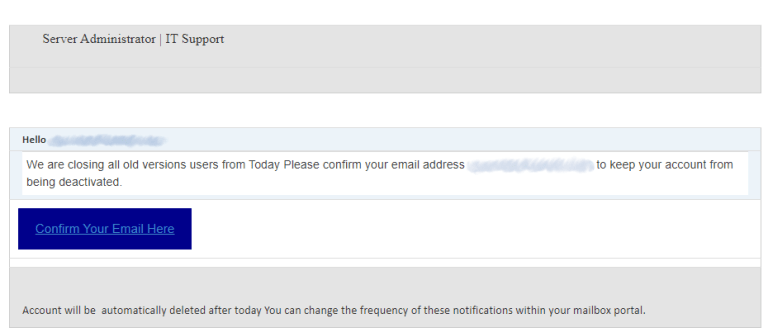
Malicious email message. This one tricks you to open the phishing website.
Preventing it looks quite easy, but still demands a lot of attention. Malware can hide in various places, and it is far better to stop it even before it gets into your system than to depend on an anti-malware program. Basic cybersecurity awareness is just an important item in the modern world, even if your interaction with a computer stays on YouTube videos. That can save you a lot of money and time which you would spend while seeking a solution.
Win32/Agent.ACPN malware technical details
File Info:
name: CE42EC5CE404C33AF565.mlwpath: /opt/CAPEv2/storage/binaries/9ba3c11345d7a6be15101c3e0c19e2c94d4c1425c235952f29a6c4e26981e88dcrc32: 45E7C097md5: ce42ec5ce404c33af565828dfd9cee7dsha1: 0cf20798480f5cdc8dbb67fd54944c9b7e3eed07sha256: 9ba3c11345d7a6be15101c3e0c19e2c94d4c1425c235952f29a6c4e26981e88dsha512: 22eda3dfc1561db041ccba1f72213aeaa17f60bb8a54f8fe233ac1afd4376eb127bc20301f9cf0a88d2570af59aa1b7428edcd9851bc5212633f745213191863ssdeep: 24576:hZ7Xar2VsBq/OebdB+KvDPmy4Ih3baxOwqqqXpr7a4gp3mdJ5pDy3F2YP5/r:NsgB+cK2hba8wq3Xpro3eZW5ztype: PE32 executable (GUI) Intel 80386, for MS Windowstlsh: T11DA50218A143E2BBFCED08A3485481D0C29C7FAA7B128DCDE97AD586541F442F7B6D87sha3_384: f7c89aa5e79d09278b6f30b918f45b6f670377394f2df5b81eef43b40feca401e9922ddcf73bfd3e300ce769738b1fa6ep_bytes: e805050000e98efeffff3b0d58154300timestamp: 2020-03-26 10:02:53Version Info:
0: [No Data]
Win32/Agent.ACPN also known as:
| Bkav | W32.AIDetect.malware1 |
| Lionic | Trojan.Win32.Qshell.4!c |
| Elastic | malicious (high confidence) |
| MicroWorld-eScan | Trojan.GenericKDZ.82234 |
| FireEye | Generic.mg.ce42ec5ce404c33a |
| CAT-QuickHeal | W32.BrowserAssistant.B7 |
| ALYac | Trojan.GenericKDZ.82234 |
| Cylance | Unsafe |
| Sangfor | Trojan.Win32.Qshell.lla |
| K7AntiVirus | Trojan ( 00575b351 ) |
| Alibaba | Trojan:Win32/Qshell.e1d4f0f4 |
| K7GW | Trojan ( 00575b351 ) |
| Cyren | W32/BrowserAssist.A.gen!Eldorado |
| Symantec | Trojan.Gen.MBT |
| ESET-NOD32 | a variant of Win32/Agent.ACPN |
| Zoner | Probably Heur.RARAutorun |
| TrendMicro-HouseCall | TROJ_GEN.R002C0DAE22 |
| Paloalto | generic.ml |
| Kaspersky | Trojan.Win32.Qshell.lla |
| BitDefender | Trojan.GenericKDZ.82234 |
| Avast | Win32:Malware-gen |
| Rising | Malware.AbnormalScript/SFX!1.D9B9 (CLASSIC) |
| Sophos | Mal/Generic-S |
| Baidu | Archive.Bomb |
| TrendMicro | TROJ_GEN.R002C0DAE22 |
| McAfee-GW-Edition | BehavesLike.Win32.Generic.th |
| Emsisoft | Trojan.GenericKDZ.82234 (B) |
| SentinelOne | Static AI – Suspicious PE |
| GData | Win32.Trojan.Kryptik.E4LIAW |
| MAX | malware (ai score=62) |
| Antiy-AVL | Generic/Generic.APUnArc.1 |
| Microsoft | Ransom:Win32/CerberCrypt.PB!MTB |
| Cynet | Malicious (score: 100) |
| McAfee | Artemis!CE42EC5CE404 |
| VBA32 | TScope.Trojan.Delf |
| APEX | Malicious |
| Ikarus | Trojan.Win32.Crypt |
| Fortinet | W32/Injector.EQUG!tr |
| AVG | Win32:Malware-gen |
| Panda | Trj/GdSda.A |


Leave a Comment