
Spectating the VirTool:Win32/CeeInject.CF malware detection usually means that your computer is in big danger. This computer virus can correctly be named as ransomware – virus which encrypts your files and forces you to pay for their decryption. Deleteing it requires some peculiar steps that must be taken as soon as possible.
VirTool:Win32/CeeInject.CF detection is a malware detection you can spectate in your system. It generally shows up after the preliminary activities on your PC – opening the untrustworthy e-mail messages, clicking the banner in the Internet or mounting the program from dubious sources. From the instance it appears, you have a short time to do something about it before it starts its destructive activity. And be sure – it is far better not to wait for these malicious actions.
What is VirTool:Win32/CeeInject.CF virus?
VirTool:Win32/CeeInject.CF Summary
In total, VirTool:Win32/CeeInject.CF ransomware actions in the infected computer are next:
- Behavioural detection: Executable code extraction – unpacking;
- CAPE extracted potentially suspicious content;
- The binary likely contains encrypted or compressed data.;
- Authenticode signature is invalid;
- CAPE detected the embedded win api malware family;
- Anomalous binary characteristics;
- Clears web history;
- Yara detections observed in process dumps, payloads or dropped files;
- Ciphering the documents kept on the victim’s disk drives — so the victim cannot use these files;
- Blocking the launching of .exe files of anti-malware programs
- Blocking the launching of installation files of anti-malware apps
Ransomware has been a headache for the last 4 years. It is hard to imagine a more harmful malware for both individuals and organizations. The algorithms utilized in VirTool:Win32/CeeInject.CF (generally, RHA-1028 or AES-256) are not hackable – with minor exclusions. To hack it with a brute force, you need more time than our galaxy currently exists, and possibly will exist. However, that virus does not do all these horrible things without delay – it may require up to a few hours to cipher all of your files. Therefore, seeing the VirTool:Win32/CeeInject.CF detection is a clear signal that you should begin the clearing procedure.
Where did I get the VirTool:Win32/CeeInject.CF?
Routine methods of VirTool:Win32/CeeInject.CF distribution are basic for all other ransomware variants. Those are one-day landing websites where victims are offered to download the free program, so-called bait e-mails and hacktools. Bait emails are a quite modern strategy in malware spreading – you receive the e-mail that simulates some normal notifications about shipments or bank service conditions changes. Within the e-mail, there is a malicious MS Office file, or a link which opens the exploit landing page.
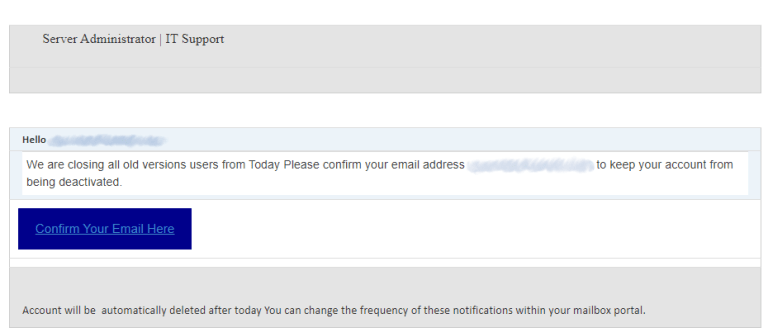
Malicious email message. This one tricks you to open the phishing website.
Avoiding it looks fairly uncomplicated, but still demands a lot of attention. Malware can hide in different places, and it is much better to stop it even before it invades your PC than to rely on an anti-malware program. General cybersecurity knowledge is just an essential item in the modern world, even if your interaction with a computer stays on YouTube videos. That may keep you a great deal of money and time which you would spend while searching for a fix guide.
VirTool:Win32/CeeInject.CF malware technical details
File Info:
name: 054EB0BDCAF1BA0B2FF9.mlwpath: /opt/CAPEv2/storage/binaries/5ea44667ec1f118d91eb2a2e1a7f19501b2d30e2976fb4169bab572771b7e220crc32: 6E9AF4F0md5: 054eb0bdcaf1ba0b2ff90664793d2780sha1: 71c637d6888ca220dc2ebe5407f8d028dfc67ee0sha256: 5ea44667ec1f118d91eb2a2e1a7f19501b2d30e2976fb4169bab572771b7e220sha512: 69ea27e5d96d5434814f59fec2a1ec802eca79a42278f3dbb45aec3a44838101985f155824855acfc88e19bada099c16d0a2b83df13ae523238139429320c43cssdeep: 1536:i31pyB3josNDiDTkWvrc4336nzNQhVbL+S9CFILWsjxxoU:i3ry1biXkWj93p7ZlxoUtype: PE32 executable (GUI) Intel 80386, for MS Windowstlsh: T129A3E03670E684B3D6C501B888391F2A5BBAA3060715CD17EBD009DF9DA07E35D3B26Bsha3_384: 644fcd979cdc6111eb93193fcf0416e4bbd8961ad38286614b1efa40077587a1152dccbad9ed3b6b23bc2cd6c7eb0366ep_bytes: 558bec6aff6818410101681c0b010164timestamp: 2011-11-18 19:02:48Version Info:
0: [No Data]
VirTool:Win32/CeeInject.CF also known as:
| Bkav | W32.AIDetectMalware |
| Lionic | Trojan.Win32.Cidox.lrSg |
| Elastic | malicious (high confidence) |
| MicroWorld-eScan | Trojan.Vundo.GUW |
| FireEye | Generic.mg.054eb0bdcaf1ba0b |
| CAT-QuickHeal | Trojan.Vundo.Gen |
| Skyhigh | BehavesLike.Win32.FakeAVSecurityTool.nh |
| McAfee | Vundo.gen.ef |
| Malwarebytes | Malware.AI.3857765520 |
| Zillya | Dropper.Cidox.Win32.4153 |
| K7AntiVirus | Trojan ( 0035086b1 ) |
| Alibaba | Ransom:Win32/Cidox.f19e417d |
| K7GW | Trojan ( 0035086b1 ) |
| CrowdStrike | win/malicious_confidence_90% (D) |
| Symantec | ML.Attribute.HighConfidence |
| ESET-NOD32 | Win32/Agent.SFM |
| APEX | Malicious |
| TrendMicro-HouseCall | TROJ_VUNDO.SMEO7 |
| ClamAV | Win.Dropper.Agent-36339 |
| Kaspersky | Trojan-Ransom.Win32.Cidox.aex |
| BitDefender | Trojan.Vundo.GUW |
| NANO-Antivirus | Trojan.Win32.Mayachok.ftydy |
| Avast | Win32:MalOb-HT [Cryp] |
| Tencent | Malware.Win32.Gencirc.10b6681e |
| Emsisoft | Trojan.Vundo.GUW (B) |
| F-Secure | Trojan.TR/Ransom.aexa |
| DrWeb | Trojan.Mayachok.1 |
| VIPRE | Trojan.Vundo.GUW |
| TrendMicro | TROJ_VUNDO.SMEO7 |
| Trapmine | malicious.high.ml.score |
| Sophos | ML/PE-A |
| SentinelOne | Static AI – Malicious PE |
| MAX | malware (ai score=100) |
| Jiangmin | TrojanDropper.Cidox.wir |
| Detected | |
| Avira | TR/Ransom.aexa |
| Varist | W32/Lampa.A.gen!Eldorado |
| Antiy-AVL | Trojan[Ransom]/Win32.Cidox |
| Kingsoft | Win32.Troj.Undef.a |
| Microsoft | VirTool:Win32/CeeInject.CF |
| Xcitium | TrojWare.Win32.Kryptik.VST@4kyf1k |
| Arcabit | Trojan.Vundo.GUW |
| ViRobot | Dropper.Cidox.Gen.A |
| ZoneAlarm | Trojan-Ransom.Win32.Cidox.aex |
| GData | Trojan.Vundo.GUW |
| Cynet | Malicious (score: 100) |
| AhnLab-V3 | Trojan/Win32.Cidox.R15845 |
| VBA32 | OScope.Trojan.Cidox.05 |
| ALYac | Trojan.Vundo.GUW |
| Cylance | unsafe |
| Panda | Trj/Genetic.gen |
| Rising | Backdoor.Win32.Fednu.qh (CLASSIC) |
| Yandex | Trojan.GenAsa!HBh1U0weC7s |
| Ikarus | Trojan-Dropper.Win32.Cidox |
| MaxSecure | Trojan.Malware.3280156.susgen |
| Fortinet | W32/Cidox.IRM!tr |
| BitDefenderTheta | AI:Packer.BAD30E0621 |
| AVG | Win32:MalOb-HT [Cryp] |
| Cybereason | malicious.dcaf1b |
| DeepInstinct | MALICIOUS |
| alibabacloud | Ransomware:Win/Cidox.aex |


Leave a Comment