
Seeing the Virlock.Ransom.FileInfector.DDS detection name means that your computer is in big danger. This computer virus can correctly be identified as ransomware – virus which encrypts your files and forces you to pay for their decryption. Removing it requires some peculiar steps that must be taken as soon as possible.
Virlock.Ransom.FileInfector.DDS detection is a virus detection you can spectate in your computer. It often appears after the provoking procedures on your computer – opening the dubious email, clicking the banner in the Internet or setting up the program from suspicious sources. From the instance it appears, you have a short time to act before it starts its malicious action. And be sure – it is much better not to await these destructive things.
What is Virlock.Ransom.FileInfector.DDS virus?
Virlock.Ransom.FileInfector.DDS Summary
In summary, Virlock.Ransom.FileInfector.DDS virus activities in the infected system are next:
- Behavioural detection: Executable code extraction – unpacking;
- CAPE extracted potentially suspicious content;
- Drops a binary and executes it;
- The binary likely contains encrypted or compressed data.;
- Authenticode signature is invalid;
- Uses Windows utilities for basic functionality;
- Uses Windows utilities to create a scheduled task;
- Deletes executed files from disk;
- Attempts to disable UAC;
- Attempts to modify Explorer settings to prevent file extensions from being displayed;
- Attempts to modify Explorer settings to prevent hidden files from being displayed;
- Uses suspicious command line tools or Windows utilities;
- Encrypting the documents kept on the victim’s disk drive — so the victim cannot check these files;
- Blocking the launching of .exe files of anti-malware apps
- Blocking the launching of installation files of security tools
Ransomware has been a headache for the last 4 years. It is hard to picture a more hazardous virus for both individuals and organizations. The algorithms utilized in Virlock.Ransom.FileInfector.DDS (generally, RHA-1028 or AES-256) are not hackable – with minor exclusions. To hack it with a brute force, you need to have a lot more time than our galaxy actually exists, and possibly will exist. But that virus does not do all these horrible things instantly – it can take up to several hours to cipher all of your documents. Thus, seeing the Virlock.Ransom.FileInfector.DDS detection is a clear signal that you should begin the clearing process.
Where did I get the Virlock.Ransom.FileInfector.DDS?
Standard ways of Virlock.Ransom.FileInfector.DDS injection are basic for all other ransomware examples. Those are one-day landing sites where users are offered to download and install the free software, so-called bait emails and hacktools. Bait emails are a pretty modern tactic in malware distribution – you get the email that imitates some normal notifications about deliveries or bank service conditions updates. Inside of the email, there is an infected MS Office file, or a link which opens the exploit landing page.
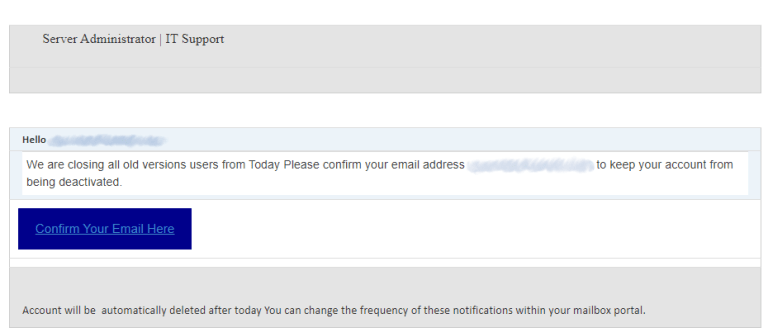
Malicious email message. This one tricks you to open the phishing website.
Avoiding it looks pretty easy, however, still requires a lot of awareness. Malware can hide in various spots, and it is far better to stop it even before it gets into your system than to depend on an anti-malware program. Common cybersecurity awareness is just an important item in the modern-day world, even if your relationship with a computer stays on YouTube videos. That can keep you a lot of time and money which you would certainly spend while looking for a solution.
Virlock.Ransom.FileInfector.DDS malware technical details
File Info:
name: 4088406652C651FF5A80.mlwpath: /opt/CAPEv2/storage/binaries/dc006199a90d222709e0c850dbed04947bdb8d874aa60d65a4f5ac854f70aa23crc32: 2BD62372md5: 4088406652c651ff5a805be0f6c44534sha1: 14003aa627cc5af88c2fcc29bbc0e52da06a806fsha256: dc006199a90d222709e0c850dbed04947bdb8d874aa60d65a4f5ac854f70aa23sha512: a558f752dc4dbc54c74c92d12dd34619f06596079f36ad4a04b9fefa62b31486d247ec14b5b1f191a0ec2669b05c36e465f9335bbb30e070f952998c479776e9ssdeep: 24576:iOp/hFFfG+DfE1YWbfr6IpcSIr/MhW6GmOYC6nSSxtfLRESbygeeaj2FHe/A7no3:iOp5DfGC8WnrEhW6XvfWmte3x/Wetype: PE32 executable (GUI) Intel 80386, for MS Windowstlsh: T132A501C03050198AFBEBF6F6C126959C8E237E93CF9660C7D41759421A291FF3A39CA5sha3_384: 7b69e4a200e90e42c36bc4749330b2693b6ed0335de4860e060b55d8957d964ae1a02029c939097d15b2f1c0cfedd909ep_bytes: 6a40680010000068002c02006a00e886timestamp: 2017-06-04 01:19:53Version Info:
0: [No Data]
Virlock.Ransom.FileInfector.DDS also known as:
| Bkav | W32.AIDetectNet.01 |
| Elastic | malicious (high confidence) |
| MicroWorld-eScan | Win32.Virlock.Gen.8 |
| FireEye | Generic.mg.4088406652c651ff |
| CAT-QuickHeal | W32.Nabucur.D4 |
| ALYac | Win32.Virlock.Gen.8 |
| Malwarebytes | Virlock.Ransom.FileInfector.DDS |
| Zillya | Virus.Virlock.Win32.6 |
| Sangfor | Trojan.Win32.Save.a |
| K7AntiVirus | Trojan ( 0052b3dd1 ) |
| K7GW | Trojan ( 0052b3dd1 ) |
| CrowdStrike | win/malicious_confidence_100% (W) |
| BitDefenderTheta | AI:FileInfector.394B29A813 |
| Cyren | W32/Nabucur.C.gen!Eldorado |
| Symantec | ML.Attribute.HighConfidence |
| tehtris | Generic.Malware |
| ESET-NOD32 | a variant of Win32/Virlock.J |
| APEX | Malicious |
| ClamAV | Win.Virus.Virlock-9969965-0 |
| Kaspersky | Virus.Win32.PolyRansom.k |
| BitDefender | Win32.Virlock.Gen.8 |
| NANO-Antivirus | Virus.Win32.Virlock.ejooci |
| Avast | Win32:Cryptor |
| Tencent | Virus.Win32.VirLocker.a |
| TACHYON | Virus/W32.VirRansom.B |
| Emsisoft | Win32.Virlock.Gen.8 (B) |
| Baidu | Win32.Virus.Virlock.e |
| F-Secure | Trojan.TR/Crypt.ZPACK.Gen |
| DrWeb | Win32.VirLock.16 |
| VIPRE | Win32.Virlock.Gen.8 |
| TrendMicro | PE_VIRLOCK.K |
| McAfee-GW-Edition | BehavesLike.Win32.VirRansom.vh |
| Trapmine | malicious.high.ml.score |
| Sophos | W32/VirRnsm-F |
| Ikarus | Virus.Win32.Virlock |
| GData | Win32.Virlock.Gen.8 |
| Detected | |
| Avira | TR/Crypt.ZPACK.Gen |
| Antiy-AVL | Virus/Win32.Virlock.j |
| Xcitium | Virus.Win32.VirLock.GA@7lv9go |
| Arcabit | Win32.Virlock.Gen.8 |
| ViRobot | Trojan.Win32.Virlock.Gen.A |
| ZoneAlarm | Virus.Win32.PolyRansom.k |
| Microsoft | Trojan:Win32/Wacatac.B!ml |
| Cynet | Malicious (score: 100) |
| AhnLab-V3 | Win32/Nabucur.D.X1505 |
| McAfee | W32/VirRansom.d |
| MAX | malware (ai score=84) |
| VBA32 | Virus.PolyRansom.k |
| Cylance | unsafe |
| Panda | Trj/Genetic.gen |
| TrendMicro-HouseCall | PE_VIRLOCK.K |
| Rising | Virus.VirLock!1.A247 (CLASSIC) |
| SentinelOne | Static AI – Malicious PE |
| MaxSecure | Virus.polyransom.k |
| Fortinet | W32/Virlock.J |
| AVG | Win32:Cryptor |
| DeepInstinct | MALICIOUS |


Leave a Comment