
Seeing the Trojan:Win32/Tnega.RR!MTB detection name means that your system is in big danger. This malware can correctly be named as ransomware – virus which encrypts your files and forces you to pay for their decryption. Deleteing it requires some specific steps that must be done as soon as possible.
Trojan:Win32/Tnega.RR!MTB detection is a malware detection you can spectate in your computer. It generally shows up after the preliminary actions on your computer – opening the untrustworthy email, clicking the advertisement in the Web or installing the program from untrustworthy resources. From the moment it shows up, you have a short time to take action before it starts its destructive action. And be sure – it is far better not to wait for these harmful actions.
What is Trojan:Win32/Tnega.RR!MTB virus?
Trojan:Win32/Tnega.RR!MTB Summary
In total, Trojan:Win32/Tnega.RR!MTB ransomware activities in the infected PC are next:
- SetUnhandledExceptionFilter detected (possible anti-debug);
- Behavioural detection: Executable code extraction – unpacking;
- Yara rule detections observed from a process memory dump/dropped files/CAPE;
- Creates RWX memory;
- Guard pages use detected – possible anti-debugging.;
- Dynamic (imported) function loading detected;
- A process created a hidden window;
- CAPE extracted potentially suspicious content;
- Drops a binary and executes it;
- The binary likely contains encrypted or compressed data.;
- Authenticode signature is invalid;
- A scripting utility was executed;
- Uses Windows utilities for basic functionality;
- Created a process from a suspicious location;
- Collects and encrypts information about the computer likely to send to C2 server;
- Creates a hidden or system file;
- CAPE detected the Echelon malware family;
- Attempts to modify Windows Defender using PowerShell;
- Ciphering the files located on the target’s disk — so the victim cannot open these files;
- Blocking the launching of .exe files of anti-virus apps
- Blocking the launching of installation files of security tools
Ransomware has actually been a headache for the last 4 years. It is hard to imagine a more harmful virus for both individuals and companies. The algorithms utilized in Trojan:Win32/Tnega.RR!MTB (typically, RHA-1028 or AES-256) are not hackable – with minor exclusions. To hack it with a brute force, you need more time than our galaxy currently exists, and possibly will exist. But that malware does not do all these bad things without delay – it may take up to several hours to cipher all of your files. Thus, seeing the Trojan:Win32/Tnega.RR!MTB detection is a clear signal that you should start the removal process.
Where did I get the Trojan:Win32/Tnega.RR!MTB?
Common methods of Trojan:Win32/Tnega.RR!MTB spreading are standard for all other ransomware variants. Those are one-day landing web pages where victims are offered to download and install the free app, so-called bait emails and hacktools. Bait emails are a pretty new tactic in malware distribution – you receive the e-mail that simulates some regular notifications about deliveries or bank service conditions modifications. Within the e-mail, there is a malicious MS Office file, or a web link which leads to the exploit landing page.
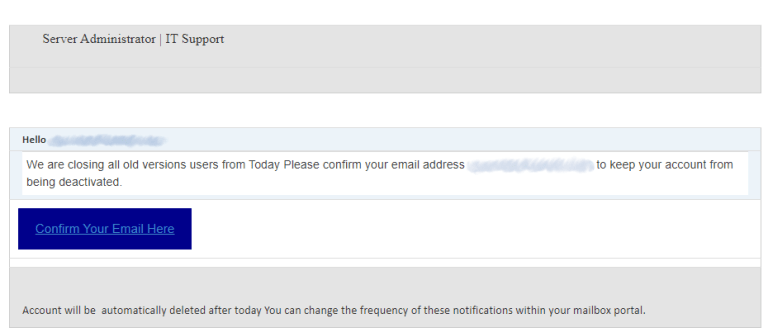
Malicious email message. This one tricks you to open the phishing website.
Avoiding it looks quite simple, however, still demands a lot of awareness. Malware can hide in different spots, and it is far better to prevent it even before it goes into your system than to rely upon an anti-malware program. Simple cybersecurity knowledge is just an essential item in the modern-day world, even if your interaction with a computer stays on YouTube videos. That can save you a great deal of money and time which you would spend while seeking a fixing guide.
Trojan:Win32/Tnega.RR!MTB malware technical details
File Info:
name: 6F217062B4880D2E97A7.mlwpath: /opt/CAPEv2/storage/binaries/43a7a3f24340cdf0ec8c938881568744222bb3fb9fa8932bf58be31c8b6663f1crc32: 9B126098md5: 6f217062b4880d2e97a7c01c53a1dabesha1: 0a2198e9b9de273082a910108e6137174a7ed98bsha256: 43a7a3f24340cdf0ec8c938881568744222bb3fb9fa8932bf58be31c8b6663f1sha512: 00925786be34217cf50607be98aa5db213b9f0d48f03f4ac99db76522df1a95fe77e22a744367d0b977e49ffa9a0bff43c9b858098438a5d72519285b55b8548ssdeep: 196608:58OgTmJsfuAK6ANaJP5Q9xFepqzqqdcAe:5vxKWS+a7QPwLtype: PE32 executable (GUI) Intel 80386, for MS Windowstlsh: T17556E0898CC4B5F8E02066F8CE9CFEC934AFD9311229BE589C934636951C0F965F276Dsha3_384: 5b4c728bf20b44d4ee01745fdabc2c1ac90d117e522edee60d115ecc7e278f8d117a23faf6759e80ffc903d7321288cdep_bytes: 5589e581ec0800000090b80400000050timestamp: 1970-01-01 00:00:00Version Info:
CompanyName: SecureObfuscatorFileTitle: FileDescription: XGhostONEFileVersion: 1,0,5,0LegalCopyright: Copyright 2022LegalTrademark: ProductName: SecureObfuscatorProductVersion: 1,0,5,0Translation: 0x0409 0x04b0
Trojan:Win32/Tnega.RR!MTB also known as:
| Bkav | W32.AIDetect.malware2 |
| Elastic | malicious (high confidence) |
| MicroWorld-eScan | Gen:Variant.FakeAlert.2 |
| FireEye | Generic.mg.6f217062b4880d2e |
| McAfee | GenericRXSM-RV!6F217062B488 |
| Cylance | Unsafe |
| Sangfor | Trojan.Win32.Save.a |
| K7AntiVirus | Trojan ( 005893401 ) |
| K7GW | Trojan ( 005893401 ) |
| Cybereason | malicious.2b4880 |
| Cyren | W32/FakeAlert.AEC.gen!Eldorado |
| ESET-NOD32 | a variant of Win32/TrojanDropper.Agent.SOV |
| APEX | Malicious |
| Kaspersky | VHO:Trojan-Ransom.Win32.Babuk.gen |
| BitDefender | Gen:Variant.FakeAlert.2 |
| Avast | Win32:Evo-gen [Susp] |
| Rising | [email protected] (RDML:DYbb73euh3E5vLppTPw1Pw) |
| Ad-Aware | Gen:Variant.FakeAlert.2 |
| Sophos | ML/PE-A |
| McAfee-GW-Edition | GenericRXSM-RV!6F217062B488 |
| Trapmine | malicious.high.ml.score |
| Emsisoft | Trojan-Dropper.Agent (A) |
| Ikarus | Trojan.Win32.Tnega |
| GData | Win32.Trojan.PSE.10E2I8C |
| Avira | HEUR/AGEN.1205338 |
| Arcabit | Trojan.FakeAlert.2 |
| Microsoft | Trojan:Win32/Tnega.RR!MTB |
| Cynet | Malicious (score: 100) |
| AhnLab-V3 | Trojan/Win.Generic.R442712 |
| Acronis | suspicious |
| VBA32 | BScope.Trojan.Nitol |
| ALYac | Gen:Variant.FakeAlert.2 |
| MAX | malware (ai score=85) |
| MaxSecure | Trojan.Malware.300983.susgen |
| Fortinet | W32/Tiny.NFR!tr |
| BitDefenderTheta | Gen:NN.ZexaE.34742.@t0@aas18vji |
| AVG | Win32:Evo-gen [Susp] |
| Panda | Trj/Genetic.gen |


Leave a Comment