
Seeing the Trojan:Win32/QQpass!pz detection usually means that your PC is in big danger. This computer virus can correctly be identified as ransomware – type of malware which ciphers your files and forces you to pay for their decryption. Removing it requires some specific steps that must be done as soon as possible.
Trojan:Win32/QQpass!pz detection is a malware detection you can spectate in your computer. It usually shows up after the provoking procedures on your PC – opening the untrustworthy email messages, clicking the advertisement in the Internet or installing the program from dubious sources. From the moment it appears, you have a short time to act until it begins its destructive action. And be sure – it is much better not to await these harmful effects.
What is Trojan:Win32/QQpass!pz virus?
Trojan:Win32/QQpass!pz Summary
In total, Trojan:Win32/QQpass!pz malware activities in the infected system are next:
- Sample contains Overlay data;
- Reads data out of its own binary image;
- Drops a binary and executes it;
- The binary contains an unknown PE section name indicative of packing;
- Authenticode signature is invalid;
- Yara rule detections observed from a process memory dump/dropped files/CAPE;
- Ciphering the files located on the target’s disk drives — so the victim cannot open these documents;
- Blocking the launching of .exe files of anti-malware apps
- Blocking the launching of installation files of anti-malware programs
Ransomware has actually been a headache for the last 4 years. It is hard to picture a more damaging virus for both individual users and organizations. The algorithms utilized in Trojan:Win32/QQpass!pz (typically, RHA-1028 or AES-256) are not hackable – with minor exclusions. To hack it with a brute force, you need a lot more time than our galaxy currently exists, and possibly will exist. But that virus does not do all these horrible things instantly – it can take up to a few hours to cipher all of your documents. Hence, seeing the Trojan:Win32/QQpass!pz detection is a clear signal that you must begin the elimination process.
Where did I get the Trojan:Win32/QQpass!pz?
Routine tactics of Trojan:Win32/QQpass!pz distribution are common for all other ransomware variants. Those are one-day landing websites where users are offered to download the free app, so-called bait e-mails and hacktools. Bait e-mails are a relatively new strategy in malware distribution – you receive the e-mail that simulates some normal notifications about shippings or bank service conditions modifications. Inside of the e-mail, there is an infected MS Office file, or a link which leads to the exploit landing site.
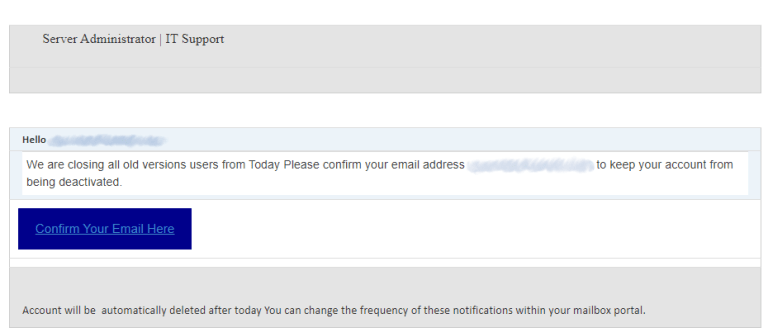
Malicious email message. This one tricks you to open the phishing website.
Avoiding it looks quite easy, but still requires a lot of recognition. Malware can hide in different spots, and it is far better to prevent it even before it gets into your computer than to rely on an anti-malware program. Essential cybersecurity knowledge is just an essential item in the modern world, even if your interaction with a computer stays on YouTube videos. That may save you a great deal of time and money which you would certainly spend while seeking a fix guide.
Trojan:Win32/QQpass!pz malware technical details
File Info:
name: B37DADEC902ED5CE4A2F.mlwpath: /opt/CAPEv2/storage/binaries/2873bf5e38ab6a2d4e9acd98948ad37d5c1607fc1359e0b2b66298647a8e27a8crc32: 92A0CCE4md5: b37dadec902ed5ce4a2fce914d139568sha1: 98bf41f092b4771a93dd52d92780fe7bf2a9633csha256: 2873bf5e38ab6a2d4e9acd98948ad37d5c1607fc1359e0b2b66298647a8e27a8sha512: 4d648395aec61c29687bef1b0e6f066df3ffa399febf3428a8f9a7b5e5db4da0c38f12b7abc3e5ee379159f25f9a8b5c731b602969fa7145d214951b17496da8ssdeep: 3072:GCaoAs101Pol0xPTM7mRCAdJSSxPUkl3VDFNdQMQTCk/dN92sdNhavtrVdewnAxn:GqDAwl0xPTMiR9JSSxPUKTGdodHGtype: PE32 executable (GUI) Intel 80386, for MS Windowstlsh: T15AD407133222CC51F2D0D7B6A2A58775FA709B4528F2C903FAACBD167F706534E6E50Asha3_384: aaa1ae4dc16df4ba01c81ed8f64fdbbbd46a110917224df00efe08927f6edbf02077025734fb832f5df1b8b3c9b62074ep_bytes: e85bc20300e8b0a9030033c0c3909090timestamp: 2015-01-28 13:36:24Version Info:
0: [No Data]
Trojan:Win32/QQpass!pz also known as:
| Bkav | W32.AIDetectMalware |
| tehtris | Generic.Malware |
| MicroWorld-eScan | DeepScan:Generic.Dacic.ADB499D7.A.932AF5DB |
| ClamAV | Win.Malware.Dqqw-9951425-0 |
| FireEye | Generic.mg.b37dadec902ed5ce |
| CAT-QuickHeal | Trojan.Mauvaise.SL1 |
| McAfee | GenericRXES-IH!B37DADEC902E |
| Cylance | unsafe |
| Zillya | Trojan.QQPass.Win32.24502 |
| Sangfor | Suspicious.Win32.Save.a |
| K7AntiVirus | Password-Stealer ( 004b75691 ) |
| K7GW | Password-Stealer ( 004b75691 ) |
| Cybereason | malicious.092b47 |
| BitDefenderTheta | Gen:NN.ZexaF.36722.KiY@aOLIbkp |
| VirIT | Trojan.Win32.Generic.ATOF |
| Cyren | W32/QQPass.AS.gen!Eldorado |
| Symantec | SMG.Heur!gen |
| Elastic | malicious (high confidence) |
| ESET-NOD32 | a variant of Win32/PSW.QQPass.OWD |
| APEX | Malicious |
| Cynet | Malicious (score: 100) |
| Kaspersky | Trojan.Win32.Scar.oetk |
| BitDefender | DeepScan:Generic.Dacic.ADB499D7.A.932AF5DB |
| NANO-Antivirus | Trojan.Win32.DangerousObject.dnizrq |
| Avast | Win32:QQPass-WK [Trj] |
| Tencent | Trojan.Win32.Sdum.ki |
| Emsisoft | DeepScan:Generic.Dacic.ADB499D7.A.932AF5DB (B) |
| Baidu | Win32.Trojan-PSW.QQPass.af |
| F-Secure | Malware.W32/Polip.A |
| DrWeb | Trojan.DownLoader12.31656 |
| VIPRE | DeepScan:Generic.Dacic.ADB499D7.A.932AF5DB |
| TrendMicro | TROJ_SCAR_GA250340.UVPA |
| McAfee-GW-Edition | BehavesLike.Win32.Generic.hh |
| Trapmine | malicious.high.ml.score |
| Sophos | Troj/Agent-BCIH |
| Ikarus | Trojan.Vundo |
| GData | Win32.Trojan.PSE.19GZR9J |
| Jiangmin | Trojan/Generic.bbckw |
| Webroot | W32.Trojan.Gen |
| Avira | W32/Polip.A |
| MAX | malware (ai score=85) |
| Antiy-AVL | Trojan/Win32.AGeneric |
| Xcitium | TrojWare.Win32.PWS.QQPass.AZF@5jtl8l |
| Arcabit | DeepScan:Generic.Dacic.ADB499D7.A.932AF5DB |
| ZoneAlarm | Trojan.Win32.Scar.oetk |
| Microsoft | Trojan:Win32/QQpass!pz |
| Detected | |
| AhnLab-V3 | Malware/Win.Generic.R418795 |
| Acronis | suspicious |
| VBA32 | Trojan.Scar |
| ALYac | DeepScan:Generic.Dacic.ADB499D7.A.932AF5DB |
| Malwarebytes | Generic.Malware.AI.DDS |
| Panda | Trj/Genetic.gen |
| TrendMicro-HouseCall | TROJ_SCAR_GA250340.UVPA |
| Rising | Stealer.QQPass!1.A658 (CLASSIC) |
| Yandex | Trojan.GenAsa!5k90ukTn350 |
| SentinelOne | Static AI – Malicious PE |
| MaxSecure | Trojan.Malware.300983.susgen |
| Fortinet | W32/QQPass.WK!tr |
| AVG | Win32:QQPass-WK [Trj] |
| DeepInstinct | MALICIOUS |
| CrowdStrike | win/malicious_confidence_100% (D) |


Leave a Comment