
Spectating the Trojan:Win32/PWSZbot.GSB!MTB malware detection means that your computer is in big danger. This computer virus can correctly be identified as ransomware – type of malware which ciphers your files and asks you to pay for their decryption. Stopping it requires some unusual steps that must be done as soon as possible.
Trojan:Win32/PWSZbot.GSB!MTB detection is a virus detection you can spectate in your system. It usually appears after the provoking activities on your computer – opening the untrustworthy email, clicking the banner in the Web or installing the program from untrustworthy sources. From the instance it appears, you have a short time to act until it begins its harmful action. And be sure – it is far better not to wait for these destructive things.
What is Trojan:Win32/PWSZbot.GSB!MTB virus?
Trojan:Win32/PWSZbot.GSB!MTB Summary
In summary, Trojan:Win32/PWSZbot.GSB!MTB malware actions in the infected computer are next:
- Yara rule detections observed from a process memory dump/dropped files/CAPE;
- Creates RWX memory;
- Possible date expiration check, exits too soon after checking local time;
- Anomalous file deletion behavior detected (10+);
- Dynamic (imported) function loading detected;
- Reads data out of its own binary image;
- A process created a hidden window;
- Drops a binary and executes it;
- Unconventionial language used in binary resources: Arabic (Libya);
- The binary contains an unknown PE section name indicative of packing;
- Executable file is packed/obfuscated with MPRESS;
- Authenticode signature is invalid;
- Created a process from a suspicious location;
- Anomalous binary characteristics;
- Ciphering the files kept on the victim’s disk — so the victim cannot use these documents;
- Blocking the launching of .exe files of anti-virus apps
- Blocking the launching of installation files of anti-virus programs
Ransomware has actually been a headache for the last 4 years. It is challenging to realize a more harmful malware for both individuals and businesses. The algorithms used in Trojan:Win32/PWSZbot.GSB!MTB (generally, RHA-1028 or AES-256) are not hackable – with minor exclusions. To hack it with a brute force, you need to have a lot more time than our galaxy already exists, and possibly will exist. However, that malware does not do all these terrible things instantly – it can take up to several hours to cipher all of your files. Therefore, seeing the Trojan:Win32/PWSZbot.GSB!MTB detection is a clear signal that you must begin the elimination process.
Where did I get the Trojan:Win32/PWSZbot.GSB!MTB?
Usual methods of Trojan:Win32/PWSZbot.GSB!MTB distribution are basic for all other ransomware variants. Those are one-day landing sites where users are offered to download the free app, so-called bait e-mails and hacktools. Bait emails are a relatively new strategy in malware distribution – you receive the e-mail that mimics some standard notifications about shipments or bank service conditions shifts. Within the e-mail, there is a malicious MS Office file, or a web link which opens the exploit landing site.
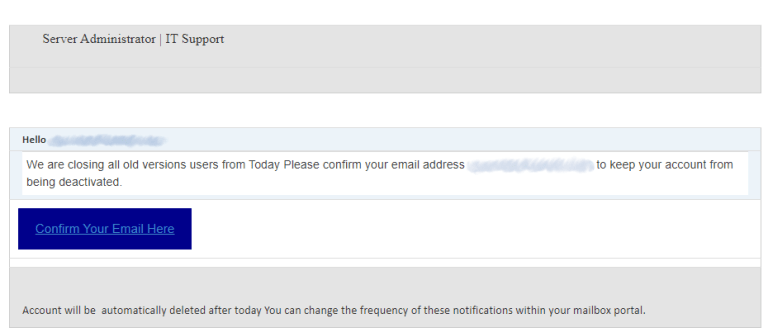
Malicious email message. This one tricks you to open the phishing website.
Avoiding it looks pretty easy, however, still needs a lot of attention. Malware can hide in different spots, and it is much better to prevent it even before it invades your PC than to depend on an anti-malware program. Standard cybersecurity knowledge is just an essential item in the modern world, even if your relationship with a computer remains on YouTube videos. That can keep you a great deal of time and money which you would spend while searching for a fix guide.
Trojan:Win32/PWSZbot.GSB!MTB malware technical details
File Info:
name: E33DEC975185C99D3391.mlwpath: /opt/CAPEv2/storage/binaries/4d171b387a796f638bf3714be7993c5673e55eef45109a0ce5a6cf6014f3c1b1crc32: 4BE56B2Dmd5: e33dec975185c99d3391dc1b29955b5dsha1: 35e8857a37d21b0a0dc65559823c37249ecab9ecsha256: 4d171b387a796f638bf3714be7993c5673e55eef45109a0ce5a6cf6014f3c1b1sha512: badbc2329f291b82419061580aa2f2bb6464c67a58b4d4103e1e616cd33ef69a15054bb37396a67ebd7b42910b5a8b801668409411d0da41fe24062e218a5c48ssdeep: 192:FlF5m//mmV0VNUhlT/RT0ygGkYp2Npar8wfmt/aL0Pn7SzCcZFrQQ8o1WQk9B:FlF5u+XVNu9/efXYp2N68wfmt5+CIipbtype: PE32 executable (GUI) Intel 80386, for MS Windowstlsh: T11CF28736D7DD44B4F37B8A3E95B74289882BBD303B01A9DEA18D715105337C6C9B069Esha3_384: 2f658b516b783e4f1bcbf7402cf3af23bce1a8db304e7dda6d6ff72af621adaf071301e7314b1f476ff06615b1d3305eep_bytes: 57565351e87ef4ffffc3cccccccccccctimestamp: 1973-03-03 10:25:35Version Info:
CompanyName: JineJongFileDescription: JineJong companyFileVersion: Version 2.5.23InternalName: JineJongLegalCopyright: Copyright by JineJongOriginalFilename: JineJongTranslation: 0x040b 0x04e2
Trojan:Win32/PWSZbot.GSB!MTB also known as:
| Bkav | W32.AIDetect.malware1 |
| Elastic | malicious (high confidence) |
| MicroWorld-eScan | Trojan.Ppatre.Gen.1 |
| FireEye | Generic.mg.e33dec975185c99d |
| CAT-QuickHeal | Ransom.Crowti.ZZ6 |
| ALYac | Trojan.Ppatre.Gen.1 |
| Cylance | Unsafe |
| Zillya | Downloader.Upatre.Win32.66076 |
| Sangfor | Suspicious.Win32.Save.a |
| K7AntiVirus | Trojan ( 0052964f1 ) |
| K7GW | Trojan ( 0052964f1 ) |
| CrowdStrike | win/malicious_confidence_100% (D) |
| Baidu | Win32.Trojan-Downloader.Waski.a |
| Cyren | W32/Upatre.GR.gen!Eldorado |
| ESET-NOD32 | Win32/TrojanDownloader.Waski.A |
| APEX | Malicious |
| Cynet | Malicious (score: 100) |
| Kaspersky | Trojan-Downloader.Win32.Upatre.bla |
| BitDefender | Trojan.Ppatre.Gen.1 |
| NANO-Antivirus | Trojan.Win32.Upatre.dfecyf |
| Avast | Win32:Agent-AULS [Trj] |
| Tencent | Malware.Win32.Gencirc.10b0c5b0 |
| Ad-Aware | Trojan.Ppatre.Gen.1 |
| Sophos | ML/PE-A + Troj/HkMain-AZ |
| Comodo | TrojWare.Win32.TrojanDownloader.Upatre.AAL@5iclp5 |
| DrWeb | Trojan.DownLoad3.34292 |
| VIPRE | Trojan-Downloader.Win32.Cutwail.bza (v) |
| TrendMicro | TROJ_UPATRE.SM37 |
| McAfee-GW-Edition | BehavesLike.Win32.Generic.nt |
| Emsisoft | Trojan.Ppatre.Gen.1 (B) |
| Ikarus | Trojan.Win32.Bublik |
| GData | Win32.Trojan-Downloader.Upatre.BK |
| Jiangmin | TrojanDownloader.Upatre.p |
| Avira | HEUR/AGEN.1135285 |
| Antiy-AVL | Trojan[Downloader]/Win32.Upatre |
| Arcabit | Trojan.Ppatre.Gen.1 |
| SUPERAntiSpyware | Trojan.Agent/Gen-Downloader |
| Microsoft | Trojan:Win32/PWSZbot.GSB!MTB |
| AhnLab-V3 | Downloader/Win32.Upatre.C2673332 |
| Acronis | suspicious |
| McAfee | Upatre-FAEL!E33DEC975185 |
| MAX | malware (ai score=87) |
| VBA32 | Trojan.Download |
| Malwarebytes | Malware.AI.350260953 |
| TrendMicro-HouseCall | TROJ_UPATRE.SM37 |
| Rising | Downloader.Waski!8.184 (TFE:dGZlOgIHHEf+jZx7dg) |
| Yandex | Trojan.GenAsa!+rIQ7cDoUXQ |
| SentinelOne | Static AI – Malicious PE |
| MaxSecure | Trojan.Upatre.Gen |
| Fortinet | W32/Waski.A!tr |
| BitDefenderTheta | Gen:NN.ZexaF.34114.cq1@a8Vb8fmG |
| AVG | Win32:Agent-AULS [Trj] |
| Cybereason | malicious.75185c |
| Panda | Trj/Genetic.gen |


Leave a Comment