
Seeing the Trojan:Win32/Occamy.C86 malware detection usually means that your computer is in big danger. This computer virus can correctly be identified as ransomware – virus which encrypts your files and forces you to pay for their decryption. Stopping it requires some specific steps that must be done as soon as possible.
Trojan:Win32/Occamy.C86 detection is a malware detection you can spectate in your system. It generally shows up after the preliminary activities on your computer – opening the suspicious e-mail, clicking the banner in the Internet or mounting the program from unreliable sources. From the instance it appears, you have a short time to act until it begins its malicious activity. And be sure – it is better not to await these harmful effects.
What is Trojan:Win32/Occamy.C86 virus?
Trojan:Win32/Occamy.C86 Summary
In summary, Trojan:Win32/Occamy.C86 malware actions in the infected system are next:
- At least one process apparently crashed during execution;
- The binary likely contains encrypted or compressed data.;
- Authenticode signature is invalid;
- Encrypting the files kept on the victim’s disk drives — so the victim cannot check these files;
- Blocking the launching of .exe files of anti-malware apps
- Blocking the launching of installation files of anti-virus apps
Ransomware has actually been a major problem for the last 4 years. It is hard to realize a more hazardous malware for both individual users and organizations. The algorithms utilized in Trojan:Win32/Occamy.C86 (usually, RHA-1028 or AES-256) are not hackable – with minor exclusions. To hack it with a brute force, you need to have more time than our galaxy already exists, and possibly will exist. But that malware does not do all these bad things immediately – it may take up to several hours to cipher all of your documents. Therefore, seeing the Trojan:Win32/Occamy.C86 detection is a clear signal that you should start the clearing procedure.
Where did I get the Trojan:Win32/Occamy.C86?
General ways of Trojan:Win32/Occamy.C86 spreading are basic for all other ransomware examples. Those are one-day landing sites where users are offered to download the free program, so-called bait emails and hacktools. Bait e-mails are a pretty modern strategy in malware distribution – you get the e-mail that simulates some normal notifications about shippings or bank service conditions modifications. Within the e-mail, there is a malicious MS Office file, or a web link which leads to the exploit landing site.
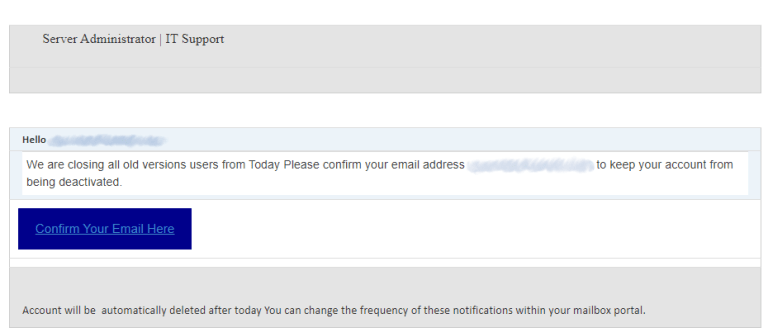
Malicious email message. This one tricks you to open the phishing website.
Preventing it looks pretty uncomplicated, however, still needs a lot of awareness. Malware can hide in various spots, and it is better to stop it even before it gets into your computer than to depend on an anti-malware program. Essential cybersecurity awareness is just an essential thing in the modern world, even if your relationship with a computer remains on YouTube videos. That may save you a lot of time and money which you would spend while seeking a solution.
Trojan:Win32/Occamy.C86 malware technical details
File Info:
name: 41DF36CF6F11D3D707E5.mlwpath: /opt/CAPEv2/storage/binaries/8683a187f0ae2cd879b9fd92e2b0233552975386bda566efe34002b7f306dc3fcrc32: FBDDBF35md5: 41df36cf6f11d3d707e5334ed7a3671csha1: c1120f387417fdb55c60b7b118f86733bd22112bsha256: 8683a187f0ae2cd879b9fd92e2b0233552975386bda566efe34002b7f306dc3fsha512: 7230828081b21ee0a7fd0a455ee6637f92b8a2ce51d3f32faf906b1672afe4f28b883d6200437ac29856ab9589726c29d1d47b7b1991393c7b316fdb9ddf251essdeep: 6144:lOzh/tkDiyKylUUmiiuISXBF5zoqyK1h7V9w3eLImJsaZBWdsEwqASIOga9Z:w/tytmPujBFWqXp9Me5JxZBXELIBa9type: PE32 executable (GUI) Intel 80386, for MS Windowstlsh: T194A4E18CEBCFCDB6CD3AB4FAA61D85F48E078244DC1E8D46596D2AC426A50904B5DC4Fsha3_384: 5b4de7dd83871a8607f3db93fa5ef83afd995aadd2af80575048802c27c867872d3138efcde033f1bbbdb9ac0f244aa4ep_bytes: e8867207003decfeffff0f856a000000timestamp: 2015-01-06 00:36:08Version Info:
0: [No Data]
Trojan:Win32/Occamy.C86 also known as:
| Bkav | W32.AIDetect.malware1 |
| Lionic | Virus.Win32.PolyRansom.mfPW |
| Elastic | malicious (high confidence) |
| DrWeb | Trojan.Packed2.42446 |
| MicroWorld-eScan | Win32.Virlock.Gen.1 |
| McAfee | W32/VirRansom.b!41DF36CF6F11 |
| Cylance | Unsafe |
| Zillya | Virus.Virlock.Win32.1 |
| Sangfor | Suspicious.Win32.Save.a |
| K7AntiVirus | Virus ( 005662d71 ) |
| Alibaba | Malware:Win32/km_286d688.None |
| K7GW | Virus ( 005662d71 ) |
| Cybereason | malicious.f6f11d |
| BitDefenderTheta | AI:FileInfector.4097910C13 |
| VirIT | Win32.PolyRansom.B |
| Cyren | W32/Virlock.N.gen!Eldorado |
| Symantec | W32.Virlock!gen4 |
| ESET-NOD32 | a variant of Generik.CQIFFOA |
| APEX | Malicious |
| Paloalto | generic.ml |
| ClamAV | Win.Virus.Virlock-6804475-0 |
| Kaspersky | Virus.Win32.PolyRansom.b |
| BitDefender | Win32.Virlock.Gen.1 |
| NANO-Antivirus | Trojan.Win32.VirLock.dtitwg |
| SUPERAntiSpyware | Ransom.Virlock/Variant |
| Avast | Win32:VirLock-B [Trj] |
| Tencent | Win32.Virus.Polyransom.Pdcx |
| Ad-Aware | Win32.Virlock.Gen.1 |
| TACHYON | Virus/W32.VirRansom |
| Sophos | ML/PE-A + W32/VirRnsm-C |
| Comodo | TrojWare.Win32.Virlock.XU@5xaovq |
| VIPRE | Virus.Win32.Nabucur.b (v) |
| TrendMicro | PE_VIRLOCK.B-O |
| McAfee-GW-Edition | BehavesLike.Win32.VirRansom.gc |
| FireEye | Generic.mg.41df36cf6f11d3d7 |
| Emsisoft | Win32.Virlock.Gen.1 (B) |
| SentinelOne | Static AI – Malicious PE |
| GData | Win32.Virlock.Gen.1 |
| Jiangmin | Win32/Polyransom.b |
| eGambit | Unsafe.AI_Score_99% |
| Avira | TR/Crypt.XPACK.Gen |
| Antiy-AVL | Trojan/Generic.ASBOL.C581 |
| Arcabit | Win32.Virlock.Gen.1 |
| Microsoft | Trojan:Win32/Occamy.C86 |
| Cynet | Malicious (score: 100) |
| AhnLab-V3 | Win32/Nabucur.C.X1543 |
| Acronis | suspicious |
| VBA32 | BScope.Virus.Virlock |
| ALYac | Win32.Virlock.Gen.1 |
| MAX | malware (ai score=86) |
| Malwarebytes | Trojan.VirLock |
| TrendMicro-HouseCall | PE_VIRLOCK.B-O |
| Rising | Virus.VirLock!1.A08A (CLOUD) |
| Ikarus | Virus.Win32.Virlock |
| MaxSecure | Virus.PolyRansom.b |
| Fortinet | W32/Virlock.D |
| AVG | Win32:VirLock-B [Trj] |
| Panda | Generic Suspicious |
| CrowdStrike | win/malicious_confidence_100% (D) |


Leave a Comment