
Seeing the Trojan:Win32/Kryptik!MSR detection name means that your system is in big danger. This virus can correctly be named as ransomware – type of malware which ciphers your files and asks you to pay for their decryption. Deleteing it requires some specific steps that must be done as soon as possible.
Trojan:Win32/Kryptik!MSR detection is a virus detection you can spectate in your system. It often shows up after the provoking procedures on your PC – opening the dubious e-mail messages, clicking the advertisement in the Internet or mounting the program from suspicious sources. From the second it appears, you have a short time to take action until it starts its harmful action. And be sure – it is far better not to await these destructive actions.
What is Trojan:Win32/Kryptik!MSR virus?
Trojan:Win32/Kryptik!MSR Summary
In total, Trojan:Win32/Kryptik!MSR virus activities in the infected computer are next:
- SetUnhandledExceptionFilter detected (possible anti-debug);
- Behavioural detection: Executable code extraction – unpacking;
- Yara rule detections observed from a process memory dump/dropped files/CAPE;
- Creates RWX memory;
- Guard pages use detected – possible anti-debugging.;
- A process attempted to delay the analysis task.;
- Attempts to connect to a dead IP:Port (255 unique times);
- Dynamic (imported) function loading detected;
- Enumerates running processes;
- CAPE extracted potentially suspicious content;
- The binary likely contains encrypted or compressed data.;
- Creates an autorun.inf file;
- Authenticode signature is invalid;
- Collects and encrypts information about the computer likely to send to C2 server;
- Performs a large number of encryption calls using the same key possibly indicative of ransomware file encryption behavior;
- Writes a potential ransom message to disk;
- CAPE detected the Conti malware family;
- Detects Bochs through the presence of a registry key;
- Checks the version of Bios, possibly for anti-virtualization;
- Attempted to write directly to a physical drive;
- Collects information to fingerprint the system;
- Ciphering the files located on the victim’s drives — so the victim cannot check these documents;
- Blocking the launching of .exe files of anti-malware apps
- Blocking the launching of installation files of security tools
Ransomware has actually been a headache for the last 4 years. It is challenging to imagine a more dangerous virus for both individuals and organizations. The algorithms utilized in Trojan:Win32/Kryptik!MSR (usually, RHA-1028 or AES-256) are not hackable – with minor exclusions. To hack it with a brute force, you need a lot more time than our galaxy already exists, and possibly will exist. But that virus does not do all these horrible things instantly – it can require up to several hours to cipher all of your files. Thus, seeing the Trojan:Win32/Kryptik!MSR detection is a clear signal that you should start the removal procedure.
Where did I get the Trojan:Win32/Kryptik!MSR?
Usual tactics of Trojan:Win32/Kryptik!MSR spreading are standard for all other ransomware variants. Those are one-day landing sites where victims are offered to download and install the free program, so-called bait emails and hacktools. Bait emails are a pretty modern strategy in malware distribution – you get the email that imitates some routine notifications about deliveries or bank service conditions changes. Inside of the email, there is an infected MS Office file, or a link which opens the exploit landing site.
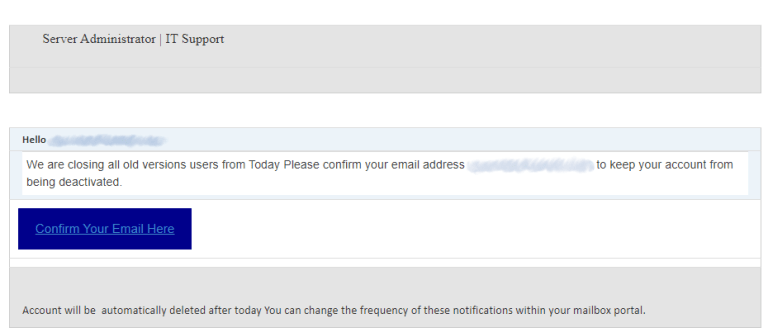
Malicious email message. This one tricks you to open the phishing website.
Avoiding it looks quite simple, however, still requires a lot of focus. Malware can hide in different places, and it is better to stop it even before it gets into your PC than to rely upon an anti-malware program. Common cybersecurity knowledge is just an important thing in the modern world, even if your interaction with a PC remains on YouTube videos. That can save you a great deal of time and money which you would spend while looking for a fix guide.
Trojan:Win32/Kryptik!MSR malware technical details
File Info:
name: F365F7F6C852C1AC172A.mlwpath: /opt/CAPEv2/storage/binaries/41896f40197a6160fcab046b5fc63a36d0805dbb1ca5a03af35b92b27d9a0eb5crc32: 2E42DA9Bmd5: f365f7f6c852c1ac172a331d75e8cad5sha1: 683100cbbdf110828e0ee5e4acf20fc17f596c7asha256: 41896f40197a6160fcab046b5fc63a36d0805dbb1ca5a03af35b92b27d9a0eb5sha512: 054f22c4fbb377a08bc1c64d441d6b09d3f6451b6b1b2073e77da54fd05075a61dd650525e395d74491856602188ebaf0c19e157ad2153494bcdb2e2e35fc4b8ssdeep: 6144:8y4IzfDPuh+i2G1EVxJelMWEWEWfiN+DDo0fRjy1KGTKc4dPdEkBC92hOZg+7H:Lf6h+i2hxcKNtpGDFfxy1rK7dW2Cf7Htype: PE32 executable (GUI) Intel 80386, for MS Windowstlsh: T16F74E01135C2D4F3D4B2653238D2BB835A2AF4641B749EFB77E902AD0BF91604C876A7sha3_384: 2e9ea60523c8d5c3b1867b070fc2bfe3d9d782941146ddebddec3d7471aa2628f79e101836fe938df590c5a46bbec4b1ep_bytes: e8a3020000e97afeffff558bec8b4508timestamp: 2021-11-09 17:21:46Version Info:
0: [No Data]
Trojan:Win32/Kryptik!MSR also known as:
| Bkav | W32.AIDetect.malware2 |
| Lionic | Trojan.Win32.Generic.4!c |
| Elastic | malicious (high confidence) |
| Cynet | Malicious (score: 100) |
| ALYac | Trojan.Ransom.Conti |
| Cylance | Unsafe |
| Zillya | Trojan.Kryptik.Win32.3641400 |
| Sangfor | Trojan.Win32.Save.a |
| K7AntiVirus | Trojan ( 0058b1d81 ) |
| Alibaba | Ransom:Win32/generic.ali2000010 |
| K7GW | Trojan ( 0058b1d81 ) |
| CrowdStrike | win/malicious_confidence_90% (W) |
| Symantec | ML.Attribute.HighConfidence |
| ESET-NOD32 | a variant of Win32/Kryptik.HNNZ |
| APEX | Malicious |
| Paloalto | generic.ml |
| BitDefender | Trojan.GenericKD.38142012 |
| MicroWorld-eScan | Trojan.GenericKD.38142012 |
| Avast | Win32:RansomX-gen [Ransom] |
| Ad-Aware | Trojan.GenericKD.38142012 |
| Emsisoft | Trojan.GenericKD.38142012 (B) |
| DrWeb | Trojan.Encoder.34408 |
| TrendMicro | Ransom.Win32.CONTI.YXBK4Z |
| McAfee-GW-Edition | BehavesLike.Win32.Backdoor.fc |
| FireEye | Generic.mg.f365f7f6c852c1ac |
| Sophos | Mal/Generic-S |
| Ikarus | Trojan.Win32.Crypt |
| GData | Trojan.GenericKD.38142012 |
| Jiangmin | Packed.Krap.gtwj |
| Avira | TR/Crypt.Agent.lwqrs |
| Antiy-AVL | Trojan/Generic.ASMalwS.34E50F9 |
| Arcabit | Trojan.Generic.D246003C |
| Microsoft | Trojan:Win32/Kryptik!MSR |
| AhnLab-V3 | Trojan/Win.EmotetCrypt.R454494 |
| McAfee | Artemis!F365F7F6C852 |
| MAX | malware (ai score=83) |
| VBA32 | Trojan.Encoder |
| Malwarebytes | Trojan.Crypt |
| TrendMicro-HouseCall | Ransom.Win32.CONTI.YXBK4Z |
| Rising | [email protected] (RDML:ZNVVOCsynXowW+IzQYJCPg) |
| Yandex | Trojan.Kryptik!pVP4EkZIl1Y |
| SentinelOne | Static AI – Suspicious PE |
| eGambit | Unsafe.AI_Score_99% |
| Fortinet | W32/Kryptik.HNGZ!tr.ransom |
| BitDefenderTheta | Gen:NN.ZexaF.34084.uuW@aueiQxoi |
| AVG | Win32:RansomX-gen [Ransom] |
| Panda | Trj/CI.A |
| MaxSecure | Trojan.Malware.300983.susgen |


Leave a Comment