
Seeing the Trojan:Win32/Glupteba.NI!MTB malware detection usually means that your computer is in big danger. This computer virus can correctly be named as ransomware – virus which ciphers your files and asks you to pay for their decryption. Deleteing it requires some peculiar steps that must be taken as soon as possible.
Trojan:Win32/Glupteba.NI!MTB detection is a virus detection you can spectate in your system. It frequently appears after the preliminary procedures on your PC – opening the dubious email messages, clicking the banner in the Internet or mounting the program from suspicious sources. From the second it appears, you have a short time to act before it starts its destructive action. And be sure – it is far better not to wait for these harmful effects.
What is Trojan:Win32/Glupteba.NI!MTB virus?
Trojan:Win32/Glupteba.NI!MTB Summary
Summarizingly, Trojan:Win32/Glupteba.NI!MTB ransomware activities in the infected system are next:
- Behavioural detection: Executable code extraction – unpacking;
- Yara rule detections observed from a process memory dump/dropped files/CAPE;
- CAPE extracted potentially suspicious content;
- Unconventionial language used in binary resources: Maori;
- The binary likely contains encrypted or compressed data.;
- Authenticode signature is invalid;
- CAPE detected the OnlyLogger malware family;
- Ciphering the documents located on the target’s drive — so the victim cannot check these files;
- Blocking the launching of .exe files of anti-malware apps
- Blocking the launching of installation files of security tools
Ransomware has been a headache for the last 4 years. It is difficult to imagine a more damaging malware for both individual users and companies. The algorithms utilized in Trojan:Win32/Glupteba.NI!MTB (typically, RHA-1028 or AES-256) are not hackable – with minor exclusions. To hack it with a brute force, you need to have a lot more time than our galaxy already exists, and possibly will exist. However, that malware does not do all these bad things without delay – it can take up to a few hours to cipher all of your documents. Thus, seeing the Trojan:Win32/Glupteba.NI!MTB detection is a clear signal that you have to start the removal process.
Where did I get the Trojan:Win32/Glupteba.NI!MTB?
Standard ways of Trojan:Win32/Glupteba.NI!MTB spreading are standard for all other ransomware examples. Those are one-day landing sites where users are offered to download the free program, so-called bait emails and hacktools. Bait emails are a pretty new tactic in malware spreading – you receive the e-mail that imitates some routine notifications about deliveries or bank service conditions changes. Inside of the email, there is a corrupted MS Office file, or a link which leads to the exploit landing page.
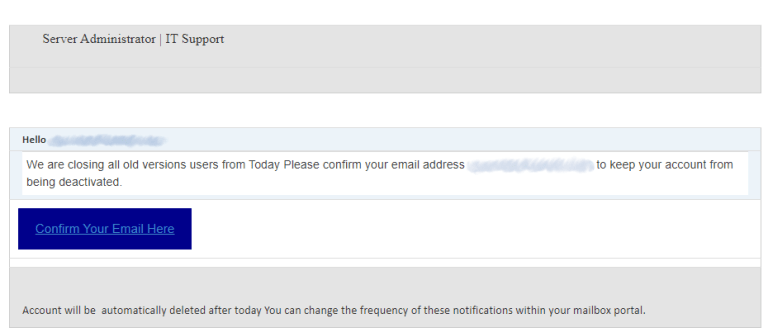
Malicious email message. This one tricks you to open the phishing website.
Avoiding it looks fairly uncomplicated, however, still needs a lot of awareness. Malware can hide in different spots, and it is far better to stop it even before it invades your PC than to trust in an anti-malware program. General cybersecurity knowledge is just an important item in the modern world, even if your interaction with a computer stays on YouTube videos. That can save you a great deal of money and time which you would spend while looking for a fix guide.
Trojan:Win32/Glupteba.NI!MTB malware technical details
File Info:
name: B565FB258AC8FA211BD7.mlwpath: /opt/CAPEv2/storage/binaries/c953ed32436dc31ced724183a740de92efc61d755216f1e5e3e85cf3758c720ecrc32: 95BF8D1Emd5: b565fb258ac8fa211bd77ef54659efacsha1: 2af7ad047f5e07b6c438ef9be5d1b7f9e2c8d6d6sha256: c953ed32436dc31ced724183a740de92efc61d755216f1e5e3e85cf3758c720esha512: 4db1c1c19e305dfad2fdd12b72891d19687d96dde5a549d3047b624103527061d17693fa5dd991ece53f9da2c74619b6343167ba70874597b2e2cafe4537eb4essdeep: 6144:ohoYyq2l3psUIzcObB9P/wK8mcM2A+HGy:LYJyyk0BZ/w9MWmtype: PE32 executable (GUI) Intel 80386, for MS Windowstlsh: T1D324E0223AA2C873C51725357CB4EB54977FB6712672D64373A82B3E6F702E0563234Asha3_384: ddf43528d3ae21b5441e24425e9069971907c9a9dfdf1a8f8f3a2944f17f94e7cca104a8e5a7c4e28a53681831c27aafep_bytes: e8845c0000e978feffff8bff558bec51timestamp: 2019-10-17 05:20:25Version Info:
FileV: 1.0.2.27ProductVer: 1.5.8.29Translations: 0x0126 0x01ae
Trojan:Win32/Glupteba.NI!MTB also known as:
| Bkav | W32.AIDetect.malware2 |
| tehtris | Generic.Malware |
| MicroWorld-eScan | Gen:Heur.Scai.S.1 |
| ClamAV | Win.Packed.Tofsee-9806903-0 |
| FireEye | Generic.mg.b565fb258ac8fa21 |
| CAT-QuickHeal | Ransom.Stop.P5 |
| ALYac | Gen:Heur.Scai.S.1 |
| Cylance | Unsafe |
| VIPRE | Gen:Heur.Scai.S.1 |
| Sangfor | Trojan.Win32.Save.a |
| K7AntiVirus | Trojan ( 005749861 ) |
| K7GW | Trojan ( 005749861 ) |
| Cybereason | malicious.58ac8f |
| Symantec | ML.Attribute.HighConfidence |
| Elastic | malicious (high confidence) |
| ESET-NOD32 | a variant of Win32/Kryptik.HIDY |
| APEX | Malicious |
| Paloalto | generic.ml |
| Cynet | Malicious (score: 100) |
| Kaspersky | HEUR:Trojan-PSW.Win32.Tepfer.gen |
| BitDefender | Gen:Heur.Scai.S.1 |
| SUPERAntiSpyware | Trojan.Agent/Gen-Kryptik |
| Avast | Win32:TrojanX-gen [Trj] |
| Ad-Aware | Gen:Heur.Scai.S.1 |
| Emsisoft | Gen:Heur.Scai.S.1 (B) |
| TrendMicro | Backdoor.Win32.GLUPTEBA.SMTH.hp |
| McAfee-GW-Edition | BehavesLike.Win32.Lockbit.dc |
| Trapmine | suspicious.low.ml.score |
| Sophos | Mal/Generic-S |
| SentinelOne | Static AI – Malicious PE |
| Avira | HEUR/AGEN.1223957 |
| MAX | malware (ai score=83) |
| Microsoft | Trojan:Win32/Glupteba.NI!MTB |
| Arcabit | Trojan.Scai.S.1 |
| GData | Gen:Heur.Scai.S.1 |
| Detected | |
| AhnLab-V3 | Trojan/Win32.Glupteba.R357684 |
| McAfee | Packed-GDE!B565FB258AC8 |
| VBA32 | Malware-Cryptor.Azorult.gen |
| Malwarebytes | Trojan.MalPack.GS |
| TrendMicro-HouseCall | Backdoor.Win32.GLUPTEBA.SMTH.hp |
| Rising | Trojan.Kryptik!1.D027 (CLASSIC) |
| Ikarus | Trojan.Win32.Crypt |
| MaxSecure | Trojan.Malware.300983.susgen |
| BitDefenderTheta | Gen:NN.ZexaF.34606.nuW@aGWCpQhO |
| AVG | Win32:TrojanX-gen [Trj] |
| Panda | Trj/Genetic.gen |
| CrowdStrike | win/malicious_confidence_90% (D) |


Leave a Comment