
Seeing the Trojan:Win32/Conhook.D detection usually means that your system is in big danger. This virus can correctly be named as ransomware – virus which ciphers your files and asks you to pay for their decryption. Removing it requires some peculiar steps that must be taken as soon as possible.
Trojan:Win32/Conhook.D detection is a malware detection you can spectate in your computer. It often appears after the provoking actions on your PC – opening the untrustworthy e-mail, clicking the advertisement in the Web or mounting the program from unreliable sources. From the second it appears, you have a short time to take action until it starts its malicious activity. And be sure – it is much better not to await these malicious things.
What is Trojan:Win32/Conhook.D virus?
Trojan:Win32/Conhook.D Summary
In summary, Trojan:Win32/Conhook.D malware actions in the infected PC are next:
- The binary contains an unknown PE section name indicative of packing;
- The binary likely contains encrypted or compressed data.;
- The executable is compressed using UPX;
- Authenticode signature is invalid;
- Yara detections observed in process dumps, payloads or dropped files;
- Encrypting the documents kept on the victim’s disk — so the victim cannot check these documents;
- Blocking the launching of .exe files of anti-virus apps
- Blocking the launching of installation files of anti-malware programs
Ransomware has been a nightmare for the last 4 years. It is difficult to realize a more hazardous malware for both individuals and businesses. The algorithms used in Trojan:Win32/Conhook.D (usually, RHA-1028 or AES-256) are not hackable – with minor exclusions. To hack it with a brute force, you need a lot more time than our galaxy actually exists, and possibly will exist. However, that virus does not do all these horrible things immediately – it may require up to a few hours to cipher all of your documents. Therefore, seeing the Trojan:Win32/Conhook.D detection is a clear signal that you must begin the elimination procedure.
Where did I get the Trojan:Win32/Conhook.D?
Ordinary tactics of Trojan:Win32/Conhook.D spreading are common for all other ransomware examples. Those are one-day landing web pages where users are offered to download and install the free app, so-called bait e-mails and hacktools. Bait emails are a relatively new strategy in malware distribution – you receive the email that mimics some normal notifications about deliveries or bank service conditions shifts. Within the e-mail, there is an infected MS Office file, or a link which opens the exploit landing page.
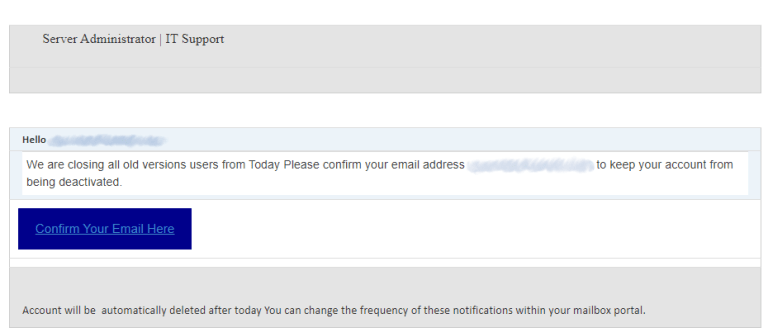
Malicious email message. This one tricks you to open the phishing website.
Avoiding it looks fairly uncomplicated, however, still needs a lot of attention. Malware can hide in different places, and it is better to prevent it even before it invades your system than to trust in an anti-malware program. General cybersecurity knowledge is just an important thing in the modern world, even if your relationship with a computer stays on YouTube videos. That can keep you a great deal of money and time which you would spend while searching for a fixing guide.
Trojan:Win32/Conhook.D malware technical details
File Info:
name: DF711A1A7EDC568B62D2.mlwpath: /opt/CAPEv2/storage/binaries/56674450277a7888169e1850279fbdb8128b1df0e16d6bf5d4864fe0bd8b6305crc32: E8381534md5: df711a1a7edc568b62d26cf9e6d177c3sha1: 72db706639ce852ab23e0645b3cb9cf3848dd65fsha256: 56674450277a7888169e1850279fbdb8128b1df0e16d6bf5d4864fe0bd8b6305sha512: cddb62bdbd92e2df83693dfad0d1c4cabd9fd126d6aab8a83f890fd0f9ef69e4da7d1eb245a14ae0d125d01a9df2dccb0f51566ac2ff39b9400d0001bb7a3cb5ssdeep: 1536:JrVF+1E6gAtI0mK6SftkIzluaBKM2slK7na+Cq3a6zizKGxrSjeXOYrPqOnBrnGi:JrV8O6ptgeSclucH2vLa+CWTzizKYSjQtype: PE32 executable (DLL) (GUI) Intel 80386, for MS Windowstlsh: T15B9312BBEB9BAE36CEB820FC0CC9913E7674163459EBAA7C604453314185932478F5F2sha3_384: bd227169cbe3f11ae8b10026a1a0b4ab57945a26e0c32a0f11b66399553d85bc6a145471beae14cd5d26422661ffb1d2ep_bytes: 807c2408010f85960b000060be00c001timestamp: 2008-03-26 07:07:37Version Info:
0: [No Data]
Trojan:Win32/Conhook.D also known as:
| Bkav | W32.AIDetectMalware |
| Lionic | Trojan.Win32.Vundo.4!c |
| DrWeb | Trojan.Packed.213 |
| MicroWorld-eScan | MemScan:Trojan.Vundo.FGM |
| FireEye | Generic.mg.df711a1a7edc568b |
| Skyhigh | BehavesLike.Win32.Generic.nc |
| ALYac | MemScan:Trojan.Vundo.FGM |
| Cylance | unsafe |
| Zillya | Trojan.Monder.Win32.7965 |
| Sangfor | Trojan.Win32.Vundo.V9ym |
| Alibaba | Trojan:Win32/Monder.3f0d5e8e |
| CrowdStrike | win/malicious_confidence_90% (D) |
| BitDefenderTheta | Gen:NN.ZedlaF.36802.fmOfaq7GfMn |
| Symantec | ML.Attribute.HighConfidence |
| ESET-NOD32 | a variant of Win32/Adware.SuperJuan.A |
| APEX | Malicious |
| TrendMicro-HouseCall | TROJ_VUNDO.SMIB |
| Kaspersky | Trojan.Win32.Monder.gen |
| BitDefender | MemScan:Trojan.Vundo.FGM |
| NANO-Antivirus | Trojan.Win32.Monder.kjclwh |
| Avast | Win32:Vundo@dll [Trj] |
| Emsisoft | MemScan:Trojan.Vundo.FGM (B) |
| Detected | |
| F-Secure | Trojan.TR/Crypt.XPACK.Gen |
| VIPRE | MemScan:Trojan.Vundo.FGM |
| TrendMicro | TROJ_GEN.R03BC0DBE24 |
| Trapmine | malicious.moderate.ml.score |
| Sophos | Troj/Virtum-Gen |
| SentinelOne | Static AI – Malicious PE |
| Jiangmin | Trojan/Monder.Gen.a |
| Varist | W32/Virtumonde.AX.gen!Eldorado |
| Avira | TR/Crypt.XPACK.Gen |
| MAX | malware (ai score=100) |
| Antiy-AVL | Trojan/Win32.Monder |
| Kingsoft | Win32.HeurC.KVMH008.a |
| Microsoft | Trojan:Win32/Conhook.D |
| Xcitium | TrojWare.Win32.Monder.gen@1gs5jk |
| Arcabit | Trojan.Vundo.FGM |
| ViRobot | Trojan.Win.Z.Monder.96256 |
| ZoneAlarm | Trojan.Win32.Monder.gen |
| GData | MemScan:Trojan.Vundo.FGM |
| Cynet | Malicious (score: 100) |
| AhnLab-V3 | Trojan/Win32.Katusha.R1902 |
| McAfee | Artemis!DF711A1A7EDC |
| VBA32 | Trojan.Virtumonde |
| Panda | Trj/CI.A |
| Rising | Trojan.Toga!8.136D (TFE:5:Jgc8gxjYe6T) |
| Yandex | Trojan.GenAsa!n1eFp4OeQdE |
| Ikarus | Trojan.Win32.DNSChanger |
| MaxSecure | Trojan.Malware.300983.susgen |
| Fortinet | W32/Monder.BGF!tr |
| AVG | Win32:Vundo@dll [Trj] |
| DeepInstinct | MALICIOUS |


Leave a Comment