
Spectating the Trojan:Win32/Busky!dll detection means that your computer is in big danger. This malware can correctly be named as ransomware – type of malware which ciphers your files and asks you to pay for their decryption. Stopping it requires some unusual steps that must be done as soon as possible.
Trojan:Win32/Busky!dll detection is a virus detection you can spectate in your system. It usually appears after the provoking actions on your computer – opening the untrustworthy email messages, clicking the banner in the Internet or installing the program from dubious sources. From the instance it shows up, you have a short time to act until it begins its harmful action. And be sure – it is much better not to wait for these malicious things.
What is Trojan:Win32/Busky!dll virus?
Trojan:Win32/Busky!dll is ransomware-type malware. It looks for the files on your disk drive, ciphers it, and after that asks you to pay the ransom for receiving the decryption key. Besides making your documents inaccessible, this virus also does a ton of damage to your system. It changes the networking setups in order to prevent you from looking for the elimination guides or downloading the anti-malware program. Sometimes, Trojan:Win32/Busky!dll can also prevent the launching of anti-malware programs.
Trojan:Win32/Busky!dll Summary
Summarizingly, Trojan:Win32/Busky!dll ransomware actions in the infected computer are next:
- The binary contains an unknown PE section name indicative of packing;
- Authenticode signature is invalid;
- Ciphering the documents located on the target’s disks — so the victim cannot open these files;
- Blocking the launching of .exe files of anti-virus programs
- Blocking the launching of installation files of anti-virus programs
Ransomware has been a major problem for the last 4 years. It is challenging to imagine a more dangerous virus for both individuals and businesses. The algorithms utilized in Trojan:Win32/Busky!dll (generally, RHA-1028 or AES-256) are not hackable – with minor exclusions. To hack it with a brute force, you need to have more time than our galaxy actually exists, and possibly will exist. But that virus does not do all these horrible things immediately – it can take up to several hours to cipher all of your files. Therefore, seeing the Trojan:Win32/Busky!dll detection is a clear signal that you must begin the clearing procedure.
Where did I get the Trojan:Win32/Busky!dll?
Routine methods of Trojan:Win32/Busky!dll spreading are usual for all other ransomware examples. Those are one-day landing web pages where users are offered to download the free program, so-called bait emails and hacktools. Bait emails are a relatively modern method in malware distribution – you receive the email that imitates some normal notifications about shippings or bank service conditions changes. Inside of the e-mail, there is a corrupted MS Office file, or a web link which leads to the exploit landing page.
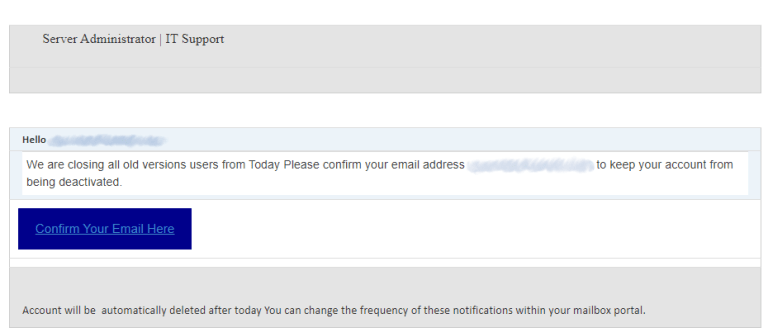
Malicious email message. This one tricks you to open the phishing website.
Preventing it looks pretty easy, however, still requires a lot of recognition. Malware can hide in different places, and it is far better to prevent it even before it goes into your PC than to rely upon an anti-malware program. Essential cybersecurity awareness is just an essential item in the modern-day world, even if your relationship with a PC remains on YouTube videos. That may save you a lot of money and time which you would certainly spend while trying to find a solution.
Trojan:Win32/Busky!dll malware technical details
File Info:
name: 8CA9FCB4D427C71109A6.mlwpath: /opt/CAPEv2/storage/binaries/540e3c63386af97ea32f0ca97b7ce39dbaf4b5f88c8468f8e27f5f3bdb554fcecrc32: A8255B63md5: 8ca9fcb4d427c71109a65d4efef40420sha1: f3c8346f6d6fb78ee7a7768abd006a3d5e455fdfsha256: 540e3c63386af97ea32f0ca97b7ce39dbaf4b5f88c8468f8e27f5f3bdb554fcesha512: 89f625ffe93bb52d065c1a3871fe917de2d2b5e4ff9912767192a88d75d110fff0c14d214631f338e991104f5aa21d586306644907cb3cfd2308d4a820fe8453ssdeep: 1536:FMEGlTTBfU0kg/tY5t+GCF6aSgq7qQybt8tsKO1xzsCKVdoaHc9bofSUU:WDlBfmegt+ZghgTtckuxsgtype: PE32 executable (DLL) (GUI) Intel 80386, for MS Windowstlsh: T1B463E829671FD3A7E1AE8AFA320E3F7514C6A1F1805F6C0FA3438145153ABE9562A713sha3_384: 26527279a017950f350c8dd97620dea1874ec8ce4a0ab1a9243b618b93b27b004fab36d0aea62c92fbe450a0569cc434ep_bytes: 5589e580ced683ec3056575380e5d69ctimestamp: 2006-09-05 13:07:38Version Info:
0: [No Data]
Trojan:Win32/Busky!dll also known as:
| Bkav | W32.AIDetectMalware |
| Lionic | Trojan.Win32.Obfuscated.4!c |
| Elastic | malicious (high confidence) |
| MicroWorld-eScan | Trojan.Obfus.Gen |
| FireEye | Generic.mg.8ca9fcb4d427c711 |
| Skyhigh | BehavesLike.Win32.Sality.lh |
| Cylance | unsafe |
| Sangfor | Suspicious.Win32.Save.a |
| CrowdStrike | win/malicious_confidence_100% (D) |
| Alibaba | TrojanDownloader:Win32/Obfuscated.da3594fb |
| K7GW | Trojan-Downloader ( 000319c21 ) |
| K7AntiVirus | Trojan-Downloader ( 000319c21 ) |
| BitDefenderTheta | AI:Packer.9F868B1D1D |
| Symantec | Trojan.Packed.14 |
| ESET-NOD32 | a variant of Win32/TrojanDownloader.Busky.AZ |
| APEX | Malicious |
| ClamAV | Win.Trojan.Obfus-37 |
| Kaspersky | Trojan.Win32.Obfuscated.ev |
| BitDefender | Trojan.Obfus.Gen |
| NANO-Antivirus | Trojan.Win32.Crypt.buyssw |
| Avast | Win32:Obfuscated [Trj] |
| Tencent | Win32.Trojan.Obfuscated.Uwhl |
| Emsisoft | Trojan.Obfus.Gen (B) |
| F-Secure | Trojan.TR/Vundo.Gen |
| DrWeb | Trojan.DownLoader.based |
| VIPRE | Trojan.Obfus.Gen |
| TrendMicro | Mal_Obfus |
| Sophos | Troj/Busky-Gen |
| Ikarus | Trojan-Downloader.Win32.Busky |
| GData | Trojan.Obfus.Gen |
| Detected | |
| Avira | TR/Vundo.Gen |
| Varist | W32/Busky.A.gen!Eldorado |
| Antiy-AVL | Trojan/Win32.Obfuscated |
| Kingsoft | Win32.Troj.Busky.ev.74240 |
| Xcitium | TrojWare.Win32.Agent.~N11@1mxs3s |
| Arcabit | Trojan.Obfus.Gen |
| ZoneAlarm | Trojan.Win32.Obfuscated.ev |
| Microsoft | Trojan:Win32/Busky.gen!dll |
| Cynet | Malicious (score: 100) |
| AhnLab-V3 | Win-Trojan/Obfuscated.Gen |
| McAfee | Downloader-AXI.f |
| MAX | malware (ai score=100) |
| VBA32 | BScope.Trojan-Downloader.Googlya.D.Obfs |
| Panda | Trj/Genetic.gen |
| TrendMicro-HouseCall | Mal_Obfus |
| Rising | Malware.Undefined!8.C (TFE:2:WDGG1AUz5RS) |
| Yandex | Trojan.Obfuscated!Y8zAZzK4l7A |
| Fortinet | W32/Obfuscated.EV!tr |
| AVG | Win32:Obfuscated [Trj] |
| DeepInstinct | MALICIOUS |


Leave a Comment