
Seeing the Trojan:Win32/Azorult.MC!MTB detection name usually means that your PC is in big danger. This malware can correctly be identified as ransomware – type of malware which ciphers your files and forces you to pay for their decryption. Deleteing it requires some specific steps that must be taken as soon as possible.
Trojan:Win32/Azorult.MC!MTB detection is a malware detection you can spectate in your computer. It often shows up after the preliminary procedures on your PC – opening the untrustworthy e-mail, clicking the banner in the Internet or setting up the program from dubious sources. From the moment it shows up, you have a short time to act until it starts its destructive activity. And be sure – it is far better not to await these malicious actions.
What is Trojan:Win32/Azorult.MC!MTB virus?
Trojan:Win32/Azorult.MC!MTB Summary
Summarizingly, Trojan:Win32/Azorult.MC!MTB malware actions in the infected computer are next:
- SetUnhandledExceptionFilter detected (possible anti-debug);
- Behavioural detection: Executable code extraction – unpacking;
- Sample contains Overlay data;
- Yara rule detections observed from a process memory dump/dropped files/CAPE;
- Creates RWX memory;
- Dynamic (imported) function loading detected;
- Enumerates the modules from a process (may be used to locate base addresses in process injection);
- CAPE extracted potentially suspicious content;
- Unconventionial language used in binary resources: Serbian;
- The binary likely contains encrypted or compressed data.;
- Authenticode signature is invalid;
- CAPE detected the RedLine malware family;
- Anomalous binary characteristics;
- Ciphering the documents located on the target’s disk drive — so the victim cannot use these documents;
- Blocking the launching of .exe files of security tools
- Blocking the launching of installation files of security tools
Ransomware has been a nightmare for the last 4 years. It is hard to picture a more damaging malware for both individuals and corporations. The algorithms used in Trojan:Win32/Azorult.MC!MTB (usually, RHA-1028 or AES-256) are not hackable – with minor exclusions. To hack it with a brute force, you need a lot more time than our galaxy actually exists, and possibly will exist. But that malware does not do all these unpleasant things without delay – it can take up to a few hours to cipher all of your documents. Thus, seeing the Trojan:Win32/Azorult.MC!MTB detection is a clear signal that you have to begin the elimination process.
Where did I get the Trojan:Win32/Azorult.MC!MTB?
Common methods of Trojan:Win32/Azorult.MC!MTB injection are standard for all other ransomware examples. Those are one-day landing sites where victims are offered to download the free app, so-called bait emails and hacktools. Bait emails are a pretty modern method in malware spreading – you get the email that simulates some regular notifications about deliveries or bank service conditions modifications. Inside of the e-mail, there is a malicious MS Office file, or a web link which leads to the exploit landing site.
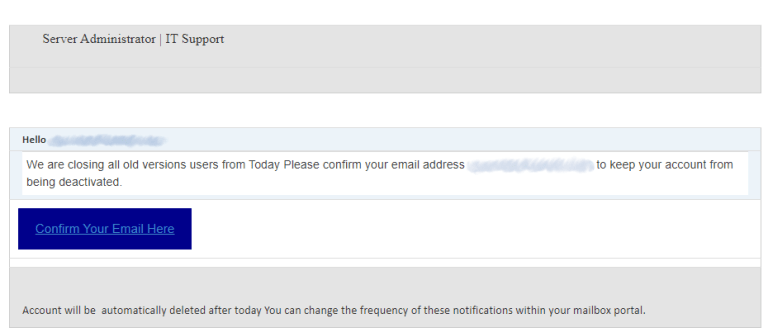
Malicious email message. This one tricks you to open the phishing website.
Avoiding it looks pretty uncomplicated, but still demands a lot of attention. Malware can hide in various places, and it is far better to stop it even before it invades your system than to rely on an anti-malware program. General cybersecurity knowledge is just an important item in the modern world, even if your interaction with a computer stays on YouTube videos. That can keep you a lot of time and money which you would certainly spend while trying to find a fixing guide.
Trojan:Win32/Azorult.MC!MTB malware technical details
File Info:
name: 15DE3026AA3B7000DF42.mlwpath: /opt/CAPEv2/storage/binaries/40b63795dc1177ff8d528455bfb9bf9d50cfb11eff0eb66b15b245e56d59f0d6crc32: 5066D04Emd5: 15de3026aa3b7000df422d08f69eee97sha1: f9fd9ded4ed3e1321fc133f93df5a2dab1374658sha256: 40b63795dc1177ff8d528455bfb9bf9d50cfb11eff0eb66b15b245e56d59f0d6sha512: 3bce26fded01c141e3c644a28f3e96ff240958a790ebfd8da0e5b43c24fa87f633d10aea452c2436da73c04dada2f86934f7de5137505d2fa2077f379dde0ddcssdeep: 6144:DnuJRigTmno+NhzIG5SPrVFCg1ASe0gbMnjHwVtLTDi34JQ4kokiV:DuyQmoihzIG5S3CQASwMDupPtype: PE32 executable (GUI) Intel 80386, for MS Windowstlsh: T1CE94CF10BA90D438F0B312FC45BA9368B52E7AE19B2550CF63D56AEE56346E4ED3130Bsha3_384: d9f30f5c5a5b427f9f3471f566aab9db1eb23527058f407a23b9e185f339753cdf1ef6126fcd01ac29797b0be29aa716ep_bytes: 8bff558bece846a70000e8110000005dtimestamp: 2021-02-14 02:11:33Version Info:
Translations: 0x0025 0x0305
Trojan:Win32/Azorult.MC!MTB also known as:
| Bkav | W32.AIDetect.malware2 |
| Lionic | Trojan.Win32.Stealer.l!c |
| tehtris | Generic.Malware |
| MicroWorld-eScan | Trojan.GenericKDZ.85028 |
| FireEye | Generic.mg.15de3026aa3b7000 |
| CAT-QuickHeal | Trojan.AzorultRI.S26995182 |
| ALYac | Trojan.GenericKDZ.85028 |
| Cylance | Unsafe |
| Zillya | Trojan.Kryptik.Win32.3713938 |
| Sangfor | Trojan.Win32.Save.a |
| K7AntiVirus | Trojan ( 005690671 ) |
| Alibaba | TrojanSpy:Win32/Azorult.81614f2c |
| K7GW | Trojan ( 005690671 ) |
| Cybereason | malicious.d4ed3e |
| Cyren | W32/Kryptik.GAJ.gen!Eldorado |
| Symantec | ML.Attribute.HighConfidence |
| Elastic | malicious (high confidence) |
| ESET-NOD32 | a variant of Win32/Kryptik.HOSW |
| Baidu | Win32.Trojan.Kryptik.jm |
| TrendMicro-HouseCall | TROJ_GEN.R002H0CCB22 |
| Paloalto | generic.ml |
| ClamAV | Win.Dropper.Generickdz-9939781-0 |
| Kaspersky | HEUR:Trojan-Spy.Win32.Stealer.gen |
| BitDefender | Trojan.GenericKDZ.85028 |
| Avast | Win32:RansomX-gen [Ransom] |
| Tencent | Trojan-Spy.Win32.Stealer.za |
| Ad-Aware | Trojan.GenericKDZ.85028 |
| Emsisoft | Trojan.Crypt (A) |
| DrWeb | Trojan.Siggen17.23166 |
| VIPRE | Trojan.GenericKDZ.85028 |
| TrendMicro | Ransom.Win32.STOP.SMYXCCGT.hp |
| McAfee-GW-Edition | BehavesLike.Win32.Ransomware.gc |
| SentinelOne | Static AI – Malicious PE |
| Trapmine | malicious.moderate.ml.score |
| Sophos | Mal/Generic-S + Troj/Krypt-FV |
| APEX | Malicious |
| GData | Win32.Trojan.Kryptik.RW |
| Jiangmin | TrojanSpy.Stealer.qcf |
| Avira | TR/AD.GenSHCode.byhzy |
| Antiy-AVL | Trojan/Generic.ASMalwS.50E8 |
| Kingsoft | Win32.Troj.Undef.(kcloud) |
| Arcabit | Trojan.Generic.D14C24 |
| Microsoft | Trojan:Win32/Azorult.MC!MTB |
| Cynet | Malicious (score: 100) |
| AhnLab-V3 | Infostealer/Win.RedLine.R477392 |
| Acronis | suspicious |
| McAfee | Packed-GEE!15DE3026AA3B |
| MAX | malware (ai score=86) |
| VBA32 | TrojanSpy.Stealer |
| Malwarebytes | Trojan.MalPack.GS |
| Rising | [email protected] (RDMK:YAOO6GMJ0JAa618Vk/Sjew) |
| Ikarus | Trojan-Ransom.StopCrypt |
| MaxSecure | Trojan.Malware.300983.susgen |
| Fortinet | W32/Packed.GEE!tr |
| AVG | Win32:RansomX-gen [Ransom] |
| Panda | Trj/GdSda.A |
| CrowdStrike | win/malicious_confidence_100% (W) |


Leave a Comment