
Seeing the Trojan:MSIL/SnakeKeylogger.SPAQ!MTB malware detection means that your computer is in big danger. This malware can correctly be named as ransomware – virus which ciphers your files and asks you to pay for their decryption. Deleteing it requires some specific steps that must be taken as soon as possible.
Trojan:MSIL/SnakeKeylogger.SPAQ!MTB detection is a malware detection you can spectate in your system. It frequently appears after the preliminary activities on your PC – opening the untrustworthy email messages, clicking the banner in the Internet or mounting the program from untrustworthy resources. From the instance it appears, you have a short time to do something about it before it begins its destructive activity. And be sure – it is better not to wait for these destructive effects.
What is Trojan:MSIL/SnakeKeylogger.SPAQ!MTB virus?
Trojan:MSIL/SnakeKeylogger.SPAQ!MTB Summary
In summary, Trojan:MSIL/SnakeKeylogger.SPAQ!MTB virus activities in the infected system are next:
- CAPE extracted potentially suspicious content;
- Authenticode signature is invalid;
- Ciphering the documents kept on the target’s drives — so the victim cannot use these documents;
- Blocking the launching of .exe files of anti-virus apps
- Blocking the launching of installation files of security tools
Ransomware has actually been a major problem for the last 4 years. It is difficult to picture a more hazardous virus for both individual users and corporations. The algorithms utilized in Trojan:MSIL/SnakeKeylogger.SPAQ!MTB (generally, RHA-1028 or AES-256) are not hackable – with minor exclusions. To hack it with a brute force, you need a lot more time than our galaxy already exists, and possibly will exist. However, that malware does not do all these horrible things instantly – it may take up to several hours to cipher all of your files. Hence, seeing the Trojan:MSIL/SnakeKeylogger.SPAQ!MTB detection is a clear signal that you must start the elimination procedure.
Where did I get the Trojan:MSIL/SnakeKeylogger.SPAQ!MTB?
Typical ways of Trojan:MSIL/SnakeKeylogger.SPAQ!MTB spreading are standard for all other ransomware variants. Those are one-day landing websites where victims are offered to download the free app, so-called bait emails and hacktools. Bait emails are a pretty modern method in malware spreading – you receive the e-mail that mimics some normal notifications about deliveries or bank service conditions shifts. Within the email, there is a corrupted MS Office file, or a web link which leads to the exploit landing page.
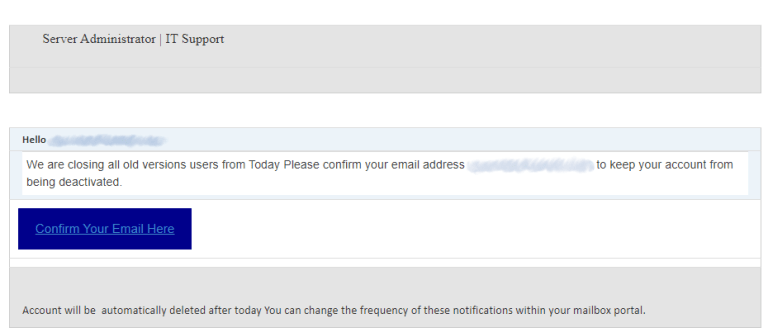
Malicious email message. This one tricks you to open the phishing website.
Avoiding it looks fairly easy, but still needs a lot of focus. Malware can hide in various places, and it is much better to stop it even before it invades your PC than to rely on an anti-malware program. Basic cybersecurity awareness is just an important thing in the modern-day world, even if your interaction with a computer stays on YouTube videos. That may save you a lot of time and money which you would spend while looking for a solution.
Trojan:MSIL/SnakeKeylogger.SPAQ!MTB malware technical details
File Info:
name: 999D17F66B6E237453AD.mlwpath: /opt/CAPEv2/storage/binaries/14a10ef4f604c227bfa74bae7dd4b0ea95e27f0d1711080cd31efe6ab1141e95crc32: 54516603md5: 999d17f66b6e237453ad899d94fb6998sha1: fec99ee5b5e7d1e1f13ee69208292921a843a0bdsha256: 14a10ef4f604c227bfa74bae7dd4b0ea95e27f0d1711080cd31efe6ab1141e95sha512: ba8e66801fcf49e6e5bcd74b03760f35d13060fee0c1e66daa8117976f8ae6e995acfc9208c44679425ba06b1d9bce86fb22d7ec867cc71ab7cf291cd811d99bssdeep: 6144:UD0AJsZbY+kdRpmXmfFgjYEIyv49iVt//Vzo+F0w3qmsTcKSK:K0AJ1+8RpmXmfFgjYEIyv49KnB5fiLStype: PE32 executable (GUI) Intel 80386, for MS Windowstlsh: T132641919779A5915C35F4734E0B1644CEEF0CA17A3CAABAEAC0076F49CA37D0A6434E7sha3_384: 45a29e6043d0fb2c3412367425d5a904a1452afcee4b1aeb81331422d4886576b74e3977859761d4af8358f16d99bad4ep_bytes: ff250020400000000000000000000000timestamp: 2023-10-03 07:56:53Version Info:
Translation: 0x0000 0x04b0Comments: CompanyName: FileDescription: FileVersion: 1.0.0.0InternalName: akt-sverka.PDF.exeLegalCopyright: LegalTrademarks: OriginalFilename: akt-sverka.PDF.exeProductName: ProductVersion: 1.0.0.0Assembly Version: 1.0.0.0
Trojan:MSIL/SnakeKeylogger.SPAQ!MTB also known as:
| Bkav | W32.Common.28D2D301 |
| Lionic | Trojan.Win32.Blocker.V!c |
| Elastic | malicious (high confidence) |
| MicroWorld-eScan | IL:Trojan.MSILMamut.12836 |
| FireEye | Generic.mg.999d17f66b6e2374 |
| CAT-QuickHeal | TrojanRansom.MSIL |
| Skyhigh | BehavesLike.Win32.Generic.fh |
| ALYac | IL:Trojan.MSILMamut.12836 |
| Malwarebytes | Trojan.Crypt.MSIL.Generic |
| VIPRE | IL:Trojan.MSILMamut.12836 |
| Sangfor | Downloader.Msil.Agent.Vjy3 |
| CrowdStrike | win/malicious_confidence_100% (W) |
| Alibaba | Ransom:MSIL/Blocker.9c832132 |
| VirIT | Trojan.Win32.MSIL_Heur.A |
| Symantec | ML.Attribute.HighConfidence |
| tehtris | Generic.Malware |
| ESET-NOD32 | a variant of MSIL/TrojanDownloader.Agent.OXE |
| APEX | Malicious |
| Cynet | Malicious (score: 100) |
| Kaspersky | HEUR:Trojan-Ransom.MSIL.Blocker.gen |
| BitDefender | IL:Trojan.MSILMamut.12836 |
| Avast | Win32:DropperX-gen [Drp] |
| Emsisoft | IL:Trojan.MSILMamut.12836 (B) |
| F-Secure | Trojan.TR/Dldr.Agent.zgxjm |
| DrWeb | Trojan.PackedNET.2429 |
| TrendMicro | TrojanSpy.Win32.REDLINE.YXDJFZ |
| Trapmine | suspicious.low.ml.score |
| Sophos | Mal/Generic-S |
| SentinelOne | Static AI – Malicious PE |
| GData | MSIL.Trojan.PSE.20JAUQ |
| Varist | W32/ABRisk.LWVE-3955 |
| Avira | TR/Dldr.Agent.zgxjm |
| MAX | malware (ai score=89) |
| Kingsoft | malware.kb.c.933 |
| Arcabit | IL:Trojan.MSILMamut.D3224 |
| ViRobot | Trojan.Win.Z.Agent.322560.BX |
| ZoneAlarm | HEUR:Trojan-Ransom.MSIL.Blocker.gen |
| Microsoft | Trojan:MSIL/SnakeKeylogger.SPAQ!MTB |
| Detected | |
| AhnLab-V3 | Trojan/Win.PWSX-gen.C5496401 |
| McAfee | Artemis!999D17F66B6E |
| Cylance | unsafe |
| Panda | Trj/GdSda.A |
| TrendMicro-HouseCall | TrojanSpy.Win32.REDLINE.YXDJFZ |
| Rising | Ransom.Blocker!8.12A (CLOUD) |
| Ikarus | Backdoor.MSIL.Agent |
| Fortinet | MSIL/Agent.PJK!tr.dldr |
| BitDefenderTheta | Gen:NN.ZemsilF.36738.tm0@aCXkWXg |
| AVG | Win32:DropperX-gen [Drp] |
| DeepInstinct | MALICIOUS |


Leave a Comment