
Cerobgar.B is a type of Trojan virus that can perform various malicious actions on an infected computer. Some of the actions it can perform include:
- Stealing sensitive information: Cerobgar.B can collect personal and confidential information from the infected computer, such as passwords, login credentials, banking details, and credit card numbers.
- Modifying or deleting files: Cerobgar.B can modify, delete, or corrupt files on the infected computer, which can result in system instability or data loss.
- Downloading and installing other malware: Cerobgar.B can download and install other malware onto the infected computer, which can further compromise the system’s security and stability.
- Creating backdoors: Cerobgar.B can create backdoors on the infected computer, which can allow remote attackers to access the system and carry out further malicious actions, such as stealing data or using the system to launch attacks on other computers.
Overall, Cerobgar.B is a dangerous and malicious piece of software that can cause serious harm to an infected computer and its users. It is important to take steps to prevent infections, such as keeping antivirus software up-to-date and avoiding suspicious downloads and emails.
What does the notification with Cerobgar.B detection mean?
The Cerobgar.B detection you can see on the lower right side is demonstrated to you by Windows Defender. That default Windows antivirus is quite good at scanning. However, prone to be unstable. It is defenseless to malware attacks. It has a glitchy interface and problematic malware removal features. Hence, the pop-up which says concerning the Cerobgar.B is just an alert that Defender has detected it. To remove it, you will likely need to make use of another anti-malware program.
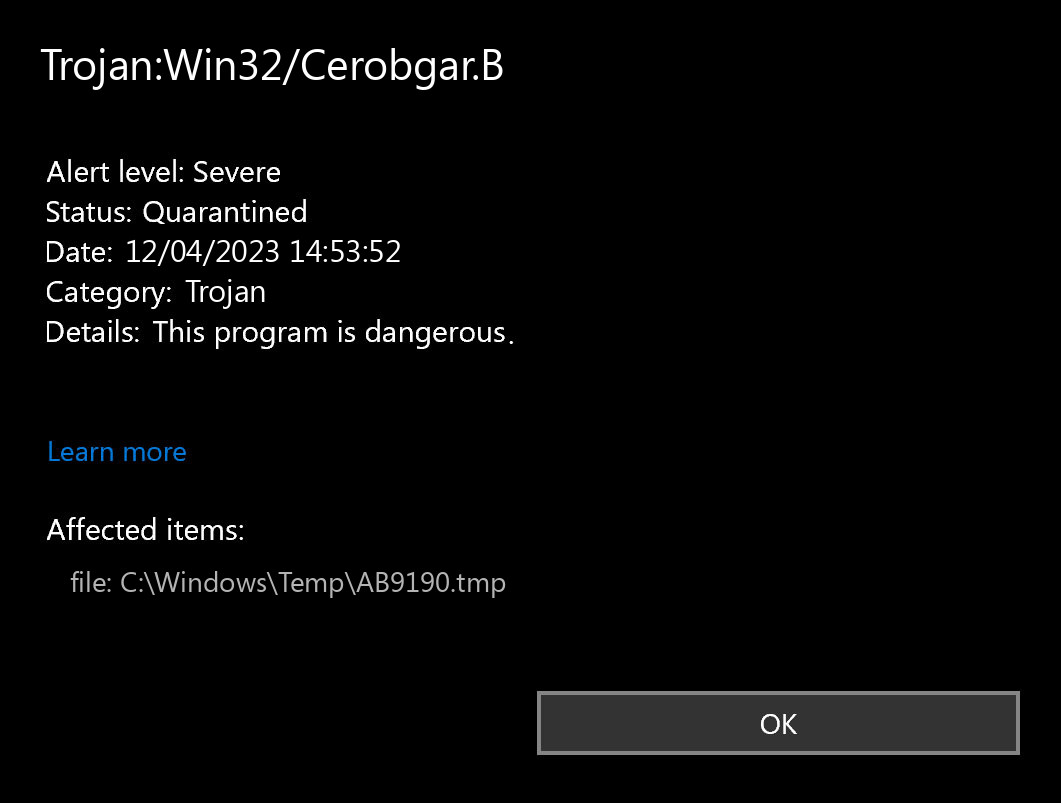
Microsoft Defender detect Cerobgar.B Trojan”
The exact Trojan:Win32/Cerobgar.B infection is a very undesirable thing. It sits inside of your Windows disguised as a part of something legit, or as a part of the app you downloaded from a forum. After that, it makes all possible steps to weaken your system. At the end of this “party”, it injects other malicious things – ones which are chosen by cyber burglars who control this virus. Hence, it is likely impossible to predict the effects from Cerobgar.B actions. And unpredictability is one of the most unpleasant things when it comes to malware. That’s why it is rather not to choose at all, and don’t give it even a single chance to complete its task.
Threat Summary:
| Name | Cerobgar.B Trojan |
| Detection | Trojan:Win32/Cerobgar.B |
| Details | Once installed on your computer, the Cerobgar.B Trojan makes modifications to your system settings and registry entries, which can cause performance issues and instability. |
| Similar | Trojan:Win32/Cerobgar.A |
Is Trojan:Win32/Cerobgar.B dangerous?
As I have specified previously, non-harmful malware does not exist. And Cerobgar.B is not an exception. This virus alters the system configurations and modifies the Group Policies and Windows registry. All of these components are crucial for proper system functioning, even in cases when we are not talking about Windows security. Therefore, the virus that Cerobgar.B carries, or which it will inject later, will try to get maximum profit from you. Cybercriminals can grab your personal information and then push it on the Darknet. Using adware and browser hijacker functions embedded in Cerobgar.B malware, they can make money by showing you the advertisements. Each view gives them a penny, but 100 views per day = $1. 1000 victims who watch 100 banners daily – $1000. Easy math, but sad conclusions. It is a bad choice to be a donkey for crooks.
How did I get this virus?
It is difficult to trace malware’s origins on your computer. Nowadays, things are mixed up, and spreading ways chosen by adware seven years ago can be utilized by spyware nowadays. However, if we abstract from the exact distribution tactic and will think of why it has success, the reply will be very simple – low level of cybersecurity knowledge. People click on advertisements on odd websites, open the pop-ups they get in their web browsers, and call “Microsoft tech support” thinking that the strange banner about malware is true. It is very important to understand what is legitimate – to avoid misconceptions when attempting to discover a virus.
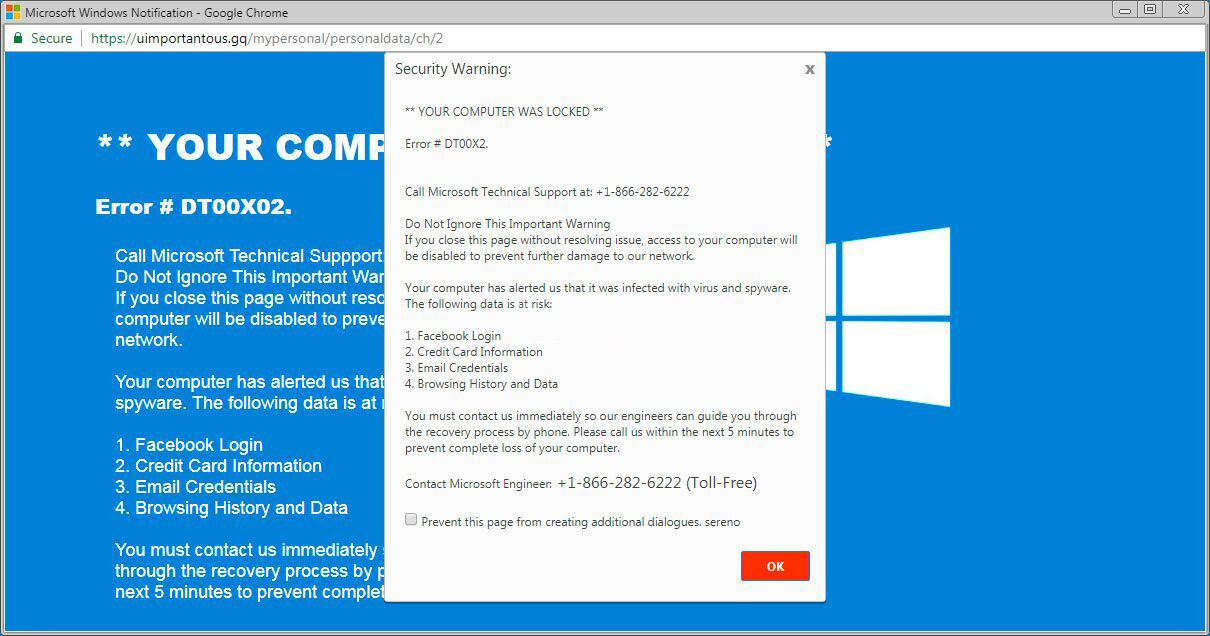
The example of Microsoft Tech support scam banner
Nowadays, there are two of the most extensive tactics of malware spreading – lure emails and injection into a hacked program. While the first one is not so easy to evade – you need to know a lot to understand a counterfeit – the 2nd one is easy to solve: don’t use cracked applications. Torrent trackers and other providers of “free” applications (which are, exactly, paid, but with a disabled license checking) are a giveaway point of malware. And Cerobgar.B is just among them.


Leave a Comment