
Spectating the Trojan-Ransom.Win32.PornoAsset.cwhs malware detection means that your computer is in big danger. This virus can correctly be named as ransomware – sort of malware which encrypts your files and forces you to pay for their decryption. Removing it requires some unusual steps that must be done as soon as possible.
Trojan-Ransom.Win32.PornoAsset.cwhs detection is a malware detection you can spectate in your system. It usually shows up after the provoking actions on your PC – opening the suspicious email messages, clicking the banner in the Internet or mounting the program from dubious resources. From the second it appears, you have a short time to take action before it begins its malicious activity. And be sure – it is far better not to wait for these malicious actions.
What is Trojan-Ransom.Win32.PornoAsset.cwhs virus?
Trojan-Ransom.Win32.PornoAsset.cwhs Summary
Summarizingly, Trojan-Ransom.Win32.PornoAsset.cwhs ransomware actions in the infected PC are next:
- SetUnhandledExceptionFilter detected (possible anti-debug);
- Sample contains Overlay data;
- Reads data out of its own binary image;
- Authenticode signature is invalid;
- Installs itself for autorun at Windows startup;
- Likely virus infection of existing system binary;
- Encrypting the documents kept on the victim’s drives — so the victim cannot open these files;
- Blocking the launching of .exe files of anti-malware programs
- Blocking the launching of installation files of security tools
Ransomware has been a nightmare for the last 4 years. It is challenging to realize a more harmful virus for both individuals and organizations. The algorithms used in Trojan-Ransom.Win32.PornoAsset.cwhs (generally, RHA-1028 or AES-256) are not hackable – with minor exclusions. To hack it with a brute force, you need a lot more time than our galaxy actually exists, and possibly will exist. However, that malware does not do all these bad things without delay – it may take up to several hours to cipher all of your documents. Thus, seeing the Trojan-Ransom.Win32.PornoAsset.cwhs detection is a clear signal that you need to start the clearing procedure.
Where did I get the Trojan-Ransom.Win32.PornoAsset.cwhs?
Standard tactics of Trojan-Ransom.Win32.PornoAsset.cwhs spreading are typical for all other ransomware variants. Those are one-day landing sites where users are offered to download and install the free software, so-called bait e-mails and hacktools. Bait e-mails are a quite new method in malware distribution – you receive the email that mimics some standard notifications about shipments or bank service conditions changes. Inside of the email, there is an infected MS Office file, or a web link which leads to the exploit landing page.
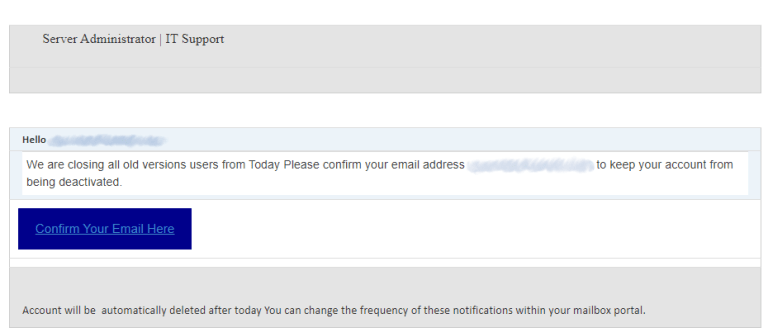
Malicious email message. This one tricks you to open the phishing website.
Avoiding it looks fairly easy, however, still needs a lot of focus. Malware can hide in different spots, and it is much better to stop it even before it invades your PC than to depend on an anti-malware program. General cybersecurity knowledge is just an essential item in the modern-day world, even if your interaction with a PC remains on YouTube videos. That may keep you a lot of money and time which you would certainly spend while looking for a solution.
Trojan-Ransom.Win32.PornoAsset.cwhs malware technical details
File Info:
name: 0E828B7FDA8B42CDFE1D.mlwpath: /opt/CAPEv2/storage/binaries/f015c2a924a40ff5a9953e4e9ae8d95898971143be5ee7d80a7652636d092f71crc32: 053C03CDmd5: 0e828b7fda8b42cdfe1d3ac1195487e0sha1: 04638fcc0fa3f042561650b09ddf69c98fad4c52sha256: f015c2a924a40ff5a9953e4e9ae8d95898971143be5ee7d80a7652636d092f71sha512: 1f2fed2d14099e48faafe45b903bd9d8dde7cc62e7dc242da6b907baa33d36d1297f1421611b8de34e33c3302c0ebb8375113e6c32b4331d1e8b3e109823ad3fssdeep: 1536:EizQjrrQ3hz9LH5i8wUkMP6girYduKjGyP5EcfS:EcQTA5OrMjGyP5ERtype: PE32 executable (GUI) Intel 80386, for MS Windowstlsh: T1DD937C1276D0D072C89621784565CBB20BBFE43127A59987F7B817BE8F603E1963E34Bsha3_384: c183a7f45937a25c34d298717958fc66f5b478d782bbdc1b8f8b6b37bb9f7b2858f3d5bd3c544f4f80a8f2a96de2db7aep_bytes: e8a8460000e978feffff6a0c68a83841timestamp: 2010-09-24 13:29:35Version Info:
0: [No Data]
Trojan-Ransom.Win32.PornoAsset.cwhs also known as:
| Bkav | W32.AIDetect.malware2 |
| Elastic | malicious (high confidence) |
| MicroWorld-eScan | Gen:Trojan.UserStartup.fqX@ayLCVGo |
| FireEye | Generic.mg.0e828b7fda8b42cd |
| CAT-QuickHeal | Trojan.Sisron.AZ4 |
| ALYac | Gen:Trojan.UserStartup.fqX@ayLCVGo |
| Cylance | Unsafe |
| VIPRE | Gen:Trojan.UserStartup.fqX@ayLCVGo |
| Sangfor | Worm.Win32.Save.a |
| K7AntiVirus | Riskware ( 0040eff71 ) |
| K7GW | Riskware ( 0040eff71 ) |
| CrowdStrike | win/malicious_confidence_70% (D) |
| Baidu | Win32.Trojan.Agent.eu |
| VirIT | Trojan.Win32.Generic.ADIZ |
| Cyren | W32/Agent.WT.gen!Eldorado |
| Symantec | ML.Attribute.HighConfidence |
| ESET-NOD32 | a variant of Win32/Agent.WRQ |
| APEX | Malicious |
| ClamAV | Win.Trojan.Agent-1390133 |
| Kaspersky | Trojan-Ransom.Win32.PornoAsset.cwhs |
| BitDefender | Gen:Trojan.UserStartup.fqX@ayLCVGo |
| NANO-Antivirus | Trojan.Win32.MLW.cqwmw |
| Avast | Win32:Malware-gen |
| Tencent | Malware.Win32.Gencirc.10b5a781 |
| Ad-Aware | Gen:Trojan.UserStartup.fqX@ayLCVGo |
| Comodo | TrojWare.Win32.Agent.rry@4yooc5 |
| DrWeb | Trojan.DownLoader5.27278 |
| Zillya | Trojan.Agent.Win32.135045 |
| TrendMicro | TROJ_AGENT_003421.TOMB |
| Trapmine | suspicious.low.ml.score |
| Sophos | ML/PE-A + Troj/Agent-UYB |
| SentinelOne | Static AI – Malicious PE |
| GData | Gen:Trojan.UserStartup.fqX@ayLCVGo |
| Jiangmin | Trojan/Scar.acvz |
| Avira | TR/ATRAPS.Gen |
| MAX | malware (ai score=86) |
| Antiy-AVL | Trojan/Generic.ASMalwS.103 |
| Microsoft | Trojan:Win32/Wacatac.B!ml |
| Cynet | Malicious (score: 100) |
| AhnLab-V3 | Trojan/Win32.Scar.C53608 |
| Acronis | suspicious |
| McAfee | GenericATG-FDR!0E828B7FDA8B |
| TACHYON | Ransom/W32.PornoAsset.89462 |
| VBA32 | BScope.Trojan.Agent |
| TrendMicro-HouseCall | TROJ_AGENT_003421.TOMB |
| Rising | Adware.Agent!1.6A2F (CLASSIC) |
| Ikarus | Trojan.Win32.Sisron |
| Fortinet | W32/Agent.WRQ!tr |
| BitDefenderTheta | Gen:NN.ZexaF.34582.fqX@ayLCVGo |
| AVG | Win32:Malware-gen |
| Cybereason | malicious.fda8b4 |
| Panda | Trj/Genetic.gen |


Leave a Comment