
Spectating the Trojan-Proxy.Win32.Qukart.vih malware detection usually means that your PC is in big danger. This virus can correctly be identified as ransomware – type of malware which ciphers your files and asks you to pay for their decryption. Removing it requires some peculiar steps that must be taken as soon as possible.
Trojan-Proxy.Win32.Qukart.vih detection is a malware detection you can spectate in your system. It frequently shows up after the preliminary activities on your computer – opening the untrustworthy email messages, clicking the advertisement in the Web or setting up the program from dubious resources. From the second it appears, you have a short time to act before it begins its harmful activity. And be sure – it is far better not to wait for these harmful effects.
What is Trojan-Proxy.Win32.Qukart.vih virus?
Trojan-Proxy.Win32.Qukart.vih Summary
In summary, Trojan-Proxy.Win32.Qukart.vih malware activities in the infected system are next:
- Creates an indicator observed in Territorial Disputes report SIG40;
- The binary likely contains encrypted or compressed data.;
- Authenticode signature is invalid;
- Anomalous binary characteristics;
- Yara rule detections observed from a process memory dump/dropped files/CAPE;
- Ciphering the documents kept on the target’s drives — so the victim cannot check these documents;
- Blocking the launching of .exe files of anti-malware programs
- Blocking the launching of installation files of security tools
Ransomware has been a nightmare for the last 4 years. It is challenging to picture a more harmful virus for both individuals and corporations. The algorithms used in Trojan-Proxy.Win32.Qukart.vih (usually, RHA-1028 or AES-256) are not hackable – with minor exclusions. To hack it with a brute force, you need to have more time than our galaxy currently exists, and possibly will exist. However, that virus does not do all these unpleasant things without delay – it can require up to a few hours to cipher all of your documents. Therefore, seeing the Trojan-Proxy.Win32.Qukart.vih detection is a clear signal that you should begin the removal procedure.
Where did I get the Trojan-Proxy.Win32.Qukart.vih?
Typical tactics of Trojan-Proxy.Win32.Qukart.vih injection are typical for all other ransomware variants. Those are one-day landing websites where victims are offered to download the free software, so-called bait e-mails and hacktools. Bait emails are a quite new tactic in malware distribution – you get the e-mail that imitates some standard notifications about shippings or bank service conditions modifications. Inside of the e-mail, there is a malicious MS Office file, or a link which opens the exploit landing site.
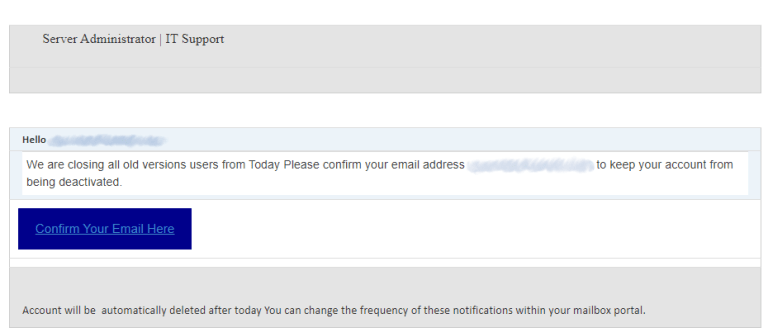
Malicious email message. This one tricks you to open the phishing website.
Avoiding it looks quite uncomplicated, however, still demands a lot of attention. Malware can hide in various spots, and it is better to prevent it even before it gets into your computer than to rely upon an anti-malware program. Simple cybersecurity awareness is just an essential thing in the modern-day world, even if your relationship with a computer remains on YouTube videos. That may save you a lot of time and money which you would spend while trying to find a fixing guide.
Trojan-Proxy.Win32.Qukart.vih malware technical details
File Info:
name: 78C8A0405199789EA66F.mlwpath: /opt/CAPEv2/storage/binaries/02062d0e896504df1de5f13c3e818a9649a42766fb34fcf44f08b45bdcce6abfcrc32: 1F3BB540md5: 78c8a0405199789ea66fae559da2d21bsha1: b04450cdc40c64a5d321595cbd5d5fbc195fab0fsha256: 02062d0e896504df1de5f13c3e818a9649a42766fb34fcf44f08b45bdcce6abfsha512: 19a8c606ca02e7897cb1af0821c3fd21723d865ddd870ce6f5de372e832dfbf4266860c972a15b45314b2be8900901104168ffef8754adb5760cb4278271eab4ssdeep: 1536:8fv7J5tXfwoWZ3U+b6TDb2gGQAU6FuLeBNVH2L2aWFNRgj:879ooSUfDb2gGQAU6F6GNm2aQNqtype: PE32 executable (GUI) Intel 80386, for MS Windowstlsh: T164635BEB69B58F63CD8401B939BF46BFA1E9A89F167D4211D169C2090233538C4BD7B3sha3_384: ed62e22c2e38ae685ab493d96a105356bde2871c54f2fd15b519c0924def3db4847b8dde266f5a36515f9dc459ec3ff9ep_bytes: 60909090909090b8001040006a049090timestamp: 1985-08-31 04:22:33Version Info:
0: [No Data]
Trojan-Proxy.Win32.Qukart.vih also known as:
| Bkav | W32.AIDetectMalware |
| Lionic | Trojan.Win32.Qukart.4!c |
| tehtris | Generic.Malware |
| MicroWorld-eScan | Trojan.GenericKDZ.99416 |
| ClamAV | Win.Trojan.Crypted-28 |
| FireEye | Generic.mg.78c8a0405199789e |
| CAT-QuickHeal | Backdoor.Berbew.A6.MUE |
| ALYac | Trojan.GenericKDZ.99416 |
| Malwarebytes | Virlock.Ransom.FileInfector.DDS |
| Zillya | Trojan.Padodor.Win32.736321 |
| Sangfor | Trojan.Win32.Save.a |
| K7AntiVirus | Trojan ( 005780dd1 ) |
| Alibaba | Backdoor:Win32/Berbew.36d |
| K7GW | Trojan ( 005780dd1 ) |
| CrowdStrike | win/malicious_confidence_100% (W) |
| Baidu | Win32.Trojan-Spy.Quart.a |
| Cyren | W32/Kryptik.JEE.gen!Eldorado |
| Symantec | Backdoor.Berbew.F |
| Elastic | malicious (high confidence) |
| ESET-NOD32 | a variant of Win32/Padodor.NAX |
| APEX | Malicious |
| Cynet | Malicious (score: 100) |
| Kaspersky | Trojan-Proxy.Win32.Qukart.vih |
| BitDefender | Trojan.GenericKDZ.99416 |
| NANO-Antivirus | Trojan.Win32.Qukart.fokxzm |
| Avast | Win32:TrojanX-gen [Trj] |
| Tencent | Trojan-Ransom.Win32.Pornoasset.a |
| Emsisoft | Trojan.GenericKDZ.99416 (B) |
| F-Secure | Trojan.TR/Crypt.XDR.Gen |
| DrWeb | BackDoor.HangUp.43874 |
| VIPRE | Trojan.GenericKDZ.99416 |
| TrendMicro | TROJ_GEN.R002C0CED23 |
| McAfee-GW-Edition | BehavesLike.Win32.Generic.kc |
| Trapmine | malicious.high.ml.score |
| Sophos | Troj/Padodo-Fam |
| SentinelOne | Static AI – Malicious PE |
| Jiangmin | Trojan.Generic.dzrgt |
| Avira | TR/Crypt.XDR.Gen |
| MAX | malware (ai score=87) |
| Antiy-AVL | Trojan[Proxy]/Win32.Qukart.gen |
| Arcabit | Trojan.Generic.D18458 |
| ViRobot | Trojan.Win.Z.Qukart.69120.FFZ |
| ZoneAlarm | Trojan-Proxy.Win32.Qukart.vih |
| GData | Win32.Trojan.PSE.11RRK8R |
| Detected | |
| AhnLab-V3 | Win-Trojan/Berbew.51712 |
| McAfee | GenericRXVP-YB!78C8A0405199 |
| TACHYON | Backdoor/W32.Padodor |
| VBA32 | Backdoor.HangUp |
| Cylance | unsafe |
| Panda | Trj/Genetic.gen |
| TrendMicro-HouseCall | TROJ_GEN.R002C0CED23 |
| Rising | Backdoor.Berbew!1.AE0A (CLASSIC) |
| Ikarus | Trojan-Spy.Win32.Qukart |
| MaxSecure | Trojan.Malware.9628021.susgen |
| Fortinet | W32/Qukart.A!tr |
| BitDefenderTheta | AI:Packer.3C2B413821 |
| AVG | Win32:TrojanX-gen [Trj] |
| Cybereason | malicious.051997 |
| DeepInstinct | MALICIOUS |


Leave a Comment