
Seeing the Trojan.Dynamer.S8148 malware detection usually means that your PC is in big danger. This malware can correctly be identified as ransomware – virus which ciphers your files and asks you to pay for their decryption. Stopping it requires some specific steps that must be taken as soon as possible.
Trojan.Dynamer.S8148 detection is a malware detection you can spectate in your system. It frequently appears after the preliminary actions on your computer – opening the suspicious email messages, clicking the banner in the Web or setting up the program from unreliable sources. From the instance it shows up, you have a short time to act until it starts its destructive action. And be sure – it is much better not to wait for these harmful effects.
What is Trojan.Dynamer.S8148 virus?
Trojan.Dynamer.S8148 Summary
In total, Trojan.Dynamer.S8148 ransomware activities in the infected system are next:
- SetUnhandledExceptionFilter detected (possible anti-debug);
- Yara rule detections observed from a process memory dump/dropped files/CAPE;
- Dynamic (imported) function loading detected;
- A process created a hidden window;
- The binary contains an unknown PE section name indicative of packing;
- The binary likely contains encrypted or compressed data.;
- The executable is compressed using UPX;
- Authenticode signature is invalid;
- Uses Windows utilities for basic functionality;
- Uses Windows utilities for basic functionality;
- Encrypting the files kept on the victim’s disk — so the victim cannot use these files;
- Blocking the launching of .exe files of security tools
- Blocking the launching of installation files of security tools
Ransomware has been a nightmare for the last 4 years. It is difficult to realize a more hazardous virus for both individual users and corporations. The algorithms used in Trojan.Dynamer.S8148 (usually, RHA-1028 or AES-256) are not hackable – with minor exclusions. To hack it with a brute force, you need a lot more time than our galaxy actually exists, and possibly will exist. However, that malware does not do all these horrible things immediately – it can require up to several hours to cipher all of your files. Therefore, seeing the Trojan.Dynamer.S8148 detection is a clear signal that you should begin the removal procedure.
Where did I get the Trojan.Dynamer.S8148?
Common methods of Trojan.Dynamer.S8148 distribution are standard for all other ransomware examples. Those are one-day landing sites where users are offered to download and install the free software, so-called bait emails and hacktools. Bait emails are a pretty new strategy in malware distribution – you get the e-mail that imitates some routine notifications about shipments or bank service conditions changes. Inside of the e-mail, there is an infected MS Office file, or a link which leads to the exploit landing page.
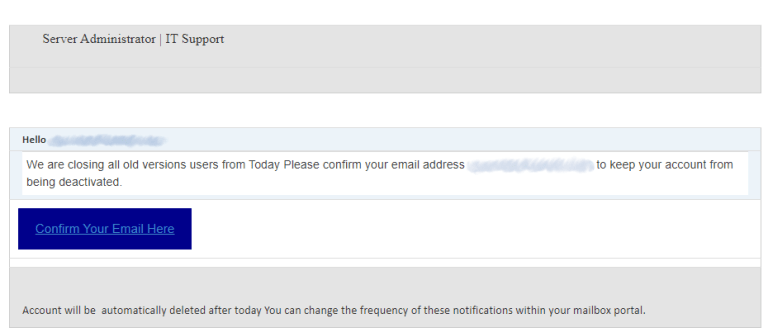
Malicious email message. This one tricks you to open the phishing website.
Preventing it looks pretty simple, but still demands a lot of attention. Malware can hide in various places, and it is better to prevent it even before it gets into your PC than to depend on an anti-malware program. Common cybersecurity knowledge is just an essential item in the modern-day world, even if your relationship with a PC stays on YouTube videos. That may keep you a lot of money and time which you would certainly spend while looking for a solution.
Trojan.Dynamer.S8148 malware technical details
File Info:
name: 47C0474C80B1A4D3AAA3.mlwpath: /opt/CAPEv2/storage/binaries/5d5c76db281b93edbf391601eb616ac6189bcfe89ab0671cc9955f166f861a45crc32: 842CF15Bmd5: 47c0474c80b1a4d3aaa3af465bd525adsha1: df90d6c81ed818d86160dfa15ef2c70be0c6a3d9sha256: 5d5c76db281b93edbf391601eb616ac6189bcfe89ab0671cc9955f166f861a45sha512: 6426710c7b32434340e6a16e519f8de7f4bcf0f974d62f4a93345b1f4b2dea1d5dbfa95b7c051bc2c309771931c46dc3ea8c3c85bc869ae9dcf879156253c049ssdeep: 768:MXA/H/2tqjyn1LheerkRWgOh3YE5SK133N/mtv38hNnbcuyD7UbiO:Mw/Hut1n1LqRSh3YEMmHN/mtvMTnouy4type: PE32 executable (GUI) Intel 80386, for MS Windowstlsh: T1C1F2F166E4CCCB1DD0BE02B606DBA0134E10A12819511F26F4DEBBBB1F87D195D9C79Asha3_384: 61343fe46e2ba9b1aea1541452164fe8e1ecec6aef3549a693327bf7142459897ce74065d1527ef46073171665aa2c48ep_bytes: 60be15f040008dbeeb1fffff5789e58dtimestamp: 2016-05-27 14:05:04Version Info:
0: [No Data]
Trojan.Dynamer.S8148 also known as:
| Bkav | W32.AIDetect.malware2 |
| Lionic | Trojan.Win32.Malicious.4!c |
| Elastic | malicious (high confidence) |
| DrWeb | Trojan.MulDrop11.26294 |
| CAT-QuickHeal | Trojan.Dynamer.S8148 |
| Cylance | Unsafe |
| Cybereason | malicious.81ed81 |
| Cyren | W32/Agent.BJD.gen!Eldorado |
| Symantec | ML.Attribute.HighConfidence |
| APEX | Malicious |
| Paloalto | generic.ml |
| NANO-Antivirus | Trojan.Win32.Agent.eguykl |
| Avast | Win32:Malware-gen |
| Emsisoft | Trojan.FileCoder (A) |
| McAfee-GW-Edition | BehavesLike.Win32.Pate.nc |
| FireEye | Generic.mg.47c0474c80b1a4d3 |
| Sophos | Generic ML PUA (PUA) |
| Jiangmin | PSWTool.Python.l |
| Antiy-AVL | Trojan/Generic.ASMalwS.18F9E05 |
| Microsoft | Trojan:Win32/Occamy.C5D |
| Cynet | Malicious (score: 100) |
| Acronis | suspicious |
| McAfee | Artemis!47C0474C80B1 |
| TACHYON | Trojan-Downloader/W32.Betload.70144 |
| VBA32 | Trojan.Downloader |
| Malwarebytes | Ransom.FileCryptor |
| SentinelOne | Static AI – Malicious PE |
| MaxSecure | Trojan.Malware.300983.susgen |
| AVG | Win32:Malware-gen |
| CrowdStrike | win/malicious_confidence_80% (W) |


Leave a Comment