
Seeing the Troj/Krypt-WE detection usually means that your computer is in big danger. This computer virus can correctly be identified as ransomware – sort of malware which encrypts your files and forces you to pay for their decryption. Removing it requires some specific steps that must be done as soon as possible.
Troj/Krypt-WE detection is a virus detection you can spectate in your system. It usually appears after the provoking actions on your computer – opening the dubious email, clicking the advertisement in the Internet or setting up the program from untrustworthy sources. From the instance it appears, you have a short time to act before it begins its destructive action. And be sure – it is far better not to await these destructive effects.
What is Troj/Krypt-WE virus?
Troj/Krypt-WE Summary
In summary, Troj/Krypt-WE virus actions in the infected PC are next:
- Behavioural detection: Executable code extraction – unpacking;
- CAPE extracted potentially suspicious content;
- Unconventionial language used in binary resources: Tamil;
- The binary contains an unknown PE section name indicative of packing;
- The binary likely contains encrypted or compressed data.;
- Authenticode signature is invalid;
- CAPE detected the RedLine malware family;
- Yara rule detections observed from a process memory dump/dropped files/CAPE;
- Ciphering the files located on the victim’s disks — so the victim cannot open these files;
- Blocking the launching of .exe files of security tools
- Blocking the launching of installation files of anti-virus apps
Ransomware has actually been a major problem for the last 4 years. It is difficult to picture a more damaging virus for both individual users and companies. The algorithms utilized in Troj/Krypt-WE (usually, RHA-1028 or AES-256) are not hackable – with minor exclusions. To hack it with a brute force, you need to have more time than our galaxy already exists, and possibly will exist. However, that virus does not do all these horrible things without delay – it can require up to several hours to cipher all of your files. Hence, seeing the Troj/Krypt-WE detection is a clear signal that you need to begin the removal procedure.
Where did I get the Troj/Krypt-WE?
General ways of Troj/Krypt-WE spreading are basic for all other ransomware examples. Those are one-day landing web pages where victims are offered to download the free software, so-called bait e-mails and hacktools. Bait e-mails are a pretty new tactic in malware spreading – you receive the email that simulates some routine notifications about deliveries or bank service conditions shifts. Inside of the email, there is a corrupted MS Office file, or a link which opens the exploit landing site.
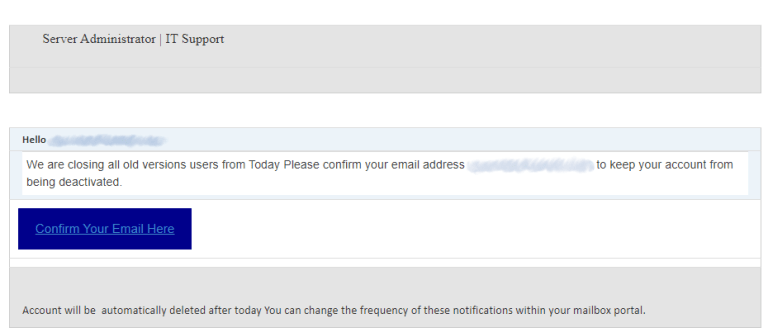
Malicious email message. This one tricks you to open the phishing website.
Avoiding it looks pretty simple, but still needs a lot of focus. Malware can hide in different spots, and it is far better to prevent it even before it gets into your computer than to rely on an anti-malware program. Essential cybersecurity knowledge is just an essential thing in the modern world, even if your interaction with a PC stays on YouTube videos. That can save you a great deal of time and money which you would certainly spend while seeking a fixing guide.
Troj/Krypt-WE malware technical details
File Info:
name: C6766C5B8F2B60990217.mlwpath: /opt/CAPEv2/storage/binaries/b58ea2a264880433d74d8ace76ae73d517b1b94539aa8c3317a03a69cd2c3209crc32: 2012260Fmd5: c6766c5b8f2b60990217243e6a1b6968sha1: f66e9de84e04ab23b00ba92a96f4e94e0bd2e530sha256: b58ea2a264880433d74d8ace76ae73d517b1b94539aa8c3317a03a69cd2c3209sha512: 4c2e9166bfe98e251406409f99369da2e570b909c9a2e443e0202fd9063b7d403f8b6460a3ea463e2ba53db6dde0a5be77de3ef730c1597093721c91957afa15ssdeep: 6144:ZRq3IrQK8fM5TFRSWBPbubcks4m0kXs4UM7s7fq:ZRq4rQK8fCXSGPbuds4AXs4NQtype: PE32 executable (GUI) Intel 80386, for MS Windowstlsh: T174848D1372F06872EA324A318E3EC6F8665EF9624F55ABDB1315DA2F09B11F2C172741sha3_384: e12555c3e3d7e3441a5cda6ad1d70f4a3df72babc64a4b0ace1eb663710246b5d0dd15970b013258375963477b366877ep_bytes: e870450000e989feffff8bff558bec8btimestamp: 2022-04-04 09:04:27Version Info:
FileDescriptions: NiceIncorporatedFileVersion: 47.44.8.14LegalCopyrights: Night bizon inc.LegalTrademark1: ElonDoesntGetItProductName: dpfkigosdfjngosdfgnoTranslation: 0x4016 0x0534
Troj/Krypt-WE also known as:
| Bkav | W32.AIDetectMalware |
| Elastic | malicious (high confidence) |
| CAT-QuickHeal | Ransom.Stop.P5 |
| McAfee | Lockbit-FSWW!C6766C5B8F2B |
| Sangfor | Virus.Win32.Save.a |
| Cybereason | malicious.84e04a |
| Symantec | Packed.Generic.528 |
| APEX | Malicious |
| Cynet | Malicious (score: 100) |
| Kaspersky | VHO:Trojan-PSW.Win32.Racealer.gen |
| McAfee-GW-Edition | BehavesLike.Win32.Lockbit.fm |
| Trapmine | malicious.high.ml.score |
| FireEye | Generic.mg.c6766c5b8f2b6099 |
| Sophos | Troj/Krypt-WE |
| Ikarus | Trojan-Ransom.StopCrypt |
| Microsoft | Trojan:Win32/Sabsik.FL.B!ml |
| ZoneAlarm | VHO:Trojan-PSW.Win32.Racealer.gen |
| Detected | |
| AhnLab-V3 | Trojan/Win.Glupteba.R427166 |
| Acronis | suspicious |
| VBA32 | BScope.Trojan.AET.281105 |
| Cylance | unsafe |
| Rising | [email protected] (RDML:uuoY3ANsJYsoNBYgHzEKLw) |
| SentinelOne | Static AI – Malicious PE |
| MaxSecure | Trojan.Malware.300983.susgen |
| DeepInstinct | MALICIOUS |
| CrowdStrike | win/malicious_confidence_100% (D) |


Leave a Comment