
StripedFly is a sophisticated malware that boasts a plethora of anti-detection measures. This modular software infiltrates systems through a multi-stage process, including a custom-built TOR client. It excels in data reconnaissance, collecting extensive system information and credentials, and can execute various commands.
StripedFly can locate and download specific file formats, capture screenshots, record audio, and target a range of web browsers. While initially identified as a cryptominer, its true complexity lies in a diverse set of functions. Distribution methods and future iterations further amplify its threat potential.
StripedFly Malware Overview
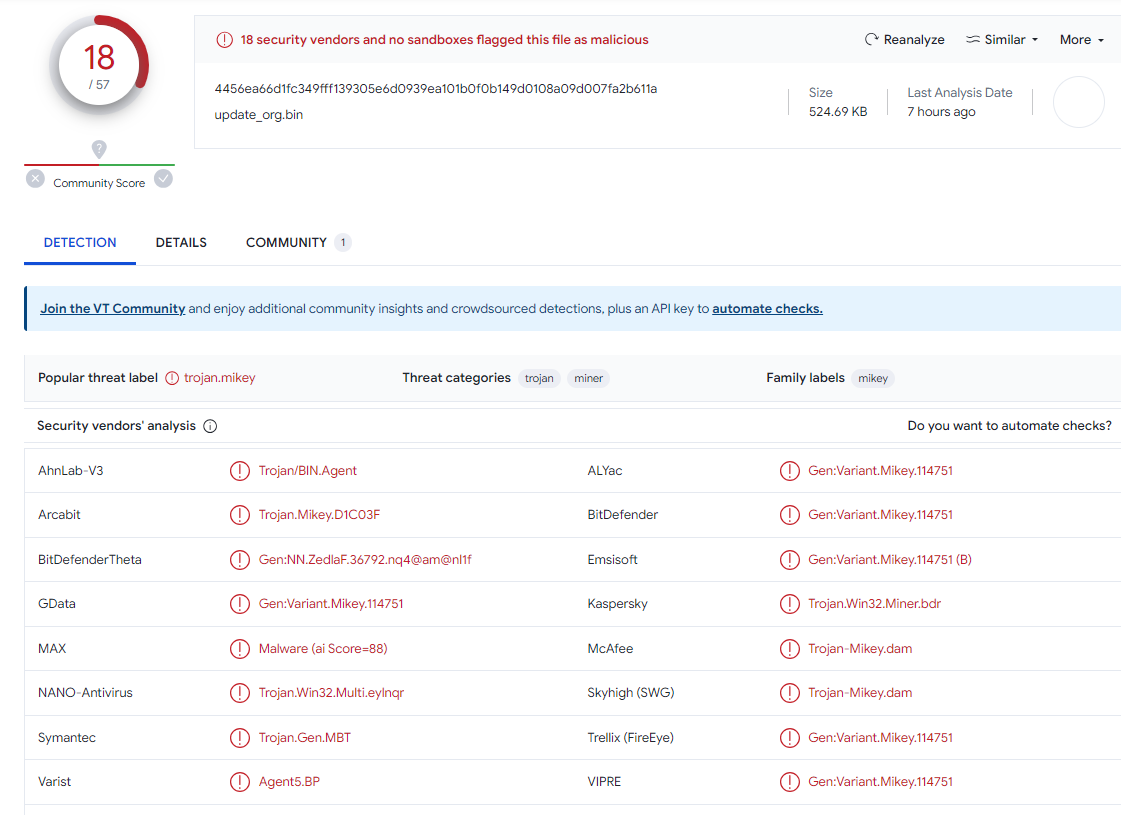
While StripedFly gained prominence in 2022, its use of an exploit dating back to 2017 suggests a longer presence in the threat landscape. Notably, it leverages legitimate code repositories like Bitbucket, GitHub, and GitLab, with download tracking on Bitbucket revealing file downloads in the range of 50,000-150,000. These numbers underscore the extensive reach of StripedFly.
| Name | StripedFly |
| Detection | StripedFly |
| Damage | Can operate as literally any malware type possible, from stealers and coin miners to ransomware. |
| Similar Behavior | PySilon, SmokeLoader |
Technical details
StripedFly’s distinction as high-end malware is primarily attributed to its extensive anti-detection capabilities. This sophisticated malware follows a multi-stage infiltration process, incorporating a custom lightweight TOR client.
The malware employs multiple command-receiving and execution modules. Other modules equip StripedFly with the capability to locate and download specific file formats, ranging from source code to certificates, databases, documents, and multimedia files. The malware’s file scanning extends to all local drives and network shares, excluding system folders.
Stripped Fly Add-on Functionality
Being a modular software, StripedFly’s infections can vary based on the combination of downloaded modules. Notable components within this framework include a reconnaissance module for gathering comprehensive system data, which is then relayed to the Command and Control (C&C) server. This data encompasses device information, OS details, MAC address, RAM, IP addresses with geolocations, user account credentials and privileges, system language, keyboard layout, and installed antivirus software.
Furthermore, StripedFly can monitor active windows and capture screenshots. It can also record audio through integrated or attached microphones. One crucial module focuses on credential theft, gathering usernames, passwords, personally identifiable information, and various credentials.
StrippedFly targets a range of web browsers, including Google Chrome, Mozilla Firefox, Internet Explorer, and more. This module extends its reach to Wi-Fi network names and data for FTP, SSH, and WebDAV connections through software like Cyberduck, FileZilla, and WinSCP.
Initially, StripedFly’s cryptocurrency mining module led to its misidentification as a cryptominer. This module engages in Monero cryptocurrency mining. However, the inclusion of this module might not be solely driven by financial motives, as cryptomining is generally less profitable, especially for creators of advanced malware.


Leave a Comment