
Spectating the Ransom:Win32/StopCrypt.SLK!MTB malware detection means that your computer is in big danger. This malware can correctly be identified as ransomware – sort of malware which encrypts your files and asks you to pay for their decryption. Deleteing it requires some unusual steps that must be taken as soon as possible.
Ransom:Win32/StopCrypt.SLK!MTB detection is a malware detection you can spectate in your computer. It often appears after the preliminary procedures on your computer – opening the suspicious e-mail, clicking the banner in the Internet or setting up the program from unreliable resources. From the moment it shows up, you have a short time to act before it starts its harmful action. And be sure – it is much better not to await these destructive things.
What is Ransom:Win32/StopCrypt.SLK!MTB virus?
Ransom:Win32/StopCrypt.SLK!MTB Summary
Summarizingly, Ransom:Win32/StopCrypt.SLK!MTB ransomware activities in the infected system are next:
- SetUnhandledExceptionFilter detected (possible anti-debug);
- Behavioural detection: Executable code extraction – unpacking;
- Sample contains Overlay data;
- Yara rule detections observed from a process memory dump/dropped files/CAPE;
- Presents an Authenticode digital signature;
- Creates RWX memory;
- Possible date expiration check, exits too soon after checking local time;
- Dynamic (imported) function loading detected;
- Enumerates the modules from a process (may be used to locate base addresses in process injection);
- CAPE extracted potentially suspicious content;
- Unconventionial language used in binary resources: Korean;
- The binary likely contains encrypted or compressed data.;
- Authenticode signature is invalid;
- CAPE detected the RedLine malware family;
- Anomalous binary characteristics;
- Ciphering the files located on the target’s disks — so the victim cannot check these files;
- Blocking the launching of .exe files of anti-malware apps
- Blocking the launching of installation files of anti-virus programs
Ransomware has been a headache for the last 4 years. It is challenging to realize a more dangerous virus for both individual users and companies. The algorithms used in Ransom:Win32/StopCrypt.SLK!MTB (generally, RHA-1028 or AES-256) are not hackable – with minor exclusions. To hack it with a brute force, you need more time than our galaxy already exists, and possibly will exist. However, that virus does not do all these unpleasant things immediately – it can take up to a few hours to cipher all of your documents. Therefore, seeing the Ransom:Win32/StopCrypt.SLK!MTB detection is a clear signal that you need to start the clearing procedure.
Where did I get the Ransom:Win32/StopCrypt.SLK!MTB?
General methods of Ransom:Win32/StopCrypt.SLK!MTB distribution are standard for all other ransomware variants. Those are one-day landing sites where victims are offered to download and install the free program, so-called bait e-mails and hacktools. Bait emails are a pretty modern method in malware distribution – you get the email that mimics some routine notifications about shipments or bank service conditions changes. Within the e-mail, there is a malicious MS Office file, or a link which leads to the exploit landing site.
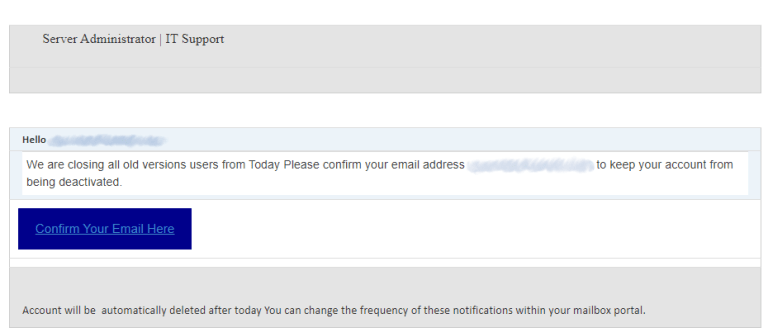
Malicious email message. This one tricks you to open the phishing website.
Avoiding it looks quite uncomplicated, but still needs a lot of attention. Malware can hide in different places, and it is better to stop it even before it invades your system than to trust in an anti-malware program. Simple cybersecurity knowledge is just an important thing in the modern-day world, even if your relationship with a PC stays on YouTube videos. That may save you a lot of money and time which you would certainly spend while seeking a solution.
Ransom:Win32/StopCrypt.SLK!MTB malware technical details
File Info:
name: 36039602B1262B59A5E1.mlwpath: /opt/CAPEv2/storage/binaries/34df404687fed1171d985fa74662a2b8c282ae9bf27dd177437079afa29cca1bcrc32: DDF30301md5: 36039602b1262b59a5e1c5b7579d9c09sha1: ee9aebf0ab263349878cbf90e5a256bbe444682fsha256: 34df404687fed1171d985fa74662a2b8c282ae9bf27dd177437079afa29cca1bsha512: fb83eedc76aef0cf0aab846892225ce4aa5a347e3ea3e4dda67c75610622d17ca93099759f85eb9ffa00293e285cf2462d03f8fc74acfd043aa22332e088351dssdeep: 6144:ZcFW8FsrExVaiU3S2qPFnDALuQgL2dgj2RUibaJMSCrs+zm1/a/fmzvF:+jEExV5U3S2qPFn0trR9KCr9Q/cwNtype: PE32 executable (GUI) Intel 80386, for MS Windowstlsh: T1B784C000BA90D035E5B352F8597AC3A9B93D7EA05B7554CB22D52AEE5734BE0EC3130Bsha3_384: 42bc81f066694cc13818e4a0f0fa65941dc29850577e1e4db0c6b9efa09fbed94dd42ac973bde7ca25a5234f710c21e4ep_bytes: 8bff558bece876a70000e8110000005dtimestamp: 2021-12-11 02:31:07Version Info:
Translations: 0x0154 0x0365
Ransom:Win32/StopCrypt.SLK!MTB also known as:
| MicroWorld-eScan | Trojan.GenericKDZ.90724 |
| FireEye | Generic.mg.36039602b1262b59 |
| ALYac | Trojan.GenericKDZ.90710 |
| Cylance | Unsafe |
| VIPRE | Trojan.GenericKDZ.90724 |
| Sangfor | Trojan.Win32.Save.a |
| K7AntiVirus | Trojan ( 00596b6e1 ) |
| K7GW | Trojan ( 00596b6e1 ) |
| Symantec | ML.Attribute.HighConfidence |
| Elastic | malicious (high confidence) |
| ESET-NOD32 | a variant of Win32/Kryptik.HQJV |
| Paloalto | generic.ml |
| ClamAV | Win.Packed.Crypterx-9954995-0 |
| Kaspersky | HEUR:Trojan-Spy.Win32.Stealer.gen |
| BitDefender | Trojan.GenericKDZ.90724 |
| NANO-Antivirus | Trojan.Win32.Kryptik.gsnmtt |
| Avast | Win32:PWSX-gen [Trj] |
| Rising | Malware.Obscure!1.A3BB (CLASSIC) |
| Ad-Aware | Trojan.GenericKDZ.90724 |
| Emsisoft | Trojan.GenericKDZ.90724 (B) |
| DrWeb | Trojan.Packed2.44393 |
| TrendMicro | Ransom.Win32.STOP.SMYXBFX.hp |
| McAfee-GW-Edition | Packed-GEE!36039602B126 |
| SentinelOne | Static AI – Malicious PE |
| Trapmine | malicious.high.ml.score |
| Sophos | ML/PE-A + Troj/Krypt-FV |
| APEX | Malicious |
| GData | Trojan.GenericKDZ.90724 |
| MAX | malware (ai score=83) |
| Arcabit | Trojan.Generic.D16256 |
| Microsoft | Ransom:Win32/StopCrypt.SLK!MTB |
| Cynet | Malicious (score: 100) |
| AhnLab-V3 | Packed/Win.GEE.R508209 |
| McAfee | Packed-GEE!36039602B126 |
| VBA32 | BScope.Trojan.Wacatac |
| Malwarebytes | Trojan.MalPack.GS |
| Ikarus | Trojan-Ransom.StopCrypt |
| MaxSecure | Trojan.Malware.300983.susgen |
| Fortinet | W32/PossibleThreat |
| AVG | Win32:PWSX-gen [Trj] |
| CrowdStrike | win/malicious_confidence_100% (W) |


Leave a Comment