
Spectating the Ransom:Win32/StopCrypt.PX!MTB malware detection usually means that your system is in big danger. This computer virus can correctly be named as ransomware – virus which ciphers your files and forces you to pay for their decryption. Deleteing it requires some unusual steps that must be done as soon as possible.
Ransom:Win32/StopCrypt.PX!MTB detection is a virus detection you can spectate in your system. It often shows up after the preliminary actions on your computer – opening the dubious e-mail, clicking the advertisement in the Internet or setting up the program from dubious resources. From the moment it appears, you have a short time to take action until it starts its destructive activity. And be sure – it is far better not to await these destructive effects.
What is Ransom:Win32/StopCrypt.PX!MTB virus?
Ransom:Win32/StopCrypt.PX!MTB Summary
Summarizingly, Ransom:Win32/StopCrypt.PX!MTB ransomware activities in the infected PC are next:
- SetUnhandledExceptionFilter detected (possible anti-debug);
- Behavioural detection: Executable code extraction – unpacking;
- Yara rule detections observed from a process memory dump/dropped files/CAPE;
- Creates RWX memory;
- Possible date expiration check, exits too soon after checking local time;
- Dynamic (imported) function loading detected;
- A process created a hidden window;
- CAPE extracted potentially suspicious content;
- Unconventionial language used in binary resources: Spanish (Panama);
- The binary likely contains encrypted or compressed data.;
- Authenticode signature is invalid;
- Behavioural detection: Injection (Process Hollowing);
- Executed a process and injected code into it, probably while unpacking;
- Behavioural detection: Injection (inter-process);
- Created a process from a suspicious location;
- Encrypting the documents kept on the target’s disk drive — so the victim cannot use these files;
- Blocking the launching of .exe files of security tools
- Blocking the launching of installation files of anti-virus programs
Ransomware has actually been a major problem for the last 4 years. It is difficult to imagine a more harmful malware for both individual users and corporations. The algorithms utilized in Ransom:Win32/StopCrypt.PX!MTB (generally, RHA-1028 or AES-256) are not hackable – with minor exclusions. To hack it with a brute force, you need more time than our galaxy actually exists, and possibly will exist. But that malware does not do all these terrible things immediately – it may take up to a few hours to cipher all of your documents. Thus, seeing the Ransom:Win32/StopCrypt.PX!MTB detection is a clear signal that you need to begin the removal procedure.
Where did I get the Ransom:Win32/StopCrypt.PX!MTB?
General methods of Ransom:Win32/StopCrypt.PX!MTB distribution are typical for all other ransomware examples. Those are one-day landing websites where users are offered to download the free software, so-called bait e-mails and hacktools. Bait emails are a relatively modern method in malware distribution – you receive the e-mail that imitates some routine notifications about deliveries or bank service conditions changes. Within the e-mail, there is an infected MS Office file, or a link which opens the exploit landing site.
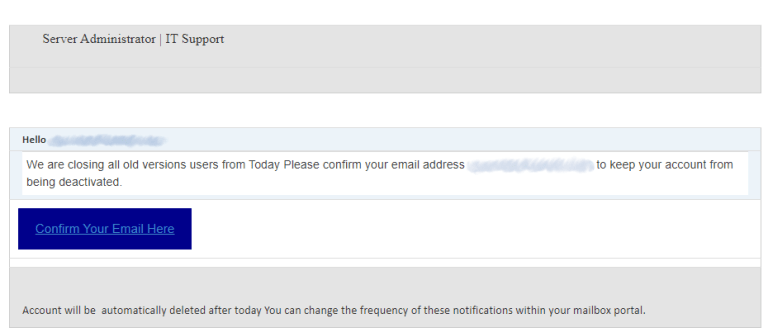
Malicious email message. This one tricks you to open the phishing website.
Avoiding it looks fairly easy, but still demands a lot of awareness. Malware can hide in various spots, and it is far better to stop it even before it invades your PC than to rely upon an anti-malware program. General cybersecurity awareness is just an essential item in the modern world, even if your interaction with a PC remains on YouTube videos. That can save you a lot of money and time which you would spend while seeking a fixing guide.
Ransom:Win32/StopCrypt.PX!MTB malware technical details
File Info:
name: EF772315F88F357EEFCF.mlwpath: /opt/CAPEv2/storage/binaries/9ef81059471ffb382077f86eacba144416f58e6f26286a5245d3ec940d8e3441crc32: 4DED972Amd5: ef772315f88f357eefcf420d7f26c04dsha1: 2d0f0cfa9a06c484230e5609c7a639209f103be4sha256: 9ef81059471ffb382077f86eacba144416f58e6f26286a5245d3ec940d8e3441sha512: 3e31cab7cb229befe6c34f706f3c7bcdfc672e45769695d7dbb0400bf8eac7da902c02f8702c803af69abb55cf4ef1f0aa4985f1a625c3db2aaf5bdae3211c46ssdeep: 6144:sioENy+CIVXMIiqjIRxCQJU+3c7mU4Mm:sioCy2iqjIRxU+QmUOtype: PE32 executable (GUI) Intel 80386, for MS Windowstlsh: T191648D0067E0C434F5B712B859BA93B9B53FBDA16B2490CF62D516EA5A346E0EC3131Bsha3_384: d705d8d724f004307ec4c5848596e9c4e5fea230554e5535b2b2d269da7010258a1dadaa7aca25b6f8e90b71978fb900ep_bytes: 8bff558bece8f63b0000e8110000005dtimestamp: 2021-02-01 10:21:55Version Info:
0: [No Data]
Ransom:Win32/StopCrypt.PX!MTB also known as:
| Bkav | W32.AIDetect.malware1 |
| Lionic | Trojan.Win32.Strab.4!c |
| Elastic | malicious (high confidence) |
| Cynet | Malicious (score: 100) |
| CAT-QuickHeal | Trojan.RaccryptPMF.S25282268 |
| ALYac | Trojan.GenericKD.47511006 |
| Malwarebytes | Trojan.MalPack.GS |
| Sangfor | Trojan.Win32.Save.a |
| K7AntiVirus | Trojan ( 0058b0df1 ) |
| Alibaba | Ransom:Win32/StopCrypt.0cdef4e8 |
| K7GW | Trojan ( 0058b0df1 ) |
| CrowdStrike | win/malicious_confidence_100% (W) |
| Cyren | W32/Kryptik.FPK.gen!Eldorado |
| Symantec | ML.Attribute.HighConfidence |
| ESET-NOD32 | a variant of Win32/Kryptik.HNNA |
| Baidu | Win32.Trojan.Kryptik.jm |
| APEX | Malicious |
| Avast | Win32:BotX-gen [Trj] |
| Kaspersky | HEUR:Backdoor.Win32.Mokes.gen |
| BitDefender | Trojan.GenericKD.47511006 |
| ViRobot | Trojan.Win32.Z.Strab.335872.C |
| MicroWorld-eScan | Trojan.GenericKD.47511006 |
| Rising | Malware.Obscure/Heur!1.9E03 (CLASSIC) |
| Ad-Aware | Trojan.GenericKD.47511006 |
| Emsisoft | Trojan.Crypt (A) |
| F-Secure | Trojan.TR/Kryptik.umbkm |
| DrWeb | Trojan.PWS.Stealer.31482 |
| Zillya | Trojan.Kryptik.Win32.3646799 |
| TrendMicro | Trojan.Win32.SMOKELOADER.YXBK4Z |
| McAfee-GW-Edition | BehavesLike.Win32.Worm.fm |
| FireEye | Generic.mg.ef772315f88f357e |
| Sophos | Mal/Generic-S + Troj/Krypt-DY |
| Ikarus | Trojan.Agent |
| GData | Win32.Trojan.BSE.1JF6AHQ |
| Jiangmin | Trojan.Strab.pu |
| Avira | TR/Kryptik.umbkm |
| Antiy-AVL | Trojan/Generic.ASMalwS.34DD791 |
| Arcabit | Trojan.Generic.D2D4F5DE |
| Microsoft | Ransom:Win32/StopCrypt.PX!MTB |
| AhnLab-V3 | Trojan/Win.MalPE.R453834 |
| Acronis | suspicious |
| McAfee | Packed-GDV!EF772315F88F |
| MAX | malware (ai score=82) |
| VBA32 | Trojan.Strab |
| Cylance | Unsafe |
| TrendMicro-HouseCall | Trojan.Win32.SMOKELOADER.YXBK4Z |
| Tencent | Trojan-Spy.Win32.Stealer.16000122 |
| Yandex | Trojan.Kryptik!RPyDkKPqhkk |
| SentinelOne | Static AI – Malicious PE |
| MaxSecure | Trojan.Malware.300983.susgen |
| Fortinet | W32/GenKryptik.FODF!tr |
| AVG | Win32:BotX-gen [Trj] |
| Cybereason | malicious.a9a06c |
| Paloalto | generic.ml |


Leave a Comment