
Seeing the Ransom:Win32/StopCrypt.PCE!MTB detection name usually means that your system is in big danger. This virus can correctly be named as ransomware – sort of malware which encrypts your files and forces you to pay for their decryption. Stopping it requires some peculiar steps that must be taken as soon as possible.
Ransom:Win32/StopCrypt.PCE!MTB detection is a virus detection you can spectate in your computer. It generally shows up after the preliminary procedures on your computer – opening the suspicious email messages, clicking the advertisement in the Web or mounting the program from suspicious sources. From the second it appears, you have a short time to act before it begins its destructive activity. And be sure – it is far better not to await these malicious things.
What is Ransom:Win32/StopCrypt.PCE!MTB virus?
Ransom:Win32/StopCrypt.PCE!MTB Summary
In summary, Ransom:Win32/StopCrypt.PCE!MTB ransomware activities in the infected PC are next:
- Behavioural detection: Executable code extraction – unpacking;
- Sample contains Overlay data;
- Yara rule detections observed from a process memory dump/dropped files/CAPE;
- Presents an Authenticode digital signature;
- CAPE extracted potentially suspicious content;
- Unconventionial language used in binary resources: Kannada;
- The binary likely contains encrypted or compressed data.;
- Authenticode signature is invalid;
- CAPE detected the RedLine malware family;
- Anomalous binary characteristics;
- Encrypting the documents kept on the victim’s disk drives — so the victim cannot use these documents;
- Blocking the launching of .exe files of anti-virus apps
- Blocking the launching of installation files of anti-malware apps
Ransomware has actually been a horror story for the last 4 years. It is hard to imagine a more hazardous malware for both individuals and corporations. The algorithms used in Ransom:Win32/StopCrypt.PCE!MTB (generally, RHA-1028 or AES-256) are not hackable – with minor exclusions. To hack it with a brute force, you need a lot more time than our galaxy currently exists, and possibly will exist. However, that virus does not do all these horrible things without delay – it may require up to several hours to cipher all of your documents. Thus, seeing the Ransom:Win32/StopCrypt.PCE!MTB detection is a clear signal that you should start the removal process.
Where did I get the Ransom:Win32/StopCrypt.PCE!MTB?
Common tactics of Ransom:Win32/StopCrypt.PCE!MTB injection are standard for all other ransomware examples. Those are one-day landing websites where victims are offered to download and install the free app, so-called bait e-mails and hacktools. Bait e-mails are a pretty new method in malware distribution – you receive the email that simulates some routine notifications about shippings or bank service conditions modifications. Within the email, there is a corrupted MS Office file, or a web link which leads to the exploit landing page.
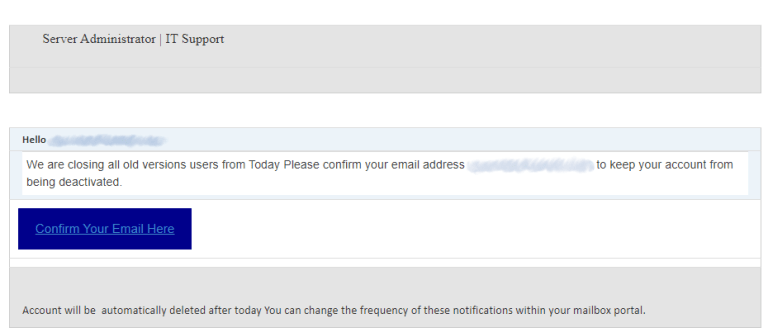
Malicious email message. This one tricks you to open the phishing website.
Preventing it looks pretty uncomplicated, but still requires a lot of awareness. Malware can hide in different spots, and it is better to prevent it even before it goes into your computer than to trust in an anti-malware program. General cybersecurity knowledge is just an essential thing in the modern world, even if your relationship with a PC stays on YouTube videos. That may save you a great deal of time and money which you would certainly spend while trying to find a fixing guide.
Ransom:Win32/StopCrypt.PCE!MTB malware technical details
File Info:
name: 50AC8C0F0EDF647604DD.mlwpath: /opt/CAPEv2/storage/binaries/70c838085615cbc910afe3a5b98b3f99e2e13a3139f6d50e1a7ba7c1fed2146ecrc32: 2B10CB09md5: 50ac8c0f0edf647604dd3a610bddd911sha1: d22133c9de96d52cdb418666ac7bcbf9975b6ae7sha256: 70c838085615cbc910afe3a5b98b3f99e2e13a3139f6d50e1a7ba7c1fed2146esha512: 2a9b0e63a6908e95f200e072578e40a3fd5c48fcf68f1639a0a3778405f48f3b235e69766bc9f4ac86fd20fadd53577b10a50ea3a79020279b3a5b78c953601essdeep: 6144:2+YTbj6NAwPJ7KNVEBwEVFdtxhZ4MMyr+ecigafwVfVN:2jP+PoNOBRVztxhCMMyr+e5Ktype: PE32 executable (GUI) Intel 80386, for MS Windowstlsh: T16674F11276A0CC72D8522E716874C7B05733BDA2AA709447F794776E2EB33E05AB131Bsha3_384: 252a8ffcf191533dd8134d4cebd5aa9b604f4ea53c0c797d66abae240c7a6abeadc6f55e3fa74ee642536e90b4ffc53dep_bytes: e83b4b0000e989feffffcccccccccccctimestamp: 2021-08-27 10:01:15Version Info:
FileVersions: 44.48.44.20Copyrighz: Copyright (C) 2022, pozkarteProjectVersion: 85.41.5.33
Ransom:Win32/StopCrypt.PCE!MTB also known as:
| Bkav | W32.AIDetect.malware1 |
| Lionic | Heuristic.File.Generic.00×1!p |
| MicroWorld-eScan | Trojan.GenericKD.61001004 |
| FireEye | Generic.mg.50ac8c0f0edf6476 |
| McAfee | Packed-GDD!50AC8C0F0EDF |
| Cylance | Unsafe |
| Sangfor | Trojan.Win32.Save.a |
| K7AntiVirus | Riskware ( 00584baa1 ) |
| BitDefender | Trojan.GenericKD.61001004 |
| K7GW | Riskware ( 00584baa1 ) |
| CrowdStrike | win/malicious_confidence_100% (W) |
| Cyren | W32/Kryptik.HGS.gen!Eldorado |
| Symantec | ML.Attribute.HighConfidence |
| Elastic | malicious (high confidence) |
| ESET-NOD32 | a variant of Win32/Kryptik.HQFV |
| Cynet | Malicious (score: 100) |
| APEX | Malicious |
| Paloalto | generic.ml |
| ClamAV | Win.Malware.Mikey-9957589-0 |
| Kaspersky | HEUR:Trojan-Spy.Win32.Stealer.pef |
| Alibaba | TrojanSpy:Win32/Raccoon.194771d6 |
| NANO-Antivirus | Trojan.Win32.Stealer.jqkgbm |
| Rising | Trojan.Kryptik!8.8 (TFE:5:Q263RgRkQuM) |
| Ad-Aware | Trojan.GenericKD.61001004 |
| Emsisoft | Trojan.GenericKD.61001004 (B) |
| Comodo | Malware@#3septl1wn0gg |
| F-Secure | Heuristic.HEUR/AGEN.1249898 |
| DrWeb | Trojan.PWS.Stealer.33602 |
| VIPRE | Trojan.GenericKD.61001004 |
| TrendMicro | TrojanSpy.Win32.REDLINE.YXCGXZ |
| McAfee-GW-Edition | Packed-GDD!50AC8C0F0EDF |
| Trapmine | malicious.high.ml.score |
| Sophos | Mal/Agent-AWV |
| Ikarus | Trojan.Krypt |
| Jiangmin | TrojanSpy.Stealer.zak |
| Avira | HEUR/AGEN.1249898 |
| Antiy-AVL | Trojan/Generic.ASMalwS.813F |
| Microsoft | Ransom:Win32/StopCrypt.PCE!MTB |
| GData | Win32.Trojan.PSE.1FLET03 |
| Detected | |
| AhnLab-V3 | Packed/Win.GDD.R506565 |
| VBA32 | Malware-Cryptor.InstallCore.6 |
| ALYac | Trojan.GenericKD.61001004 |
| MAX | malware (ai score=84) |
| Malwarebytes | Trojan.MalPack.GS |
| Panda | Trj/Chgt.AB |
| TrendMicro-HouseCall | TrojanSpy.Win32.REDLINE.YXCGXZ |
| Tencent | Malware.Win32.Gencirc.12031f86 |
| SentinelOne | Static AI – Suspicious PE |
| MaxSecure | Trojan.Malware.300983.susgen |
| Fortinet | W32/GenKryptik.FXXR!tr |
| AVG | Win32:PWSX-gen [Trj] |
| Cybereason | malicious.9de96d |
| Avast | Win32:PWSX-gen [Trj] |


Leave a Comment