
Spectating the Ransom:Win32/StopCrypt.PBF!MTB malware detection means that your computer is in big danger. This malware can correctly be identified as ransomware – sort of malware which ciphers your files and asks you to pay for their decryption. Removing it requires some specific steps that must be done as soon as possible.
Ransom:Win32/StopCrypt.PBF!MTB detection is a virus detection you can spectate in your system. It often appears after the preliminary actions on your computer – opening the dubious email, clicking the advertisement in the Web or setting up the program from unreliable resources. From the second it appears, you have a short time to do something about it until it starts its malicious activity. And be sure – it is much better not to await these harmful things.
What is Ransom:Win32/StopCrypt.PBF!MTB virus?
Ransom:Win32/StopCrypt.PBF!MTB Summary
In total, Ransom:Win32/StopCrypt.PBF!MTB ransomware activities in the infected PC are next:
- SetUnhandledExceptionFilter detected (possible anti-debug);
- Behavioural detection: Executable code extraction – unpacking;
- Yara rule detections observed from a process memory dump/dropped files/CAPE;
- Presents an Authenticode digital signature;
- Creates RWX memory;
- Dynamic (imported) function loading detected;
- Enumerates the modules from a process (may be used to locate base addresses in process injection);
- CAPE extracted potentially suspicious content;
- Unconventionial language used in binary resources: Manipuri;
- Authenticode signature is invalid;
- CAPE detected the RedLine malware family;
- Anomalous binary characteristics;
- Encrypting the documents located on the victim’s disks — so the victim cannot use these documents;
- Blocking the launching of .exe files of security tools
- Blocking the launching of installation files of anti-virus programs
Ransomware has been a headache for the last 4 years. It is difficult to picture a more harmful malware for both individuals and companies. The algorithms used in Ransom:Win32/StopCrypt.PBF!MTB (generally, RHA-1028 or AES-256) are not hackable – with minor exclusions. To hack it with a brute force, you need to have more time than our galaxy actually exists, and possibly will exist. However, that malware does not do all these bad things without delay – it can require up to a few hours to cipher all of your documents. Thus, seeing the Ransom:Win32/StopCrypt.PBF!MTB detection is a clear signal that you must begin the removal process.
Where did I get the Ransom:Win32/StopCrypt.PBF!MTB?
Routine methods of Ransom:Win32/StopCrypt.PBF!MTB spreading are usual for all other ransomware examples. Those are one-day landing web pages where users are offered to download and install the free software, so-called bait e-mails and hacktools. Bait e-mails are a quite new tactic in malware distribution – you get the email that simulates some regular notifications about deliveries or bank service conditions changes. Within the email, there is a corrupted MS Office file, or a link which opens the exploit landing page.
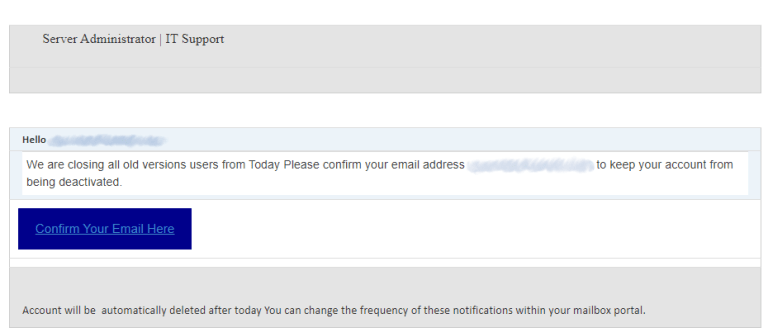
Malicious email message. This one tricks you to open the phishing website.
Avoiding it looks quite simple, however, still requires a lot of awareness. Malware can hide in various spots, and it is far better to stop it even before it goes into your PC than to rely on an anti-malware program. General cybersecurity knowledge is just an important thing in the modern-day world, even if your relationship with a PC remains on YouTube videos. That may save you a lot of money and time which you would certainly spend while trying to find a fix guide.
Ransom:Win32/StopCrypt.PBF!MTB malware technical details
File Info:
name: 365F20A6960817BA2941.mlwpath: /opt/CAPEv2/storage/binaries/d887b77bd661b078b13d8820cdf35d0917e6d15d978c1d90b0bed75d9c123409crc32: F8F7ED86md5: 365f20a6960817ba2941fcffba506c64sha1: 9b3793b5163d6f8aa2d23e0e4cb6e93b05c9f351sha256: d887b77bd661b078b13d8820cdf35d0917e6d15d978c1d90b0bed75d9c123409sha512: e79bc5c93e81a735a8b6f6e788d80e758817071f9d4fd860cd7678f056fc5bcffe15f48288ff848d7d86f51d192b3319c5b066760b1e9dd33d54e9dbc50f0800ssdeep: 6144:NXNGF9bkXwFqVQccX1lwwcZO8SGz94tmYKcv9OdnpD42s+bS:NXNG/kAFqVuTwwcE8x9gmYxcpQhtype: PE32 executable (GUI) Intel 80386, for MS Windowstlsh: T1E594F113B990C433E66649717896D7749E7BB8301A30568B7BA4467C8F313E2EE7930Asha3_384: 6017b741dc15372b6bccc221c643901b69d09512f531fcc3e01c2242ff90867cedcdd91af07a85aa8a5d7411c8aa5d52ep_bytes: e884590000e978feffff8bff558bec8btimestamp: 2020-11-02 13:32:15Version Info:
FileVersion: 34.42.11.13Copyrighz: Copyright (C) 2022, fuzkarteProjectVersion: 5.13.85.11
Ransom:Win32/StopCrypt.PBF!MTB also known as:
| Lionic | Trojan.Win32.Stealer.l!c |
| DrWeb | Trojan.Siggen17.30831 |
| MicroWorld-eScan | Trojan.GenericKD.48738186 |
| FireEye | Generic.mg.365f20a6960817ba |
| CAT-QuickHeal | Trojan.StealerPMF.S27221281 |
| McAfee | Packed-GDT!365F20A69608 |
| Malwarebytes | Trojan.MalPack.GS |
| Sangfor | Trojan.Win32.Save.a |
| K7AntiVirus | Riskware ( 0040eff71 ) |
| Alibaba | Ransom:Win32/StopCrypt.49802e38 |
| K7GW | Riskware ( 0040eff71 ) |
| Cyren | W32/Kryptik.GHL.gen!Eldorado |
| Symantec | Packed.Generic.616 |
| Elastic | malicious (high confidence) |
| ESET-NOD32 | a variant of Win32/Kryptik.HOZD |
| TrendMicro-HouseCall | TROJ_GEN.R002C0DCU22 |
| Paloalto | generic.ml |
| ClamAV | Win.Packed.Strab-9942213-0 |
| Kaspersky | HEUR:Trojan-Spy.Win32.Stealer.gen |
| BitDefender | Trojan.GenericKD.48738186 |
| Avast | Win32:AceCrypter-Q [Cryp] |
| Tencent | Trojan-Spy.Win32.Stealer.16000356 |
| Ad-Aware | Trojan.GenericKD.48738186 |
| Emsisoft | Trojan.GenericKD.48738186 (B) |
| Comodo | Malware@#4oj1gtyjfi4j |
| Zillya | Trojan.Kryptik.Win32.3731024 |
| TrendMicro | TROJ_GEN.R002C0DCU22 |
| McAfee-GW-Edition | Packed-GDT!365F20A69608 |
| Sophos | Mal/Generic-R + Troj/Krypt-IR |
| Ikarus | Trojan-Ransom.StopCrypt |
| GData | Trojan.GenericKD.48738186 |
| Jiangmin | TrojanSpy.Stealer.rmu |
| Webroot | W32.Trojan.Gen |
| Avira | TR/AD.GenSHCode.stlqn |
| MAX | malware (ai score=85) |
| Antiy-AVL | Trojan/Generic.ASMalwS.3558C7D |
| Arcabit | Trojan.Generic.D2E7AF8A |
| Microsoft | Ransom:Win32/StopCrypt.PBF!MTB |
| Cynet | Malicious (score: 100) |
| AhnLab-V3 | Trojan/Win.MalPE.R480456 |
| ALYac | Trojan.GenericKD.48738186 |
| Cylance | Unsafe |
| APEX | Malicious |
| Rising | Trojan.Kryptik!1.D977 (CLOUD) |
| Yandex | Trojan.Kryptik!EdlRMjOxfGo |
| SentinelOne | Static AI – Malicious PE |
| MaxSecure | Trojan.Malware.73793603.susgen |
| Fortinet | W32/GenKryptik.FSNU!tr |
| AVG | Win32:AceCrypter-Q [Cryp] |
| Panda | Trj/GdSda.A |
| CrowdStrike | win/malicious_confidence_100% (W) |


Leave a Comment