
Seeing the Ransom:Win32/StopCrypt.PAJ!MTB detection name means that your computer is in big danger. This virus can correctly be named as ransomware – sort of malware which encrypts your files and forces you to pay for their decryption. Removing it requires some specific steps that must be done as soon as possible.
Ransom:Win32/StopCrypt.PAJ!MTB detection is a malware detection you can spectate in your system. It frequently shows up after the provoking actions on your computer – opening the dubious e-mail messages, clicking the banner in the Internet or mounting the program from suspicious resources. From the instance it shows up, you have a short time to do something about it before it begins its harmful activity. And be sure – it is better not to wait for these destructive things.
What is Ransom:Win32/StopCrypt.PAJ!MTB virus?
Ransom:Win32/StopCrypt.PAJ!MTB Summary
In total, Ransom:Win32/StopCrypt.PAJ!MTB ransomware actions in the infected PC are next:
- SetUnhandledExceptionFilter detected (possible anti-debug);
- Behavioural detection: Executable code extraction – unpacking;
- Yara rule detections observed from a process memory dump/dropped files/CAPE;
- Creates RWX memory;
- Guard pages use detected – possible anti-debugging.;
- Dynamic (imported) function loading detected;
- Performs HTTP requests potentially not found in PCAP.;
- A process created a hidden window;
- CAPE extracted potentially suspicious content;
- Unconventionial language used in binary resources: Spanish (Argentina);
- Authenticode signature is invalid;
- Uses Windows utilities for basic functionality;
- Deletes its original binary from disk;
- Network activity contains more than one unique useragent.;
- CAPE detected the OnlyLogger malware family;
- Attempts to modify proxy settings;
- Uses suspicious command line tools or Windows utilities;
- Encrypting the files kept on the target’s drives — so the victim cannot open these documents;
- Blocking the launching of .exe files of anti-virus apps
- Blocking the launching of installation files of anti-malware apps
Ransomware has actually been a headache for the last 4 years. It is hard to imagine a more harmful malware for both individual users and companies. The algorithms used in Ransom:Win32/StopCrypt.PAJ!MTB (generally, RHA-1028 or AES-256) are not hackable – with minor exclusions. To hack it with a brute force, you need a lot more time than our galaxy actually exists, and possibly will exist. However, that virus does not do all these bad things instantly – it may require up to a few hours to cipher all of your files. Therefore, seeing the Ransom:Win32/StopCrypt.PAJ!MTB detection is a clear signal that you should begin the removal procedure.
Where did I get the Ransom:Win32/StopCrypt.PAJ!MTB?
Common methods of Ransom:Win32/StopCrypt.PAJ!MTB injection are standard for all other ransomware examples. Those are one-day landing websites where victims are offered to download and install the free app, so-called bait emails and hacktools. Bait emails are a quite new tactic in malware spreading – you receive the e-mail that simulates some regular notifications about shippings or bank service conditions modifications. Inside of the email, there is a corrupted MS Office file, or a web link which opens the exploit landing page.
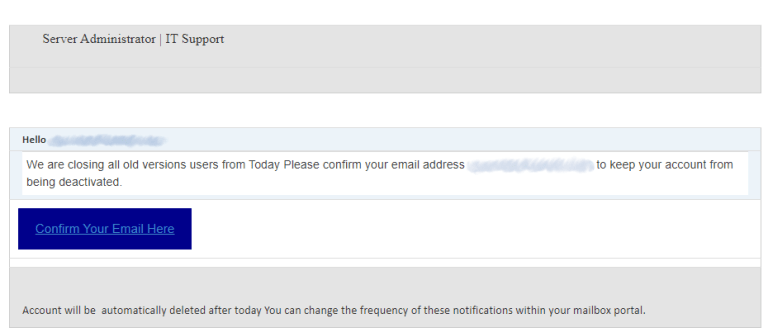
Malicious email message. This one tricks you to open the phishing website.
Preventing it looks fairly easy, however, still demands a lot of focus. Malware can hide in different places, and it is far better to prevent it even before it goes into your system than to trust in an anti-malware program. Standard cybersecurity knowledge is just an important thing in the modern world, even if your relationship with a PC stays on YouTube videos. That can keep you a lot of money and time which you would certainly spend while trying to find a fixing guide.
Ransom:Win32/StopCrypt.PAJ!MTB malware technical details
File Info:
name: 1D64AAA3D425237BE4BC.mlwpath: /opt/CAPEv2/storage/binaries/be381beb3435877071156380452d9ff94d519f7147e953864675c6b882649ea7crc32: 7DE65B8Emd5: 1d64aaa3d425237be4bcb3619fe3e8aesha1: 37f766b56bc88dcd9d6857b4237260f2a9a7bf25sha256: be381beb3435877071156380452d9ff94d519f7147e953864675c6b882649ea7sha512: ddde0052395b5c1cfe2639c5057f2729a81bc601e10c27b36e55f9f6206d984d199b4714e6e5803f81e1ef5b095a8fc973a89356ba23c40b9475e51d34d35d53ssdeep: 6144:fWysLP0scx+vxD/kBe+lE5Q0fcdpaHe44kqBp9Fuzbgwu:I4sO0/kMkkHe44LBp9Funntype: PE32 executable (GUI) Intel 80386, for MS Windowstlsh: T1B884DF313ADCC471C69312308860CBA55F7AF8216D7295C777A5376E1E30AEC9AF221Esha3_384: 2d79051d95fb6dee0a4e3bc3ba544da98ac3f51d59494cdde049ec477292c9dde5efccf8b40d88723736f17fe5b44c0aep_bytes: e876570000e979feffffcccccccccccctimestamp: 2021-03-16 21:57:50Version Info:
InternationalName: bomgvioci.iwaCopyright: Copyrighz (C) 2021, fudkortProjectVersion: 3.10.70.17Translation: 0x0129 0x0794
Ransom:Win32/StopCrypt.PAJ!MTB also known as:
| Bkav | W32.AIDetect.malware1 |
| Lionic | Trojan.Win32.Locky.j!c |
| Elastic | malicious (high confidence) |
| DrWeb | Trojan.Siggen16.30685 |
| MicroWorld-eScan | Trojan.GenericKDZ.82213 |
| FireEye | Generic.mg.1d64aaa3d425237b |
| ALYac | Trojan.GenericKDZ.82213 |
| Cylance | Unsafe |
| Sangfor | Trojan.Win32.Save.a |
| K7AntiVirus | Trojan ( 003e58dd1 ) |
| Alibaba | Ransom:Win32/StopCrypt.0354d937 |
| K7GW | Trojan ( 003e58dd1 ) |
| Cybereason | malicious.56bc88 |
| BitDefenderTheta | Gen:NN.ZexaF.34114.xqW@aKN0flU |
| Cyren | W32/Mikey.BZ.gen!Eldorado |
| Symantec | ML.Attribute.HighConfidence |
| ESET-NOD32 | a variant of Win32/Kryptik.HNYM |
| TrendMicro-HouseCall | TROJ_GEN.R002H0CAB22 |
| Paloalto | generic.ml |
| ClamAV | Win.Malware.Generic-9935569-0 |
| Kaspersky | HEUR:Trojan.Win32.Agent.gen |
| BitDefender | Trojan.GenericKDZ.82213 |
| Avast | Win32:Malware-gen |
| Ad-Aware | Trojan.GenericKDZ.82213 |
| Emsisoft | Trojan.GenericKDZ.82213 (B) |
| McAfee-GW-Edition | BehavesLike.Win32.Injector.fh |
| Sophos | Mal/Generic-R + Mal/Agent-AWV |
| SentinelOne | Static AI – Suspicious PE |
| Jiangmin | TrojanSpy.Stealer.mvy |
| Webroot | W32.Trojan.Gen |
| Avira | TR/AD.Chapak.jlgtm |
| MAX | malware (ai score=87) |
| Antiy-AVL | Trojan/Generic.ASMalwS.35030FC |
| Microsoft | Ransom:Win32/StopCrypt.PAJ!MTB |
| GData | Win32.Trojan.BSE.16VOW5Z |
| Cynet | Malicious (score: 100) |
| AhnLab-V3 | Trojan/Win.MalPE.R464212 |
| McAfee | Artemis!1D64AAA3D425 |
| VBA32 | BScope.Trojan.Convagent |
| Malwarebytes | Trojan.MalPack.GS |
| APEX | Malicious |
| Rising | Trojan.Kryptik!1.DB29 (CLOUD) |
| Yandex | Trojan.Agent!xL5ww1ftcn4 |
| Ikarus | Trojan.Win32.Crypt |
| Fortinet | W32/GenKryptik.ERHN!tr |
| AVG | Win32:Malware-gen |
| Panda | Trj/GdSda.A |
| CrowdStrike | win/malicious_confidence_100% (W) |


Leave a Comment