
Seeing the Ransom:Win32/PyrgenXlock.SK!MTB detection usually means that your system is in big danger. This virus can correctly be identified as ransomware – sort of malware which encrypts your files and asks you to pay for their decryption. Stopping it requires some peculiar steps that must be taken as soon as possible.
Ransom:Win32/PyrgenXlock.SK!MTB detection is a virus detection you can spectate in your computer. It usually appears after the provoking activities on your PC – opening the dubious e-mail, clicking the advertisement in the Internet or mounting the program from suspicious sources. From the instance it shows up, you have a short time to take action before it starts its harmful activity. And be sure – it is better not to wait for these malicious actions.
What is Ransom:Win32/PyrgenXlock.SK!MTB virus?
Ransom:Win32/PyrgenXlock.SK!MTB Summary
In total, Ransom:Win32/PyrgenXlock.SK!MTB virus activities in the infected computer are next:
- Sample contains Overlay data;
- Reads data out of its own binary image;
- CAPE extracted potentially suspicious content;
- The binary contains an unknown PE section name indicative of packing;
- The binary likely contains encrypted or compressed data.;
- The executable is compressed using UPX;
- Authenticode signature is invalid;
- CAPE detected the PyInstaller malware family;
- Harvests cookies for information gathering;
- Yara rule detections observed from a process memory dump/dropped files/CAPE;
- Encrypting the files kept on the victim’s drive — so the victim cannot check these files;
- Blocking the launching of .exe files of anti-virus programs
- Blocking the launching of installation files of security tools
Ransomware has actually been a horror story for the last 4 years. It is challenging to picture a more hazardous malware for both individual users and organizations. The algorithms used in Ransom:Win32/PyrgenXlock.SK!MTB (usually, RHA-1028 or AES-256) are not hackable – with minor exclusions. To hack it with a brute force, you need to have a lot more time than our galaxy already exists, and possibly will exist. But that virus does not do all these bad things without delay – it can take up to several hours to cipher all of your documents. Hence, seeing the Ransom:Win32/PyrgenXlock.SK!MTB detection is a clear signal that you need to start the clearing process.
Where did I get the Ransom:Win32/PyrgenXlock.SK!MTB?
Common tactics of Ransom:Win32/PyrgenXlock.SK!MTB distribution are standard for all other ransomware examples. Those are one-day landing sites where users are offered to download and install the free software, so-called bait e-mails and hacktools. Bait emails are a pretty new strategy in malware spreading – you get the e-mail that mimics some normal notifications about deliveries or bank service conditions shifts. Inside of the email, there is a malicious MS Office file, or a link which leads to the exploit landing page.
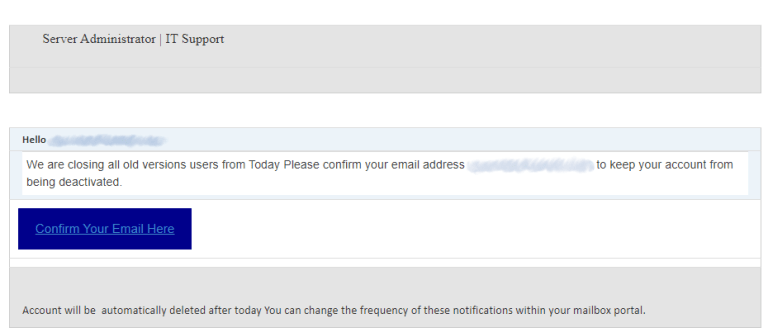
Malicious email message. This one tricks you to open the phishing website.
Avoiding it looks pretty simple, but still demands a lot of focus. Malware can hide in different places, and it is better to stop it even before it goes into your computer than to trust in an anti-malware program. Basic cybersecurity awareness is just an essential item in the modern world, even if your interaction with a PC stays on YouTube videos. That may keep you a great deal of money and time which you would certainly spend while searching for a fixing guide.
Ransom:Win32/PyrgenXlock.SK!MTB malware technical details
File Info:
name: 89A925D068F56815A13B.mlwpath: /opt/CAPEv2/storage/binaries/0c99139b43af2da50f48521328d157f4c27a500183d60d1b3f09dbe23299e8a7crc32: 7B4410B1md5: 89a925d068f56815a13b6e2b6e8a1be5sha1: 924d91b829e8e3b23bb46d8ed241da0814ab336dsha256: 0c99139b43af2da50f48521328d157f4c27a500183d60d1b3f09dbe23299e8a7sha512: b398ec65170f160866850c3b9e212742c351c364de1444d133af94523be97c9d1b3a3f69a9c9b5bfb44612ed602034e527f465f9ca040adf13f8b99b6825467dssdeep: 196608:CWfTJTn+WrXYMLL1mkJ2Z9Jq5dOYo+NWs7i7:CWfTJT+W0+BmKk9JMo5s7Stype: PE32 executable (GUI) Intel 80386, for MS Windowstlsh: T17E76330CE0306E93F15D583665D6A1AEB4BAC58F930083E691AFF722531E394B96D337sha3_384: 973ec1431d243092248d95892aa64205ec6ad4c7bea622b537ad087c4d14f61beb5e1cea3de2228088ea7f7cb63a789dep_bytes: 60be15a042008dbeeb6ffdff5783cdfftimestamp: 1970-01-01 00:00:00Version Info:
0: [No Data]
Ransom:Win32/PyrgenXlock.SK!MTB also known as:
| Bkav | W32.AIDetectMalware |
| Lionic | Trojan.Python.Pyrgen.j!c |
| Elastic | malicious (moderate confidence) |
| DrWeb | Python.Encoder.1 |
| MicroWorld-eScan | Gen:Variant.Ursu.875000 |
| ClamAV | Win.Ransomware.Pycrypter-9866486-0 |
| FireEye | Generic.mg.89a925d068f56815 |
| McAfee | Artemis!89A925D068F5 |
| Malwarebytes | Malware.Heuristic.1003 |
| Zillya | Trojan.GenericKD.Win32.12890 |
| Sangfor | Trojan.Python.Agent.Ah74 |
| CrowdStrike | win/malicious_confidence_100% (D) |
| Alibaba | Ransom:Win32/Pyrgen.35ea8b5c |
| K7GW | Trojan ( 005206a11 ) |
| K7AntiVirus | Trojan ( 005206a11 ) |
| Symantec | ML.Attribute.HighConfidence |
| ESET-NOD32 | Python/Filecoder.AC |
| APEX | Malicious |
| Cynet | Malicious (score: 100) |
| Kaspersky | Trojan-Ransom.Python.Pyrgen.a |
| BitDefender | Gen:Variant.Ursu.875000 |
| NANO-Antivirus | Trojan.Win32.Ransom.jqbnkr |
| Avast | Win32:Trojan-gen |
| Rising | Ransom.PyCryptCfg/JSON!1.E129 (CLASSIC) |
| Emsisoft | Gen:Variant.Ursu.875000 (B) |
| F-Secure | Exploit.EXP/Leivion.12 |
| VIPRE | Gen:Variant.Ursu.875000 |
| TrendMicro | Ransom.Win32.BLACKORCHID.SM.hp |
| McAfee-GW-Edition | Python/Ransom.h |
| Sophos | Mal/Generic-S |
| SentinelOne | Static AI – Suspicious PE |
| GData | Win32.Trojan-Ransom.Cyclon.G |
| Jiangmin | Trojan.Generic.pepf |
| Avira | EXP/Leivion.12 |
| Arcabit | Trojan.Ursu.DD59F8 |
| ZoneAlarm | Trojan-Ransom.Python.Pyrgen.a |
| Microsoft | Ransom:Win32/PyrgenXlock.SK!MTB |
| Detected | |
| AhnLab-V3 | Trojan/Win32.Generic.C1780470 |
| ALYac | Trojan.Ransom.Filecoder |
| MAX | malware (ai score=83) |
| Cylance | unsafe |
| Panda | Trj/CI.A |
| Tencent | Win32.Trojan.Pyrgen.Bdhl |
| Yandex | Trojan.GenAsa!cQOv28bN3hQ |
| Ikarus | Trojan-Ransom.FileCrypter |
| MaxSecure | Trojan.Malware.83820895.susgen |
| Fortinet | Python/Filecoder.AC!tr.ransom |
| AVG | Win32:Trojan-gen |
| DeepInstinct | MALICIOUS |


Leave a Comment