
Spectating the Ransom:Win32/Filecoder.SW!MSR malware detection usually means that your computer is in big danger. This computer virus can correctly be identified as ransomware – sort of malware which encrypts your files and asks you to pay for their decryption. Removing it requires some peculiar steps that must be done as soon as possible.
Ransom:Win32/Filecoder.SW!MSR detection is a virus detection you can spectate in your system. It frequently appears after the provoking procedures on your computer – opening the dubious email, clicking the banner in the Web or installing the program from suspicious sources. From the instance it shows up, you have a short time to take action before it begins its harmful action. And be sure – it is much better not to await these destructive things.
What is Ransom:Win32/Filecoder.SW!MSR virus?
Ransom:Win32/Filecoder.SW!MSR Summary
In summary, Ransom:Win32/Filecoder.SW!MSR ransomware actions in the infected system are next:
- Yara rule detections observed from a process memory dump/dropped files/CAPE;
- Dynamic (imported) function loading detected;
- Authenticode signature is invalid;
- Exhibits possible ransomware file modification behavior;
- CAPE detected the Sfile malware family;
- Encrypting the files located on the victim’s disk drive — so the victim cannot check these files;
- Blocking the launching of .exe files of anti-virus programs
- Blocking the launching of installation files of anti-malware programs
Ransomware has been a horror story for the last 4 years. It is difficult to picture a more dangerous virus for both individuals and corporations. The algorithms utilized in Ransom:Win32/Filecoder.SW!MSR (usually, RHA-1028 or AES-256) are not hackable – with minor exclusions. To hack it with a brute force, you need to have more time than our galaxy currently exists, and possibly will exist. However, that virus does not do all these bad things immediately – it may require up to several hours to cipher all of your files. Thus, seeing the Ransom:Win32/Filecoder.SW!MSR detection is a clear signal that you should begin the clearing procedure.
Where did I get the Ransom:Win32/Filecoder.SW!MSR?
Standard methods of Ransom:Win32/Filecoder.SW!MSR spreading are common for all other ransomware variants. Those are one-day landing sites where users are offered to download and install the free program, so-called bait emails and hacktools. Bait e-mails are a relatively new tactic in malware spreading – you get the email that mimics some standard notifications about deliveries or bank service conditions shifts. Within the e-mail, there is a malicious MS Office file, or a link which opens the exploit landing page.
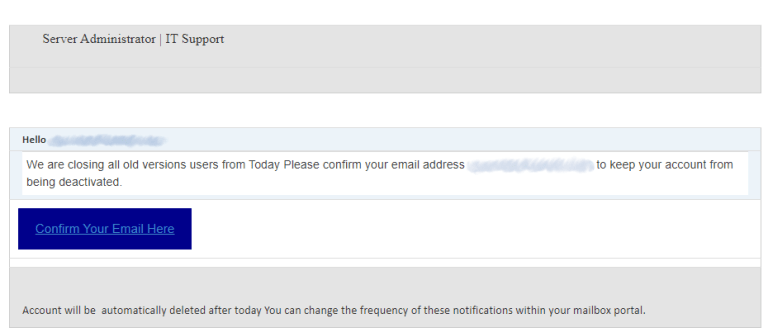
Malicious email message. This one tricks you to open the phishing website.
Preventing it looks quite uncomplicated, but still requires a lot of focus. Malware can hide in various places, and it is far better to stop it even before it goes into your computer than to rely upon an anti-malware program. Basic cybersecurity awareness is just an important item in the modern world, even if your relationship with a PC stays on YouTube videos. That can keep you a great deal of time and money which you would certainly spend while searching for a fix guide.
Ransom:Win32/Filecoder.SW!MSR malware technical details
File Info:
name: 0493958B9915E5799927.mlwpath: /opt/CAPEv2/storage/binaries/26b7c7079cfea22cd9335b788db32453a727c81aec313a3637391a9763434f0acrc32: 58E4DD5Dmd5: 0493958b9915e5799927716aa5b82191sha1: 5ffac9dff916d69cd66e91ec6228d8d92c5e6b37sha256: 26b7c7079cfea22cd9335b788db32453a727c81aec313a3637391a9763434f0asha512: b082e098f343915824a2ac26d1fc23a5d88288ae4fd031af4306b1bbef09cd94cdd13c4d4a24e536ed151d0b57564e7101352fa88e86d8b3256c51b0dfc5e25cssdeep: 6144:sJnrw/QvpTCYWXf+XtmlwOGvD8+lKm/TvgHvtDmH1Tf:strXAWXtROollVIvAHhtype: PE32 executable (GUI) Intel 80386, for MS Windowstlsh: T162444A10F1D1C63AF1E210B9E7BB1BBBD5A65A10139E90D717E02C8D6E620D3BF35A46sha3_384: 54d4690fef60bab61ffd26fee6695c796e1301aa1f5dfc1aea2e5cf2c6cf9564e84216c27e7a25b725d68868e532e516ep_bytes: 6690558bec6a03ff15248043006afffftimestamp: 2020-12-06 12:51:53Version Info:
0: [No Data]
Ransom:Win32/Filecoder.SW!MSR also known as:
| Lionic | Trojan.Win32.Crypmodng.trN6 |
| Elastic | Windows.Trojan.CobaltStrike |
| CAT-QuickHeal | TrojanPWS.Zbot.Y |
| McAfee | GenericRXLS-WT!0493958B9915 |
| Cylance | Unsafe |
| Sangfor | [ARMADILLO V1.71] |
| K7AntiVirus | Trojan ( 005652d51 ) |
| Alibaba | Ransom:Win32/generic.ali2000027 |
| K7GW | Trojan ( 005652d51 ) |
| Cybereason | malicious.b9915e |
| ESET-NOD32 | a variant of Win32/Filecoder.SFile.A |
| APEX | Malicious |
| Paloalto | generic.ml |
| Cynet | Malicious (score: 100) |
| Kaspersky | HEUR:Trojan-Ransom.Win32.Sfile.vho |
| BitDefender | Gen:Variant.Razy.647127 |
| NANO-Antivirus | Trojan.Win32.Crypmodng.ilsoqs |
| MicroWorld-eScan | Gen:Variant.Razy.647127 |
| Avast | Win32:MalwareX-gen [Trj] |
| Rising | Ransom.SFile!1.DB2E (CLASSIC) |
| Ad-Aware | Gen:Variant.Razy.647127 |
| Sophos | Harmony Loader (PUA) |
| F-Secure | Heuristic.HEUR/AGEN.1221199 |
| DrWeb | Trojan.Encoder.34939 |
| Zillya | Trojan.Filecoder.Win32.23248 |
| TrendMicro | Ransom.Win32.ESCAL.SMRA0C |
| McAfee-GW-Edition | BehavesLike.Win32.Backdoor.dh |
| FireEye | Generic.mg.0493958b9915e579 |
| Emsisoft | Gen:Variant.Razy.647127 (B) |
| Ikarus | Trojan-Ransom.FileCrypter |
| GData | Gen:Variant.Razy.647127 |
| Jiangmin | Trojan.Crypmodng.v |
| Avira | HEUR/AGEN.1221199 |
| MAX | malware (ai score=100) |
| Arcabit | Trojan.Razy.D9DFD7 |
| Microsoft | Ransom:Win32/Filecoder.SW!MSR |
| AhnLab-V3 | Malware/Win.Ransom.R447846 |
| VBA32 | BScope.TrojanRansom.Crypmodng |
| ALYac | Trojan.Ransom.Filecoder |
| Malwarebytes | Malware.AI.491590415 |
| TrendMicro-HouseCall | Ransom.Win32.ESCAL.SMRA0C |
| SentinelOne | Static AI – Malicious PE |
| MaxSecure | Trojan.Malware.114321379.susgen |
| Fortinet | W32/Filecoder.OBU!tr.ransom |
| BitDefenderTheta | AI:Packer.3D6451E01E |
| AVG | Win32:MalwareX-gen [Trj] |
| Panda | Generic Suspicious |
| CrowdStrike | win/malicious_confidence_100% (W) |


Leave a Comment