
Seeing the Ransom:Win32/Conti.WEN!MTB detection usually means that your computer is in big danger. This virus can correctly be named as ransomware – sort of malware which encrypts your files and asks you to pay for their decryption. Stopping it requires some specific steps that must be done as soon as possible.
Ransom:Win32/Conti.WEN!MTB detection is a virus detection you can spectate in your system. It generally shows up after the preliminary procedures on your computer – opening the dubious email, clicking the banner in the Internet or installing the program from unreliable resources. From the moment it shows up, you have a short time to do something about it until it starts its harmful activity. And be sure – it is far better not to wait for these destructive things.
What is Ransom:Win32/Conti.WEN!MTB virus?
Ransom:Win32/Conti.WEN!MTB Summary
Summarizingly, Ransom:Win32/Conti.WEN!MTB virus actions in the infected computer are next:
- Authenticode signature is invalid;
- Ciphering the documents kept on the victim’s disk drives — so the victim cannot check these documents;
- Blocking the launching of .exe files of anti-virus programs
- Blocking the launching of installation files of anti-virus programs
Ransomware has been a major problem for the last 4 years. It is hard to realize a more harmful virus for both individual users and businesses. The algorithms utilized in Ransom:Win32/Conti.WEN!MTB (generally, RHA-1028 or AES-256) are not hackable – with minor exclusions. To hack it with a brute force, you need to have a lot more time than our galaxy already exists, and possibly will exist. But that malware does not do all these unpleasant things instantly – it can require up to several hours to cipher all of your documents. Thus, seeing the Ransom:Win32/Conti.WEN!MTB detection is a clear signal that you must start the elimination process.
Where did I get the Ransom:Win32/Conti.WEN!MTB?
General ways of Ransom:Win32/Conti.WEN!MTB injection are basic for all other ransomware variants. Those are one-day landing websites where victims are offered to download the free app, so-called bait e-mails and hacktools. Bait e-mails are a pretty modern tactic in malware spreading – you receive the email that imitates some standard notifications about shippings or bank service conditions shifts. Inside of the email, there is a corrupted MS Office file, or a link which opens the exploit landing page.
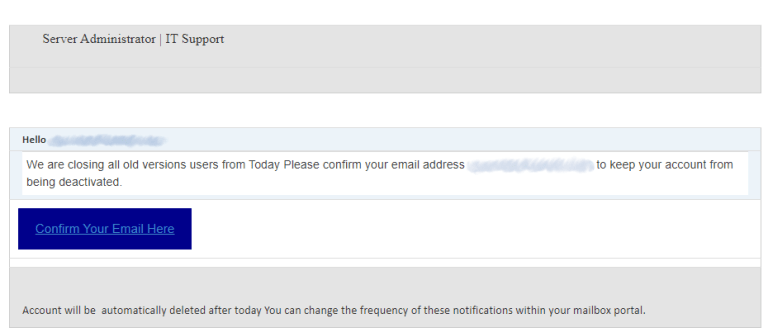
Malicious email message. This one tricks you to open the phishing website.
Preventing it looks fairly simple, however, still requires a lot of attention. Malware can hide in various places, and it is much better to prevent it even before it invades your PC than to rely upon an anti-malware program. General cybersecurity knowledge is just an essential item in the modern-day world, even if your interaction with a computer stays on YouTube videos. That may save you a lot of money and time which you would certainly spend while seeking a fixing guide.
Ransom:Win32/Conti.WEN!MTB malware technical details
File Info:
name: 84AC1D178F33CEEF94C4.mlwpath: /opt/CAPEv2/storage/binaries/0864d94447255fe00911c22fe2a182e171e1c3e8e6bfc0552929a61cca27d662crc32: A0C75515md5: 84ac1d178f33ceef94c46061398eedd9sha1: 6972381fc8113ed17cb9c885da8b6c356f5a9552sha256: 0864d94447255fe00911c22fe2a182e171e1c3e8e6bfc0552929a61cca27d662sha512: a3e8eba0a78aff21d8ec23080a73c6be83d6917605e48751684101a4af613a9bd54d4f3cd85b34046114aac0954b1324491d1ac1d4cd25ca83493be3e387d604ssdeep: 49152:lm1ae2BwHBb7irD7zOEETjmHhp2W0AQS2wQDIevey0DNzJWN:g1+B1Bp2W0AQS2wQiykNtype: PE32 executable (GUI) Intel 80386, for MS Windowstlsh: T1DCD59DB2FB049132E5D201F1891D2B6F8C58953403B940D7E2D53AD969E0FE36B36BA7sha3_384: 9cb7bae9fab28fdac89944afb12fc945422cb49e1291e86ced6b36482bf701a1bac6a96196c1afd55eb906c32c2136d0ep_bytes: e8300a0000e97afeffffcccccccccc51timestamp: 2023-03-03 09:40:13Version Info:
0: [No Data]
Ransom:Win32/Conti.WEN!MTB also known as:
| Lionic | Trojan.Win32.Sdum.4!c |
| Elastic | malicious (high confidence) |
| FireEye | Gen:Variant.Zusy.449356 |
| McAfee | Artemis!84AC1D178F33 |
| Cylance | unsafe |
| VIPRE | Gen:Variant.Zusy.449356 |
| Sangfor | Trojan.Win32.Conti.Vo6v |
| K7AntiVirus | Trojan ( 0059efcd1 ) |
| Alibaba | Ransom:Win32/Conti.d7a579b3 |
| K7GW | Trojan ( 0059efcd1 ) |
| CrowdStrike | win/malicious_confidence_70% (D) |
| Symantec | ML.Attribute.HighConfidence |
| ESET-NOD32 | a variant of Win32/GenKryptik.GFZL |
| Paloalto | generic.ml |
| Cynet | Malicious (score: 100) |
| Kaspersky | UDS:Trojan.Win32.Agent.gen |
| BitDefender | Gen:Variant.Zusy.449356 |
| MicroWorld-eScan | Gen:Variant.Zusy.449356 |
| Avast | Win32:Malware-gen |
| Sophos | Mal/Generic-S |
| F-Secure | Heuristic.HEUR/AGEN.1255004 |
| TrendMicro | Ransom_Conti.R002C0DC323 |
| McAfee-GW-Edition | BehavesLike.Win32.Dropper.vh |
| Emsisoft | Gen:Variant.Zusy.449356 (B) |
| GData | Win32.Trojan.PSE.1B8IIM5 |
| Avira | HEUR/AGEN.1255004 |
| Antiy-AVL | Trojan/Win32.GenKryptik |
| Arcabit | Trojan.Zusy.D6DB4C |
| ZoneAlarm | UDS:Trojan.Win32.Agent.gen |
| Microsoft | Ransom:Win32/Conti.WEN!MTB |
| Detected | |
| AhnLab-V3 | Trojan/Win.Generic.R559169 |
| ALYac | Gen:Variant.Zusy.449356 |
| MAX | malware (ai score=83) |
| Malwarebytes | Malware.AI.2521190562 |
| TrendMicro-HouseCall | Ransom_Conti.R002C0DC323 |
| Rising | [email protected] (RDML:Db1DfudNl9zEf9VaZ3hi4A) |
| Ikarus | Trojan.Win32.Krypt |
| Fortinet | W32/GenKryptik.GFZL!tr |
| AVG | Win32:Malware-gen |
| Panda | Trj/Genetic.gen |


Leave a Comment