
Seeing the PWS:Win32/Zbot!AF detection usually means that your PC is in big danger. This computer virus can correctly be identified as ransomware – virus which encrypts your files and forces you to pay for their decryption. Removing it requires some peculiar steps that must be taken as soon as possible.
PWS:Win32/Zbot!AF detection is a malware detection you can spectate in your computer. It generally appears after the provoking procedures on your computer – opening the untrustworthy email, clicking the advertisement in the Web or setting up the program from suspicious sources. From the moment it appears, you have a short time to take action until it begins its destructive activity. And be sure – it is far better not to await these malicious effects.
What is PWS:Win32/Zbot!AF virus?
PWS:Win32/Zbot!AF Summary
Summarizingly, PWS:Win32/Zbot!AF ransomware actions in the infected PC are next:
- Behavioural detection: Executable code extraction – unpacking;
- Sample contains Overlay data;
- Yara rule detections observed from a process memory dump/dropped files/CAPE;
- Presents an Authenticode digital signature;
- CAPE extracted potentially suspicious content;
- The binary contains an unknown PE section name indicative of packing;
- The binary likely contains encrypted or compressed data.;
- Authenticode signature is invalid;
- Ciphering the files kept on the victim’s disk drive — so the victim cannot open these files;
- Blocking the launching of .exe files of security tools
- Blocking the launching of installation files of anti-malware programs
Ransomware has actually been a horror story for the last 4 years. It is difficult to realize a more damaging malware for both individual users and organizations. The algorithms used in PWS:Win32/Zbot!AF (typically, RHA-1028 or AES-256) are not hackable – with minor exclusions. To hack it with a brute force, you need to have a lot more time than our galaxy already exists, and possibly will exist. But that virus does not do all these horrible things immediately – it may require up to a few hours to cipher all of your documents. Therefore, seeing the PWS:Win32/Zbot!AF detection is a clear signal that you need to begin the clearing process.
Where did I get the PWS:Win32/Zbot!AF?
Standard methods of PWS:Win32/Zbot!AF spreading are common for all other ransomware examples. Those are one-day landing web pages where users are offered to download the free program, so-called bait emails and hacktools. Bait e-mails are a relatively modern tactic in malware distribution – you receive the email that simulates some standard notifications about shippings or bank service conditions modifications. Within the e-mail, there is a malicious MS Office file, or a web link which opens the exploit landing page.
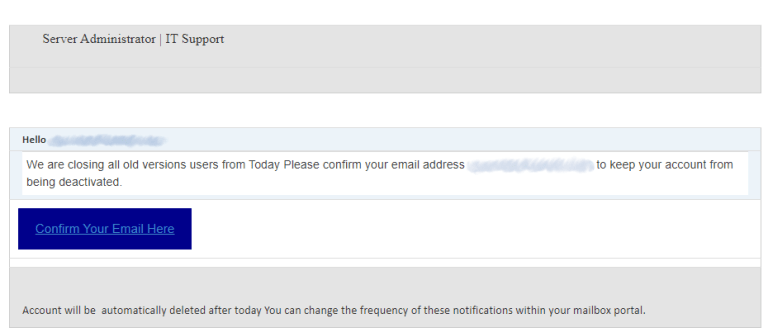
Malicious email message. This one tricks you to open the phishing website.
Avoiding it looks quite simple, but still requires a lot of attention. Malware can hide in different spots, and it is much better to prevent it even before it gets into your PC than to rely upon an anti-malware program. Simple cybersecurity knowledge is just an essential item in the modern world, even if your interaction with a PC stays on YouTube videos. That may keep you a lot of time and money which you would spend while searching for a fixing guide.
PWS:Win32/Zbot!AF malware technical details
File Info:
name: D9BD95CF45FA501FA3EC.mlwpath: /opt/CAPEv2/storage/binaries/63bc17135a1a848308f5f234c31a8128393c99c66417a1fafa46f0272f82776bcrc32: 6D260F46md5: d9bd95cf45fa501fa3ecdce46e4f227asha1: 248ba0e6e43514a0d090b7b5eb383a36de44992fsha256: 63bc17135a1a848308f5f234c31a8128393c99c66417a1fafa46f0272f82776bsha512: 52848c036eef4b9c214130f7dcaae0b6f7e37e19130f7f85229632af312f989a253698000bf505fd8756173c0a3085da85c5eaf42b9bdc9244c73028ce1e077essdeep: 6144:wsLppxrlfQQ6644KsO+JuBR8QlwodowN8+b:wEpfd16jeOGqdwmbtype: PE32 executable (GUI) Intel 80386, for MS Windowstlsh: T1DC64E1CF748ADC9BECC6427344B5493A43A9F9DD33208033B6556A8D48297D1AEB5F0Esha3_384: 7c37186b564e00a53187e1208a8f9d09680649d2c408b3a08d03524d8360ed5aa9267be72fa47bdb6b83138e8c63f316ep_bytes: 558bec81ec68010000535657c785dcfetimestamp: 2012-01-31 23:03:17Version Info:
0: [No Data]
PWS:Win32/Zbot!AF also known as:
| Bkav | W32.AIDetect.malware2 |
| Lionic | Trojan.Win32.Zbot.ltTN |
| tehtris | Generic.Malware |
| DrWeb | Trojan.PWS.Panda.1698 |
| MicroWorld-eScan | Gen:Heur.Japik.6 |
| FireEye | Generic.mg.d9bd95cf45fa501f |
| CAT-QuickHeal | TrojanPWS.Zbot.Y |
| McAfee | PWS-Zbot.gen.re |
| Cylance | Unsafe |
| VIPRE | Gen:Heur.Japik.6 |
| Sangfor | Trojan.Win32.Save.a |
| K7AntiVirus | Spyware ( 003919791 ) |
| Alibaba | TrojanPSW:Win32/Injector.d9292e4e |
| K7GW | Spyware ( 003919791 ) |
| CrowdStrike | win/malicious_confidence_100% (W) |
| BitDefenderTheta | Gen:NN.ZexaF.34606.uuX@aGMOE7p |
| VirIT | Trojan.Win32.Banker.FO |
| Cyren | W32/Zbot.DQ.gen!Eldorado |
| Symantec | Trojan.Zbot!gen30 |
| Elastic | malicious (high confidence) |
| ESET-NOD32 | Win32/Spy.Zbot.AAN |
| APEX | Malicious |
| ClamAV | Win.Dropper.Zeus-9958986-0 |
| Kaspersky | Trojan-Dropper.Win32.Injector.cmkm |
| BitDefender | Gen:Heur.Japik.6 |
| NANO-Antivirus | Trojan.Win32.Kryptik.idlgy |
| SUPERAntiSpyware | Trojan.Agent/Gen-Kryptik |
| Avast | Win32:Crypt-LKD [Trj] |
| Tencent | Trojan.Win32.spy.tqw |
| Ad-Aware | Gen:Heur.Japik.6 |
| Emsisoft | Gen:Heur.Japik.6 (B) |
| Comodo | TrojWare.Win32.Kazy.FOF@4pekmj |
| Zillya | Dropper.Injector.Win32.11242 |
| TrendMicro | TSPY_ZBOT.SMKS |
| McAfee-GW-Edition | PWS-Zbot.gen.re |
| Trapmine | malicious.high.ml.score |
| Sophos | ML/PE-A + Troj/Zbot-DHN |
| SentinelOne | Static AI – Malicious PE |
| GData | Gen:Heur.Japik.6 |
| Jiangmin | TrojanDropper.Injector.jtu |
| Webroot | Pws:Win32/Zbot.Gen |
| Detected | |
| Avira | TR/Drop.Inject.cmkm |
| MAX | malware (ai score=100) |
| Antiy-AVL | Trojan/Generic.ASCommon.1BE |
| Kingsoft | Win32.Troj.Injector.cm.(kcloud) |
| ViRobot | Trojan.Win32.A.Zbot.331776.C |
| ZoneAlarm | Packed.Win32.Krap.iu |
| Microsoft | PWS:Win32/Zbot.gen!AF |
| Cynet | Malicious (score: 100) |
| AhnLab-V3 | Spyware/Win32.Zbot.R20246 |
| Acronis | suspicious |
| VBA32 | BScope.TrojanRansom.Shade |
| ALYac | Gen:Heur.Japik.6 |
| TrendMicro-HouseCall | TSPY_ZBOT.SMKS |
| Rising | Spyware.Zbot!8.16B (TFE:1:ztghkW6XGhQ) |
| Yandex | Trojan.GenAsa!d5tJnSV2Tzs |
| Ikarus | Trojan-Dropper.Win32.Injector |
| MaxSecure | Trojan.Packed.Krap.iu |
| Fortinet | W32/ZBOT.HL!tr |
| AVG | Win32:Crypt-LKD [Trj] |
| Panda | Generic Malware |


Leave a Comment