
Seeing the PWS:Win32/Ymacco.AA0A detection usually means that your system is in big danger. This malware can correctly be named as ransomware – sort of malware which encrypts your files and forces you to pay for their decryption. Deleteing it requires some unusual steps that must be taken as soon as possible.
PWS:Win32/Ymacco.AA0A detection is a virus detection you can spectate in your computer. It often appears after the provoking procedures on your computer – opening the dubious e-mail, clicking the banner in the Internet or mounting the program from unreliable resources. From the second it appears, you have a short time to act until it begins its harmful action. And be sure – it is much better not to wait for these malicious actions.
What is PWS:Win32/Ymacco.AA0A virus?
PWS:Win32/Ymacco.AA0A Summary
Summarizingly, PWS:Win32/Ymacco.AA0A malware actions in the infected PC are next:
- Dynamic (imported) function loading detected;
- CAPE extracted potentially suspicious content;
- .NET file is packed/obfuscated with Confuser;
- The binary likely contains encrypted or compressed data.;
- Authenticode signature is invalid;
- Unusual version info supplied for binary;
- Ciphering the documents kept on the victim’s disk drive — so the victim cannot open these files;
- Blocking the launching of .exe files of anti-virus apps
- Blocking the launching of installation files of anti-malware programs
Ransomware has actually been a nightmare for the last 4 years. It is hard to realize a more damaging malware for both individuals and businesses. The algorithms used in PWS:Win32/Ymacco.AA0A (usually, RHA-1028 or AES-256) are not hackable – with minor exclusions. To hack it with a brute force, you need more time than our galaxy currently exists, and possibly will exist. However, that virus does not do all these terrible things instantly – it can take up to several hours to cipher all of your documents. Thus, seeing the PWS:Win32/Ymacco.AA0A detection is a clear signal that you should start the elimination process.
Where did I get the PWS:Win32/Ymacco.AA0A?
Usual tactics of PWS:Win32/Ymacco.AA0A spreading are standard for all other ransomware variants. Those are one-day landing web pages where victims are offered to download and install the free app, so-called bait emails and hacktools. Bait e-mails are a pretty modern method in malware distribution – you get the email that imitates some regular notifications about shippings or bank service conditions modifications. Within the email, there is an infected MS Office file, or a web link which leads to the exploit landing site.
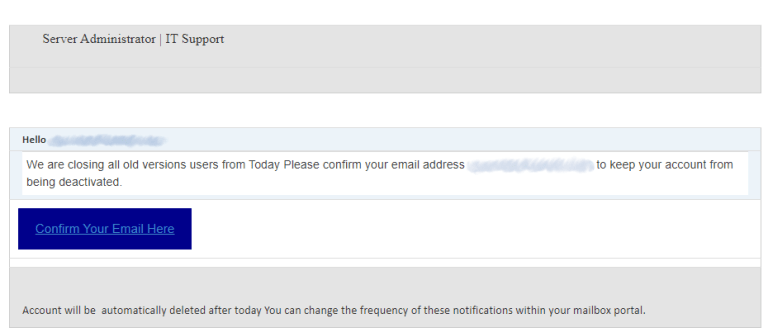
Malicious email message. This one tricks you to open the phishing website.
Preventing it looks quite uncomplicated, however, still demands a lot of focus. Malware can hide in different spots, and it is far better to prevent it even before it invades your system than to depend on an anti-malware program. Common cybersecurity awareness is just an important thing in the modern-day world, even if your interaction with a computer remains on YouTube videos. That can keep you a great deal of time and money which you would certainly spend while searching for a solution.
PWS:Win32/Ymacco.AA0A malware technical details
File Info:
name: 8E0031895C2209C0D2F1.mlwpath: /opt/CAPEv2/storage/binaries/0aaedd52a5c321135b1ae8bc8a4a44b56c8045b3d7ec1654975b880b18da9ee9crc32: 93E7025Dmd5: 8e0031895c2209c0d2f176e4b917e3b5sha1: b43ba8cd892676aecf6ac5654581ac0cb2402071sha256: 0aaedd52a5c321135b1ae8bc8a4a44b56c8045b3d7ec1654975b880b18da9ee9sha512: 6d818fc2394dadf5b5fee34ce70aa9c0d7cb51d74b28d8b6c2f6c3e9730c6dfd18b4ed4797963edac23b63a4218c6006cc3e317243c219c4c8b60e230f090eefssdeep: 12288:9FwKZIosLHL0FRg4bEmk5fUlEwr3HX+nbpt:9oF3KRpb/k5fyEaHMvtype: PE32 executable (GUI) Intel 80386, for MS Windowstlsh: T1DA942347941E65ACD4352E7B070FDB6909AA7026128AF11FFF1D35A21C0E372F9A8763sha3_384: acae9d20b2897acb1312abec03149db0d970adcd74891b9560e3868828320a25abd66a7e8c3bb061e84af2962b94d49aep_bytes: ff250020400000000000000000000000timestamp: 2020-11-02 04:34:40Version Info:
Translation: 0x0000 0x04b0Comments: CompanyName: FileDescription: Command line performance monitorFileVersion: 10.0.18362.1InternalName: TypePerf.exeLegalCopyright: © Microsoft Corporation. All Rights Reserved.LegalTrademarks: OriginalFilename: TypePerf.exeProductName: Microsoft® Windows® Operating SystemProductVersion: 10.0.18362.1Assembly Version: 10.0.18362.1
PWS:Win32/Ymacco.AA0A also known as:
| Elastic | malicious (high confidence) |
| MicroWorld-eScan | Gen:Variant.Bulz.205218 |
| FireEye | Generic.mg.8e0031895c2209c0 |
| McAfee | Artemis!8E0031895C22 |
| Cylance | Unsafe |
| Zillya | Trojan.Generic.Win32.1274374 |
| Sangfor | Suspicious.Win32.Save.a |
| K7AntiVirus | Password-Stealer ( 004d8d6a1 ) |
| Alibaba | Trojan:Win32/RansomX.e94e2942 |
| K7GW | Password-Stealer ( 004d8d6a1 ) |
| Cybereason | malicious.95c220 |
| BitDefenderTheta | Gen:NN.ZemsilF.34114.zm0@a0JI5No |
| Symantec | ML.Attribute.HighConfidence |
| ESET-NOD32 | a variant of MSIL/PSW.CoinStealer.AA |
| Paloalto | generic.ml |
| Kaspersky | HEUR:Trojan.Win32.Generic |
| BitDefender | Gen:Variant.Bulz.205218 |
| NANO-Antivirus | Trojan.Win32.CoinStealer.ifbzpt |
| Avast | Win32:RansomX-gen [Ransom] |
| Tencent | Win32.Trojan.Generic.Eawu |
| Ad-Aware | Gen:Variant.Bulz.205218 |
| Emsisoft | Gen:Variant.Bulz.205218 (B) |
| VIPRE | Trojan.Win32.Generic!BT |
| McAfee-GW-Edition | BehavesLike.Win32.Generic.gc |
| Sophos | Mal/Generic-S |
| APEX | Malicious |
| GData | Gen:Variant.Bulz.205218 |
| Avira | TR/PSW.CoinStealer.tfruj |
| MAX | malware (ai score=84) |
| Microsoft | PWS:Win32/Ymacco.AA0A |
| Cynet | Malicious (score: 100) |
| AhnLab-V3 | Trojan/Win32.CoinStealer.C4224116 |
| VBA32 | TScope.Trojan.MSIL |
| ALYac | Gen:Variant.Bulz.205218 |
| Malwarebytes | Trojan.BitCoinStealer |
| Ikarus | Trojan.Bladabindi |
| Rising | Malware.Obfus/[email protected] (RDM.MSIL:nRYU8rk+IIAI/LH+x29lDw) |
| Yandex | Trojan.Agent!G8cMc+R9ISM |
| SentinelOne | Static AI – Malicious PE |
| Fortinet | W32/Generic.AA!tr |
| AVG | Win32:RansomX-gen [Ransom] |
| CrowdStrike | win/malicious_confidence_80% (D) |


Leave a Comment