
PUA:Win32/Pearfoos.B!ml is a potentially unwanted application, also known as a PUA, that is detected by various antivirus software and security tools. Potentially unwanted applications are programs that are not inherently malicious but may exhibit unwanted behaviors or characteristics, such as displaying advertisements or collecting user data without explicit consent.
In the case of PUA:Win32/Pearfoos.B!ml, the program is detected as potentially unwanted because it may display unwanted advertisements, collect user data without consent, or perform other behaviors that could negatively impact the user’s experience.
The program may be installed on a user’s computer without their knowledge or consent, typically through software bundling or other deceptive tactics. Once installed, it may run in the background and perform various actions, such as displaying pop-up ads or tracking user activity.
While PUA:Win32/Pearfoos.B!ml is not inherently malicious, it can be annoying and potentially harmful to the user’s privacy and security. Antivirus software and security tools detect and remove such programs to protect users from unwanted or potentially harmful behaviors. It is always a good idea to be cautious when downloading and installing software and to keep your antivirus software up-to-date to protect your computer from potentially unwanted applications and other types of malware.
PUA:Win32/Pearfoos.B!ml detection is a virus detection you can spectate in your system. It often appears after the provoking activities on your PC – opening the untrustworthy email messages, clicking the advertisement in the Internet or mounting the program from suspicious sources. From the moment it appears, you have a short time to do something about it until it begins its harmful action. And be sure – it is better not to wait for these malicious things.
What is PUA:Win32/Pearfoos.B!ml virus?
PUA:Win32/Pearfoos.B!ml Summary
In total, PUA:Win32/Pearfoos.B!ml virus activities in the infected system are next:
- Sample contains Overlay data;
- Authenticode signature is invalid;
- Encrypting the files located on the target’s drives — so the victim cannot use these files;
- Blocking the launching of .exe files of anti-malware programs
- Blocking the launching of installation files of anti-virus programs
Ransomware has actually been a headache for the last 4 years. It is difficult to realize a more dangerous virus for both individuals and organizations. The algorithms used in PUA:Win32/Pearfoos.B!ml (typically, RHA-1028 or AES-256) are not hackable – with minor exclusions. To hack it with a brute force, you need to have a lot more time than our galaxy currently exists, and possibly will exist. However, that malware does not do all these bad things immediately – it can take up to several hours to cipher all of your files. Thus, seeing the PUA:Win32/Pearfoos.B!ml detection is a clear signal that you need to start the clearing process.
Where did I get the PUA:Win32/Pearfoos.B!ml?
Common methods of PUA:Win32/Pearfoos.B!ml spreading are common for all other malware examples. Those are one-day landing websites where victims are offered to download the free app, so-called bait e-mails and hack tools. Bait e-mails are a pretty modern tactic in malware spreading – you get the email that simulates some standard notifications about shipping or bank service conditions changes. Inside of the email, there is a corrupted MS Office file, or a link which leads to the exploit landing page.
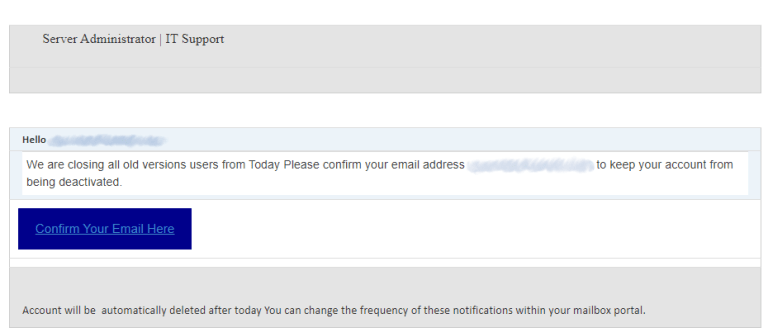
Malicious email message. This one tricks you into opening a phishing website.
Preventing it looks fairly simple, but still requires a lot of attention. Malware can hide in different places, and it is far better to prevent it even before it gets into your PC than to rely upon an anti-malware program. Standard cybersecurity knowledge is just an essential thing in the modern-day world, even if your relationship with a PC stays on YouTube videos. That can save you a lot of money and time you would spend while looking for a solution.
PUA:Win32/Pearfoos.B!ml malware technical details
File Info:
name: CFC34654FD7C85452AD1.mlwpath: /opt/CAPEv2/storage/binaries/0fe5dd6823d0535509e388d92a1e9b23642949564fdc7e29f271d9d8724646bdcrc32: 513A2157md5: cfc34654fd7c85452ad1e745a0d3791fsha1: 3dedf4e56a272b22487e4424d511842f44394faesha256: 0fe5dd6823d0535509e388d92a1e9b23642949564fdc7e29f271d9d8724646bdsha512: adfe4d9a4b46f396699864c10c3eeab7dd15ad7c8f2fe758fb32e11302821adbe4f616eba9c84e4b80949a65e5d8238d1ade3540b4d1b525ad8f75e91a3d758essdeep: 6144:uW6Tc6vJfHpLxOeds9FYIxW3+WOMjvEV4UgIhzE62Km4:uzcOBHpLxOeds9fxWtjcVXrtype: PE32+ executable (GUI) x86-64, for MS Windowstlsh: T1D6941A256AC0A62BF1739235C6A18641FF36B7634722C23B70C8467F1F77185AA73726sha3_384: aa7369317b74b07c73ca2a69bb36541271775bc59cc98bdfa7d88bd6eca49c46c5e041183703abe44af5ca6b6a312402ep_bytes: e848feffffc82000004c897c24f84883timestamp: 2010-09-30 17:49:43Version Info:
CompanyName: Microsoft CorporationFileDescription: qualauncherFileVersion: 10.0.17134.10074 (WinBuild.160101.0800)InternalName: qualauncherLegalCopyright: © Microsoft Corporation. All rights reserved.OriginalFilename: qualauncherProductName: Microsoft® Windows® Operating SystemProductVersion: 10.0.17134.10074Translation: 0x0409 0x04b0
PUA:Win32/Pearfoos.B!ml also known as:
| MicroWorld-eScan | Gen:Variant.Cerbu.155294 |
| FireEye | Gen:Variant.Cerbu.155294 |
| ALYac | Gen:Variant.Cerbu.155294 |
| Cylance | Unsafe |
| VIPRE | Gen:Variant.Cerbu.155294 |
| Cyren | W64/Ipamor.A |
| Elastic | malicious (high confidence) |
| ESET-NOD32 | Win64/Filecoder.GG |
| Cynet | Malicious (score: 100) |
| Kaspersky | VHO:Trojan-PSW.Win32.Stealer.gen |
| BitDefender | Gen:Variant.Cerbu.155294 |
| Avast | Win64:Trojan-gen |
| Ad-Aware | Gen:Variant.Cerbu.155294 |
| Emsisoft | Gen:Variant.Cerbu.155294 (B) |
| GData | Gen:Variant.Cerbu.155294 |
| Jiangmin | Trojan.Blocker.urx |
| Arcabit | Trojan.Cerbu.D25E9E |
| ZoneAlarm | VHO:Trojan-PSW.Win32.Stealer.gen |
| Microsoft | PUA:Win32/Pearfoos.B!ml |
| Detected | |
| AhnLab-V3 | Trojan/Win.PWS.R532934 |
| Acronis | suspicious |
| MAX | malware (ai score=88) |
| Malwarebytes | Ransom.Azov |
| Rising | Ransom.Agent!8.6B7 (TFE:dGZlOgRk8TKvhTnFFA) |
| Fortinet | W64/Filecoder.GG!tr |
| AVG | Win64:Trojan-gen |


Leave a Comment