
Windows Defender antivirus identifies PUADlManager:Win32/Sepdot as a potentially unwanted application (PUA). Sepdot is commonly distributed through software bundling, where it is included with other legitimate software and installed without the user’s consent.
Once PUADlManager:Win32/Sepdot is installed, it exhibits unwanted behaviors such as displaying intrusive advertisements, tracking the user’s online activity, and collecting personal information. Alternatively, it can offer functionality that can harm your computer. The detected item may be a pseudo antivirus tool, a driver updater, or the like.
What does the PUADlManager:Win32/Sepdot detection mean?
The PUADlManager:Win32/Sepdot detection that appears in the lower right corner is generated by Microsoft Defender. While Microsoft Defender is proficient in scanning, it can be somewhat unreliable. It is susceptible to malware attacks and may have a glitchy user interface, as well as limited capabilities for removing malware. Therefore, the pop-up regarding Sepdot serves as an alert that Defender has identified it. To effectively remove Sepdot, it is advisable to utilize a separate anti-malware program.
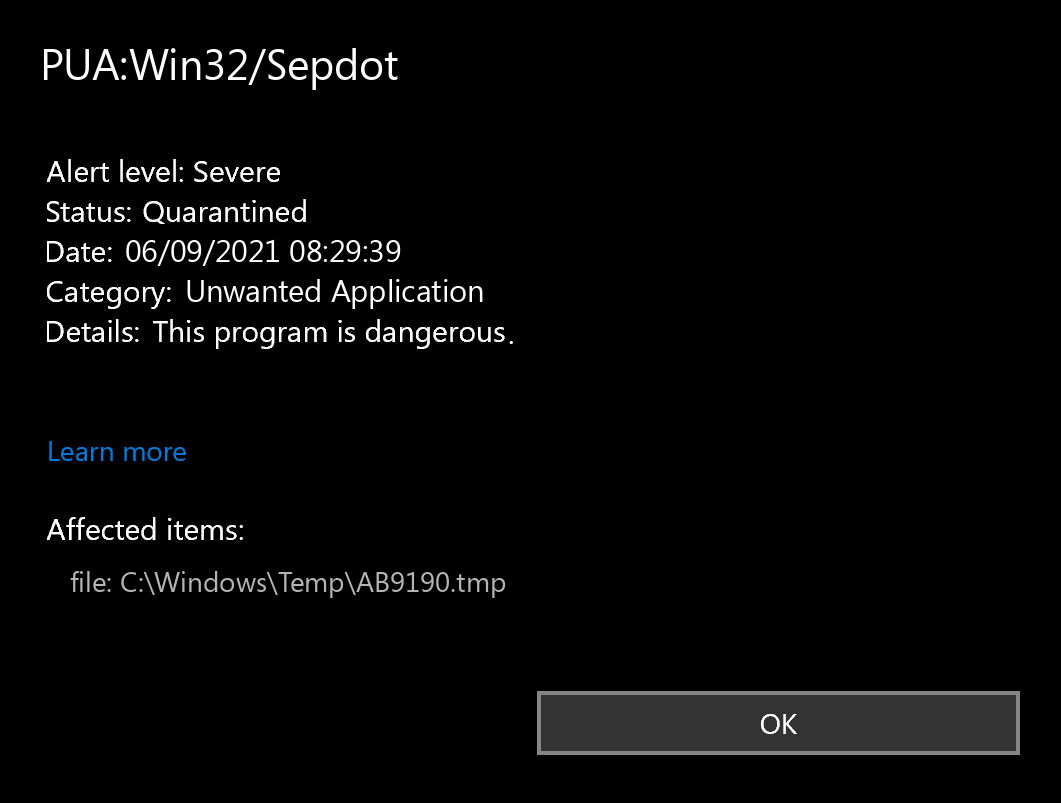
Microsoft Defender: “PUADlManager:Win32/Sepdot”
PUADlManager:Win32/Sepdot unwanted program is a case in point of PUA, which is quite widespread nowadays. Being free to use, it may provide you “the extended functionality” for the additional money. Some examples of this program type can have no useful performance – just the shell with the kaleidoscopic interface. It is advertised as a system optimization software, driver updater, or torrent downloading tracker. This or another way it does not bring you any real performance, exposing you to risk instead.
Unwanted Program Summary:
| Name | Sepdot PUA |
| Detection | PUADlManager:Win32/Sepdot |
| Damage | Sepdot is at least useless or can perform various malicious actions on your PC. |
| Fix Tool | See If Your System Has Been Affected by Sepdot exploit |
Is PUADlManager:Win32/Sepdot dangerous?
The exact damage to your system may be created not just due to the malware injection. A large share of suspicious programs, like the Sepdot application, is just badly developed. However, their actions may be helpful or useless if done on particular system setups, not on each one. That’s how an uncomplicated system optimization application may cause chaos with continuous BSODs on your system. Any system registry interruptions are risky and much more unsafe if performed with such programs.
How did I get this virus?
Determining the sources of malware on a computer can be difficult. Nowadays, the spreading methods used by adware five years ago can be employed by spyware. However, if we disregard the specific propagation method and focus on why it works, the answer is straightforward – a low level of cybersecurity knowledge. People click on ads on dubious websites, open pop-ups in their web browsers, and even call “Microsoft tech support,” believing the false claims about malware. To avoid misunderstandings when searching for a virus, it is crucial to have a clear understanding of what is legitimate.
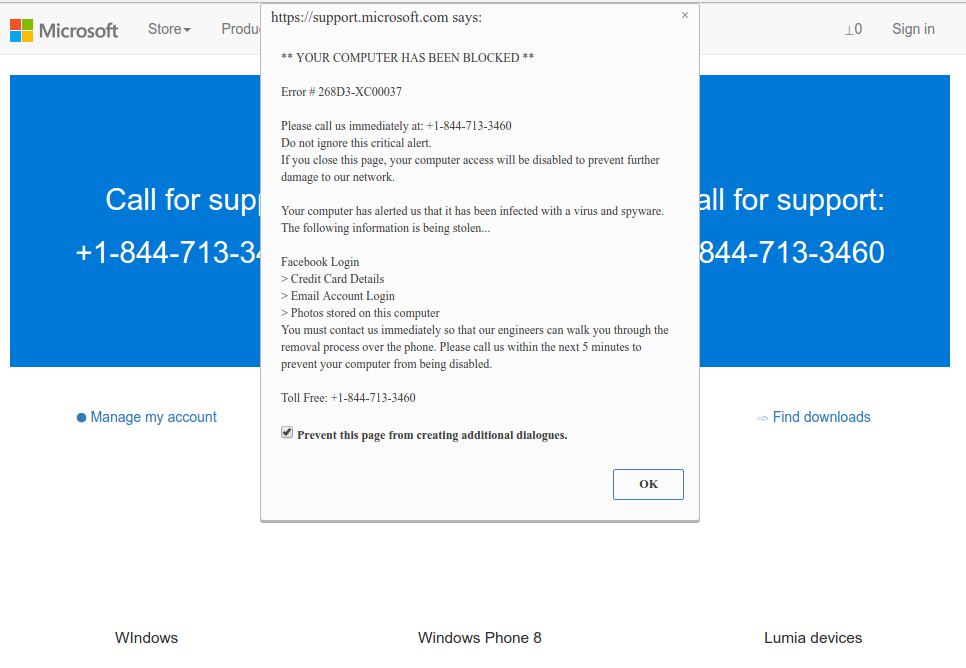
Microsoft Tech Support Scam
Malware distributors use two common ways to spread malware nowadays – they lure people through e-mails or inject malware into hacked programs. While avoiding the first method can be difficult because of the complexity of identifying fake e-mails, the second method is straightforward – do not use hacked applications. Torrent trackers and other sources that offer “free” applications but with a disabled license checking are common sources of malware. PUADlManager:Win32/Sepdot is often found within such sources.



can you get rid of this one – it doesnt see it on my pc using yoiur program
PUADlManager:Win32/Sepdot
file: C:UserstracyDownloadsaTube_Catcher_v4.279.570.563.exe
HELP
windows 10 security detected – PUADlManager:Win32/Sepdot
AFFECTED FILE – BUT DOESNT EXIST IN DRICE C TREE
file: C:UserstracyDownloadsaTube_Catcher_v4.279.570.563.exe