
Seeing the NSIS/Injector.ASR malware detection means that your PC is in big danger. This computer virus can correctly be named as ransomware – sort of malware which encrypts your files and asks you to pay for their decryption. Deleteing it requires some peculiar steps that must be done as soon as possible.
NSIS/Injector.ASR detection is a malware detection you can spectate in your computer. It usually shows up after the preliminary activities on your computer – opening the dubious e-mail messages, clicking the advertisement in the Web or setting up the program from dubious sources. From the moment it appears, you have a short time to act until it begins its malicious action. And be sure – it is better not to wait for these destructive actions.
What is NSIS/Injector.ASR virus?
NSIS/Injector.ASR Summary
In total, NSIS/Injector.ASR virus activities in the infected computer are next:
- Sample contains Overlay data;
- Reads data out of its own binary image;
- Authenticode signature is invalid;
- Encrypting the documents located on the victim’s disks — so the victim cannot use these files;
- Blocking the launching of .exe files of anti-virus apps
- Blocking the launching of installation files of anti-malware apps
Ransomware has been a nightmare for the last 4 years. It is hard to realize a more harmful malware for both individuals and organizations. The algorithms used in NSIS/Injector.ASR (typically, RHA-1028 or AES-256) are not hackable – with minor exclusions. To hack it with a brute force, you need a lot more time than our galaxy currently exists, and possibly will exist. However, that malware does not do all these horrible things instantly – it may require up to several hours to cipher all of your files. Hence, seeing the NSIS/Injector.ASR detection is a clear signal that you need to begin the removal process.
Where did I get the NSIS/Injector.ASR?
Usual ways of NSIS/Injector.ASR distribution are standard for all other ransomware variants. Those are one-day landing websites where victims are offered to download the free app, so-called bait emails and hacktools. Bait e-mails are a relatively new strategy in malware spreading – you receive the email that simulates some standard notifications about shipments or bank service conditions shifts. Inside of the email, there is a malicious MS Office file, or a web link which opens the exploit landing page.
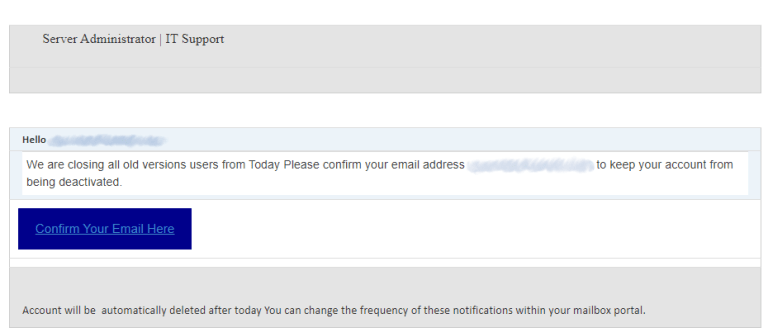
Malicious email message. This one tricks you to open the phishing website.
Preventing it looks fairly simple, but still demands a lot of recognition. Malware can hide in various spots, and it is far better to prevent it even before it goes into your PC than to trust in an anti-malware program. Common cybersecurity awareness is just an essential thing in the modern world, even if your interaction with a computer remains on YouTube videos. That may save you a lot of money and time which you would spend while looking for a fixing guide.
NSIS/Injector.ASR malware technical details
File Info:
name: 2D1EE0849F998B30E2CB.mlwpath: /opt/CAPEv2/storage/binaries/a4aa67dfffe77270e965e67519e39ea1ebf00694cef1ef9b2e15426c7703ad6dcrc32: 2F9E315Fmd5: 2d1ee0849f998b30e2cbb9dc4a4fe7a1sha1: 252b16badf62da70d107e0ae12175ec36b1a981dsha256: a4aa67dfffe77270e965e67519e39ea1ebf00694cef1ef9b2e15426c7703ad6dsha512: 9ce9cc6590d89cab5a09104890edde4b0d7d17c0002707b1481ac34fdfc1d9e056db2cac5036d28c4dc982c8ad60ba3127e8e2ee17b6814acf82a01acd20ff85ssdeep: 24576:lbvjcpTfjFInk93/AsS9DYHOkWl9vsPkh7Yz6jSNvoGjdCPl:N7cxf8y4jhNkYxsoYBoGGtype: PE32 executable (GUI) Intel 80386, for MS Windowstlsh: T1968523F3E6065C86F43B45715BF96E210A7E7F7B80F16AC9220978E734D744288A7A07sha3_384: f1159acb35dd29bf4e572d8b08afe0ae6d8f7e4eac677ea5a7c5d72996665e33da91f55619e2411b08aeee8bd8f4fd40ep_bytes: 558bec81ecf40300005356576a205f33timestamp: 2021-09-25 21:57:46Version Info:
0: [No Data]
NSIS/Injector.ASR also known as:
| Bkav | W32.AIDetectMalware |
| Lionic | Trojan.Win32.Agent.b!c |
| Elastic | malicious (high confidence) |
| MicroWorld-eScan | Trojan.GenericKD.60044635 |
| ALYac | Trojan.Ransom.LockBit |
| Cylance | unsafe |
| Zillya | Dropper.Agent.Win32.535439 |
| Sangfor | Ransom.Win32.Injector.V3wp |
| CrowdStrike | win/malicious_confidence_100% (W) |
| Alibaba | Ransom:Win32/lockbit.36f9a26e |
| K7GW | Trojan ( 00590d611 ) |
| K7AntiVirus | Trojan ( 00590d611 ) |
| Symantec | Downloader |
| ESET-NOD32 | NSIS/Injector.ASR |
| APEX | Malicious |
| Cynet | Malicious (score: 99) |
| Kaspersky | HEUR:Trojan-Dropper.Win32.Agent.gen |
| BitDefender | Trojan.GenericKD.60044635 |
| Avast | NSIS:RansomX-gen [Ransom] |
| Rising | Trojan.Injector/NSIS!1.BFBB (CLASSIC) |
| Emsisoft | Trojan.GenericKD.60044635 (B) |
| F-Secure | Heuristic.HEUR/AGEN.1337980 |
| VIPRE | Trojan.GenericKD.60044635 |
| TrendMicro | Ransom.Win32.LOCKBIT.YXDAK |
| McAfee-GW-Edition | BehavesLike.Win32.Dropper.th |
| FireEye | Generic.mg.2d1ee0849f998b30 |
| Sophos | Mal/Generic-S |
| Avira | HEUR/AGEN.1337980 |
| Microsoft | Ransom:Win32/lockbit!MSR |
| Arcabit | Trojan.Generic.D394355B |
| ViRobot | Trojan.Win32.S.RSLockBit.1718128 |
| ZoneAlarm | HEUR:Trojan-Dropper.Win32.Agent.gen |
| GData | Trojan.GenericKD.60044635 |
| AhnLab-V3 | Ransomware/Win.LockBit.C5113860 |
| Acronis | suspicious |
| McAfee | Artemis!2D1EE0849F99 |
| MAX | malware (ai score=100) |
| Malwarebytes | Generic.Malware/Suspicious |
| Panda | Trj/CI.A |
| TrendMicro-HouseCall | Ransom.Win32.LOCKBIT.YXDAK |
| Tencent | Win32.Trojan-Dropper.Agent.Gflw |
| Fortinet | NSIS/Injector.ASR!tr |
| AVG | NSIS:RansomX-gen [Ransom] |
| Cybereason | malicious.49f998 |
| DeepInstinct | MALICIOUS |


Leave a Comment