
Nagogy Grabber Stealer is a potent malware threat that spreads through email links, attachments, and sketchy website downloads.
Nagogy Grabber stealer specializes in data theft, targeting browsers and applications to pilfer sensitive information, including passwords, credit card details, and system data. Its stealthy nature makes it a challenging adversary, evading detection by traditional antivirus tools. Vigilance and regular system updates are crucial to safeguard against this pervasive threat.
Nagogy Grabber stealer Overview
Nagogy Grabber, a formidable malware, possesses a broad array of capabilities, rendering it a formidable cybersecurity menace. This malevolent software’s primary function is to pilfer sensitive data. Those afflicted by Nagogy Grabber must promptly eliminate the malware from their compromised devices.
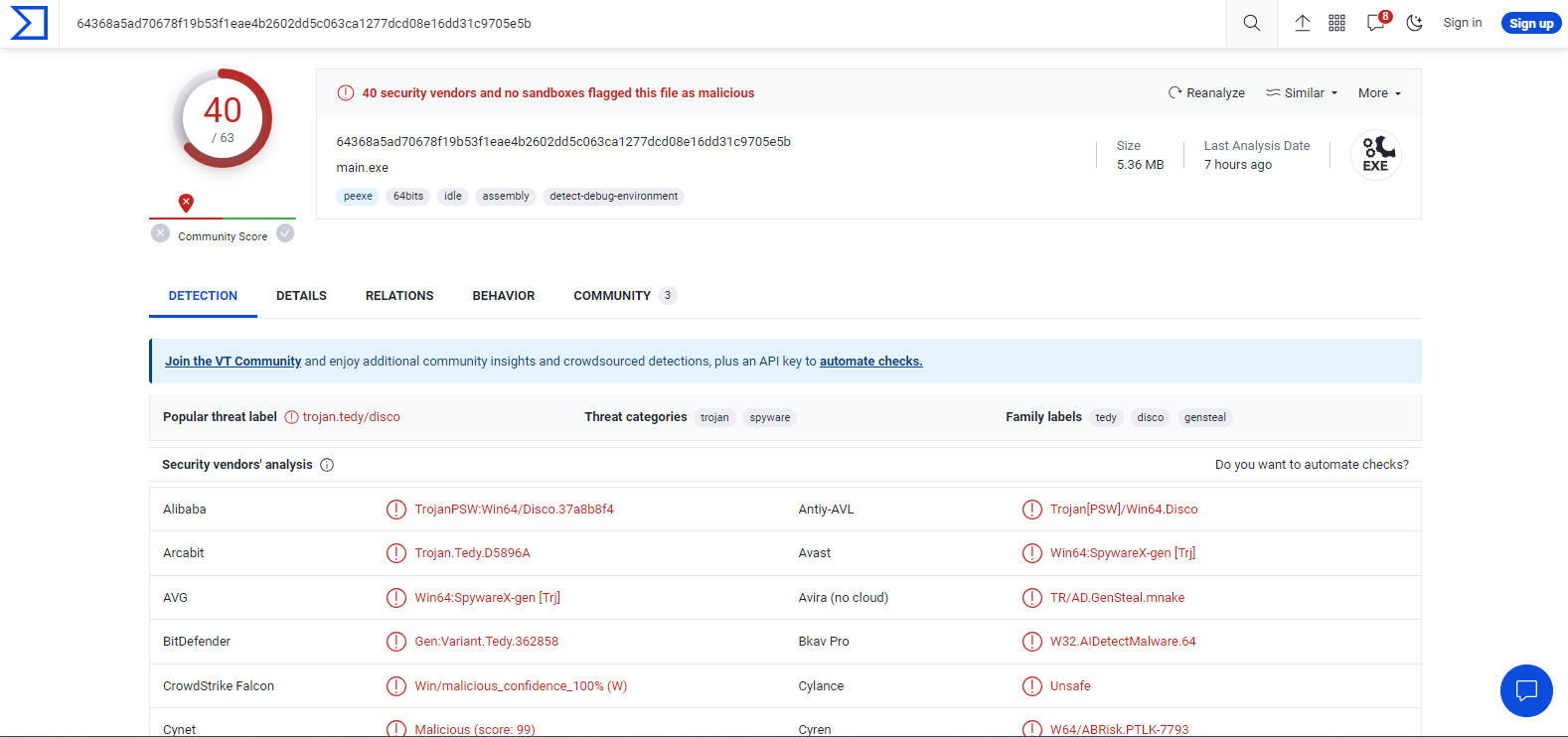
Nagogy Grabber stealer on VirusTotal
| Name | Nagogy Grabber information stealer |
| Threat Type | Password-stealing virus, information stealer, grabber |
| Detection | Microsoft (Trojan:Win32/Wacatac.B!ml), Gridinsoft (Nagogy Grabber) |
| Similar Behavior | WhiskerSpy, NightClub |
| Damage | Stolen passwords and banking information, identity theft, financial loss, loss of personal accounts, and more. |
| Distribution methods | Infected email attachments, malicious online advertisements, social engineering, software ‘cracks’. |
Technical Analysis of Nagogy Grabber Stealer
But it doesn’t stop there. Nagogy Grabber Stealer also goes after Roblox cookies, Wi-Fi passwords, and system information, putting a victim’s entire digital environment at risk. What makes it even more concerning is its stealthiness.
This malware is engineered to avoid detection by security software, making it a formidable adversary. Its fully undetectable (FUD) characteristics allow it to operate covertly within compromised systems, staying off the radar of conventional antivirus tools.
Spreading methods
Nagogy Grabber can infiltrate your computer through various means:
- Clicking on suspicious or unexpected links in emails can initiate malware downloads.
- Malware may be hidden within email attachments, so be cautious when opening them.
- Downloading software, files, or media from untrustworthy websites, especially those offering illegal content, can introduce malware to your computer.
- Neglecting to update your computer’s operating system, applications, and antivirus software can leave vulnerabilities that malware can exploit.
To protect your computer, exercise caution when encountering these situations and maintain up-to-date security measures.


Leave a Comment