
Spectating the MSIL/TrojanDownloader.Agent.KFR detection name means that your PC is in big danger. This malware can correctly be identified as ransomware – sort of malware which encrypts your files and asks you to pay for their decryption. Deleteing it requires some peculiar steps that must be done as soon as possible.
MSIL/TrojanDownloader.Agent.KFR detection is a malware detection you can spectate in your computer. It usually appears after the provoking procedures on your computer – opening the dubious email, clicking the banner in the Internet or installing the program from unreliable resources. From the instance it shows up, you have a short time to take action before it begins its harmful activity. And be sure – it is better not to wait for these malicious things.
What is MSIL/TrojanDownloader.Agent.KFR virus?
MSIL/TrojanDownloader.Agent.KFR Summary
In summary, MSIL/TrojanDownloader.Agent.KFR virus actions in the infected computer are next:
- Dynamic (imported) function loading detected;
- CAPE extracted potentially suspicious content;
- Authenticode signature is invalid;
- Ciphering the documents located on the victim’s drive — so the victim cannot use these documents;
- Blocking the launching of .exe files of anti-malware apps
- Blocking the launching of installation files of anti-virus programs
Ransomware has been a major problem for the last 4 years. It is hard to imagine a more dangerous virus for both individual users and organizations. The algorithms utilized in MSIL/TrojanDownloader.Agent.KFR (generally, RHA-1028 or AES-256) are not hackable – with minor exclusions. To hack it with a brute force, you need more time than our galaxy already exists, and possibly will exist. But that virus does not do all these terrible things immediately – it may take up to several hours to cipher all of your documents. Hence, seeing the MSIL/TrojanDownloader.Agent.KFR detection is a clear signal that you need to start the elimination process.
Where did I get the MSIL/TrojanDownloader.Agent.KFR?
Typical tactics of MSIL/TrojanDownloader.Agent.KFR distribution are basic for all other ransomware variants. Those are one-day landing web pages where victims are offered to download and install the free program, so-called bait e-mails and hacktools. Bait emails are a relatively new tactic in malware distribution – you receive the email that imitates some standard notifications about shippings or bank service conditions changes. Inside of the email, there is a malicious MS Office file, or a link which leads to the exploit landing site.
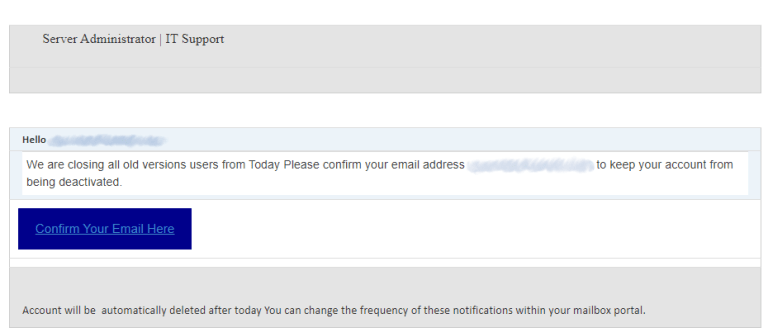
Malicious email message. This one tricks you to open the phishing website.
Preventing it looks quite uncomplicated, but still requires a lot of recognition. Malware can hide in various spots, and it is far better to stop it even before it invades your computer than to rely upon an anti-malware program. Basic cybersecurity knowledge is just an important thing in the modern-day world, even if your interaction with a PC stays on YouTube videos. That may keep you a lot of money and time which you would spend while trying to find a solution.
MSIL/TrojanDownloader.Agent.KFR malware technical details
File Info:
name: 6A3E0B978754C844B1D3.mlwpath: /opt/CAPEv2/storage/binaries/0f1660ca73964f67c094e33bc752c10215646d884d75ceefc87a47a2ec27a1c9crc32: F55FAD98md5: 6a3e0b978754c844b1d324f5f20c7782sha1: 51d312d341cb8c9b382c4acb82c04e2e396fcecesha256: 0f1660ca73964f67c094e33bc752c10215646d884d75ceefc87a47a2ec27a1c9sha512: 7a06d15f7d47e69261a42f0fb4c5688108d87b6b10236fa52bc68c630de281938ca0be70591944eb019b3608d4ea6ce49fc07fd320138b97bb7d3c8fa37afdc5ssdeep: 768:bCT+3NB0Cf81vrcT/esv1VRpicklI9YQ+Q+JoKnqiUtP+cuIHJ:bCW0A8Rk/nvdYlIiQ+Qw/n14m8ptype: PE32 executable (GUI) Intel 80386, for MS Windowstlsh: T19283CEF88FF47CA4E52821337450A13C77EA4D0EDC535636E64BF12934679C6A0E6A8Bsha3_384: 22ac6d95e1d41adc12fe8570f512311b089e4f91e798958ffa703e157afb082499a8edc55d9df9a3c80f230d14ecb26cep_bytes: ff250020400000000000000000000000timestamp: 2022-01-29 07:58:22Version Info:
Translation: 0x0000 0x04b0Comments: Windows Winhlp32 StubCompanyName: Microsoft CorporationFileDescription: Windows Winhlp32 StubFileVersion: 10.0.19041.1InternalName: Mdiceho.exeLegalCopyright: © Microsoft Corporation. All rights reserved.LegalTrademarks: OriginalFilename: Mdiceho.exeProductName: Microsoft® Windows® Operating SystemProductVersion: 10.0.19041.1Assembly Version: 10.0.19041.1
MSIL/TrojanDownloader.Agent.KFR also known as:
| Elastic | malicious (high confidence) |
| MicroWorld-eScan | Gen:Variant.Ransom.Henry.1 |
| FireEye | Gen:Variant.Ransom.Henry.1 |
| ALYac | Gen:Variant.Ransom.Henry.1 |
| K7AntiVirus | Trojan-Downloader ( 0058dabb1 ) |
| BitDefender | Gen:Variant.Ransom.Henry.1 |
| K7GW | Trojan-Downloader ( 0058dabb1 ) |
| Cybereason | malicious.78754c |
| Symantec | MSIL.Downloader!gen7 |
| ESET-NOD32 | a variant of MSIL/TrojanDownloader.Agent.KFR |
| APEX | Malicious |
| Kaspersky | HEUR:Trojan-Downloader.MSIL.PsDownload.gen |
| Ad-Aware | Gen:Variant.Ransom.Henry.1 |
| Sophos | Mal/Generic-S |
| McAfee-GW-Edition | Artemis!Trojan |
| Emsisoft | Gen:Variant.Ransom.Henry.1 (B) |
| SentinelOne | Static AI – Malicious PE |
| MAX | malware (ai score=80) |
| GData | Gen:Variant.Ransom.Henry.1 |
| Cynet | Malicious (score: 100) |
| AhnLab-V3 | Trojan/Win.Tnega.C4885083 |
| McAfee | RDN/Generic Downloader.x |
| Ikarus | Trojan-Downloader.MSIL.Agent |
| Fortinet | MSIL/Agent.KFR!tr.dldr |
| BitDefenderTheta | Gen:NN.ZemsilF.34182.fm0@aWAwE5 |
| AVG | Win32:Trojan-gen |
| Avast | Win32:Trojan-gen |
| CrowdStrike | win/malicious_confidence_90% (W) |


Leave a Comment