
Seeing the MSIL/Kryptik.AFKI malware detection means that your computer is in big danger. This computer virus can correctly be named as ransomware – type of malware which ciphers your files and asks you to pay for their decryption. Stopping it requires some peculiar steps that must be taken as soon as possible.
MSIL/Kryptik.AFKI detection is a virus detection you can spectate in your system. It usually shows up after the provoking procedures on your computer – opening the dubious e-mail messages, clicking the advertisement in the Internet or setting up the program from dubious resources. From the instance it appears, you have a short time to act until it starts its harmful activity. And be sure – it is much better not to await these destructive things.
What is MSIL/Kryptik.AFKI virus?
MSIL/Kryptik.AFKI Summary
In total, MSIL/Kryptik.AFKI ransomware activities in the infected PC are next:
- Dynamic (imported) function loading detected;
- The binary likely contains encrypted or compressed data.;
- Authenticode signature is invalid;
- Ciphering the documents located on the target’s disk — so the victim cannot check these documents;
- Blocking the launching of .exe files of anti-virus programs
- Blocking the launching of installation files of anti-virus programs
Ransomware has actually been a nightmare for the last 4 years. It is hard to realize a more damaging virus for both individuals and businesses. The algorithms utilized in MSIL/Kryptik.AFKI (usually, RHA-1028 or AES-256) are not hackable – with minor exclusions. To hack it with a brute force, you need to have more time than our galaxy already exists, and possibly will exist. However, that malware does not do all these bad things immediately – it can take up to a few hours to cipher all of your files. Thus, seeing the MSIL/Kryptik.AFKI detection is a clear signal that you must start the elimination procedure.
Where did I get the MSIL/Kryptik.AFKI?
Common ways of MSIL/Kryptik.AFKI spreading are typical for all other ransomware variants. Those are one-day landing sites where users are offered to download the free program, so-called bait emails and hacktools. Bait e-mails are a relatively new tactic in malware spreading – you receive the e-mail that imitates some routine notifications about shipments or bank service conditions changes. Inside of the email, there is an infected MS Office file, or a link which opens the exploit landing page.
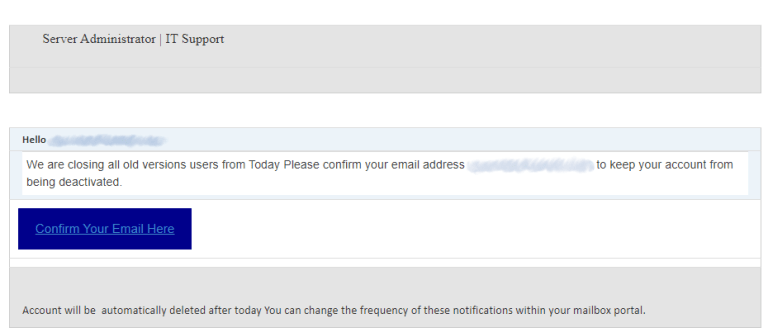
Malicious email message. This one tricks you to open the phishing website.
Avoiding it looks quite simple, however, still needs a lot of attention. Malware can hide in various places, and it is much better to stop it even before it goes into your computer than to rely upon an anti-malware program. Common cybersecurity awareness is just an important thing in the modern world, even if your interaction with a PC remains on YouTube videos. That can keep you a lot of time and money which you would spend while searching for a fix guide.
MSIL/Kryptik.AFKI malware technical details
File Info:
name: 3DC9C725FBFF28649CE6.mlwpath: /opt/CAPEv2/storage/binaries/7a7bf6c3707c288380bbf75cea65422418a0bb31778dccbb0c363acb67c58b3ecrc32: 2F0357BAmd5: 3dc9c725fbff28649ce6dac0c2cab4fesha1: e7b5c67b2157c1a97254caba47ba7972dba358cbsha256: 7a7bf6c3707c288380bbf75cea65422418a0bb31778dccbb0c363acb67c58b3esha512: 5523983d4da0bece52c0f764aad6986826325effce94a1e2147fbd64932ff0bd96dacc8a5a7bfc7edbd88d4ba34599e3a8299a526c9b0564c412ea82dd26009cssdeep: 3072:CJ6QRi4pL59shfenloCTaxMvdIATZrqX9A80Dovx:CIwlL5iEnlkg9TZ+w0type: PE32 executable (GUI) Intel 80386, for MS Windowstlsh: T1F41427EB246C8553C5084AFED4B4DF6762FC8C2959C0F288B542729CFC292ED75F42A6sha3_384: 306b885827fc682310781c56e4a0ede2602f8aaa05286749dcdd12d8104863396fe493cd8bd8189dc4ee71e73671ac54ep_bytes: ff250020400000000000000000000000timestamp: 2021-04-18 09:05:54Version Info:
Translation: 0x0000 0x04b0Comments: JJmsxwBTEFileDescription: w7BH6mdBiWFileVersion: 66.12.29.23InternalName: PnbNqz8hsQfl3.exeLegalCopyright: OriginalFilename: PnbNqz8hsQfl3.exeProductVersion: 66.12.29.23Assembly Version: 66.12.29.23
MSIL/Kryptik.AFKI also known as:
| Bkav | W32.AIDetectNet.01 |
| Lionic | Trojan.MSIL.ClipBanker.7!c |
| MicroWorld-eScan | Gen:Trojan.Mardom.IN.13 |
| ALYac | Gen:Trojan.Mardom.IN.13 |
| Cylance | Unsafe |
| Zillya | Trojan.GenKryptik.Win32.80822 |
| Sangfor | Suspicious.Win32.Save.a |
| K7AntiVirus | Trojan ( 0057b0951 ) |
| Alibaba | TrojanBanker:MSIL/ClipBanker.c81a9a42 |
| K7GW | Trojan ( 0057b0951 ) |
| Cybereason | malicious.b2157c |
| Cyren | W32/MSIL_Troj.AQM.gen!Eldorado |
| Symantec | ML.Attribute.HighConfidence |
| Elastic | malicious (high confidence) |
| ESET-NOD32 | a variant of MSIL/Kryptik.AFKI |
| APEX | Malicious |
| Paloalto | generic.ml |
| Cynet | Malicious (score: 99) |
| Kaspersky | HEUR:Trojan-Banker.MSIL.ClipBanker.gen |
| BitDefender | Gen:Trojan.Mardom.IN.13 |
| Avast | Win32:Trojan-gen |
| Tencent | Msil.Trojan-banker.Clipbanker.Loij |
| Ad-Aware | Gen:Trojan.Mardom.IN.13 |
| Emsisoft | Gen:Trojan.Mardom.IN.13 (B) |
| VIPRE | Gen:Trojan.Mardom.IN.13 |
| TrendMicro | TROJ_GEN.R007C0WH722 |
| McAfee-GW-Edition | BehavesLike.Win32.Generic.ch |
| Trapmine | malicious.moderate.ml.score |
| FireEye | Generic.mg.3dc9c725fbff2864 |
| Sophos | Mal/Generic-S |
| SentinelOne | Static AI – Malicious PE |
| GData | Gen:Trojan.Mardom.IN.13 |
| Avira | TR/Kryptik.eljtu |
| Antiy-AVL | Trojan/Generic.ASMalwS.514F |
| Arcabit | Trojan.Mardom.IN.13 |
| Microsoft | Ransom:Win32/Ergop |
| Detected | |
| AhnLab-V3 | Trojan/Win.Generic.C4468725 |
| Acronis | suspicious |
| McAfee | Artemis!3DC9C725FBFF |
| MAX | malware (ai score=89) |
| VBA32 | CIL.HeapOverride.Heur |
| Malwarebytes | Trojan.Banker |
| TrendMicro-HouseCall | TROJ_GEN.R007C0WH722 |
| Rising | Trojan.Generic/[email protected] (RDM.MSIL:zbhbwCNSH37D3ykDV6IULg) |
| Yandex | Trojan.GenKryptik!rOpFMnO3+5w |
| Ikarus | Trojan.MSIL.Bladabindi |
| MaxSecure | Trojan.Malware.73489558.susgen |
| Fortinet | MSIL/GenKryptik.FEDY!tr |
| BitDefenderTheta | Gen:NN.ZemsilF.34592.lm0@auRg0Tn |
| AVG | Win32:Trojan-gen |
| Panda | Trj/RnkBend.A |
| CrowdStrike | win/malicious_confidence_100% (W) |


Leave a Comment