
Spectating the MSIL/GenKryptik.FQON malware detection usually means that your system is in big danger. This virus can correctly be identified as ransomware – virus which ciphers your files and asks you to pay for their decryption. Stopping it requires some peculiar steps that must be taken as soon as possible.
MSIL/GenKryptik.FQON detection is a virus detection you can spectate in your system. It frequently appears after the provoking procedures on your computer – opening the dubious e-mail, clicking the banner in the Internet or setting up the program from suspicious resources. From the moment it shows up, you have a short time to act before it starts its harmful action. And be sure – it is better not to wait for these harmful effects.
What is MSIL/GenKryptik.FQON virus?
MSIL/GenKryptik.FQON Summary
In total, MSIL/GenKryptik.FQON virus activities in the infected system are next:
- Dynamic (imported) function loading detected;
- CAPE extracted potentially suspicious content;
- The binary likely contains encrypted or compressed data.;
- Authenticode signature is invalid;
- Ciphering the documents located on the target’s disks — so the victim cannot use these files;
- Blocking the launching of .exe files of anti-malware programs
- Blocking the launching of installation files of anti-malware apps
Ransomware has actually been a headache for the last 4 years. It is challenging to imagine a more hazardous malware for both individuals and businesses. The algorithms used in MSIL/GenKryptik.FQON (generally, RHA-1028 or AES-256) are not hackable – with minor exclusions. To hack it with a brute force, you need more time than our galaxy currently exists, and possibly will exist. But that malware does not do all these terrible things immediately – it may require up to several hours to cipher all of your files. Thus, seeing the MSIL/GenKryptik.FQON detection is a clear signal that you have to start the elimination procedure.
Where did I get the MSIL/GenKryptik.FQON?
Routine ways of MSIL/GenKryptik.FQON injection are basic for all other ransomware examples. Those are one-day landing sites where users are offered to download and install the free software, so-called bait emails and hacktools. Bait emails are a relatively modern method in malware distribution – you get the e-mail that mimics some normal notifications about deliveries or bank service conditions shifts. Within the e-mail, there is an infected MS Office file, or a link which leads to the exploit landing page.
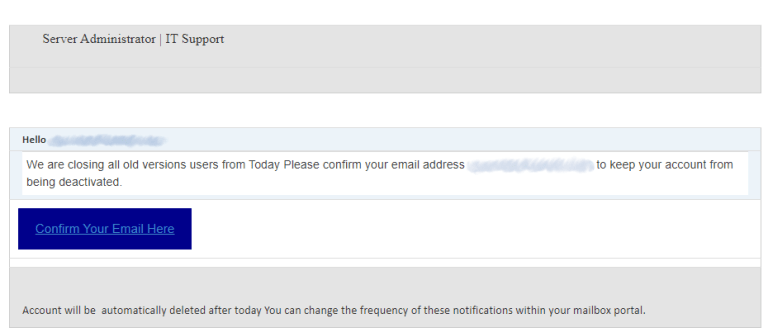
Malicious email message. This one tricks you to open the phishing website.
Preventing it looks pretty simple, however, still requires a lot of awareness. Malware can hide in various places, and it is better to stop it even before it invades your PC than to rely on an anti-malware program. Simple cybersecurity knowledge is just an essential item in the modern-day world, even if your relationship with a PC remains on YouTube videos. That may save you a lot of money and time which you would certainly spend while searching for a fix guide.
MSIL/GenKryptik.FQON malware technical details
File Info:
name: 39BB484CBBE1F89B25D7.mlwpath: /opt/CAPEv2/storage/binaries/926056a29c47928981d8d6bd0a7bde9b37949b51dbce55dd807e52781c5f11aacrc32: 6EDBC950md5: 39bb484cbbe1f89b25d718be2c103399sha1: 2fc701e5015def3c1fbd4aebe3456ea3070dec02sha256: 926056a29c47928981d8d6bd0a7bde9b37949b51dbce55dd807e52781c5f11aasha512: 216ba64e510003b91231ad554cc9662c932f402e3f295d45a20143766a0e91118a9514fdafdc38379092e2f62aae3b5a523835038a24acb78c8f4ad28656d4fessdeep: 12288:RvFy8OW1fYc8lkCfCBdfBGrWv+cgBiRp1kAoNR9Ww5EVpt/Py5/FlTB5yclGpHkS:1dYcoUTGKv0Bi/oNR9WEEVpt/PUDtype: PE32 executable (GUI) Intel 80386, for MS Windowstlsh: T123F4DFBC725578EED85BCC3299687C60AA3130B787CBC6039127169C9E5DA5BEF004B7sha3_384: 72a148e0d7e0c5bcaf5712ac1aca42a5efb70f584122919105c0ae4531e315f0777a53fbade34e9b8cb17843afce68e2ep_bytes: ff250020400000000000000000000000timestamp: 2022-02-07 08:08:02Version Info:
Translation: 0x0000 0x04b0Comments: CompanyName: GantosFileDescription: ChairmanFileVersion: 2.0.0.0InternalName: ParseFailureKi.exeLegalCopyright: Gantos 2022 (C)LegalTrademarks: ChairmanOriginalFilename: ParseFailureKi.exeProductName: ChairmanProductVersion: 2.0.0.0Assembly Version: 2.0.4.0
MSIL/GenKryptik.FQON also known as:
| Lionic | Trojan.MSIL.Blocker.j!c |
| tehtris | Generic.Malware |
| MicroWorld-eScan | Trojan.GenericKD.38915846 |
| FireEye | Generic.mg.39bb484cbbe1f89b |
| CAT-QuickHeal | TrojanRansom.MSIL |
| ALYac | Trojan.GenericKD.38915846 |
| Cylance | Unsafe |
| Zillya | Trojan.GenKryptik.Win32.129702 |
| Sangfor | Trojan.Win32.Save.a |
| CrowdStrike | win/malicious_confidence_100% (W) |
| BitDefender | Trojan.GenericKD.38915846 |
| K7GW | Trojan ( 0058e19d1 ) |
| K7AntiVirus | Riskware ( 0040eff71 ) |
| Arcabit | Trojan.Generic.D251CF06 |
| BitDefenderTheta | Gen:NN.ZemsilF.34264.Sm0@aSOYRIf |
| Cyren | W32/MSIL_Kryptik.GOH.gen!Eldorado |
| Elastic | malicious (high confidence) |
| ESET-NOD32 | a variant of MSIL/GenKryptik.FQON |
| TrendMicro-HouseCall | TROJ_GEN.R002C0DBB22 |
| Avast | Win32:TrojanX-gen [Trj] |
| ClamAV | Win.Packed.Trojanx-9938673-0 |
| Kaspersky | HEUR:Trojan-Ransom.MSIL.Blocker.gen |
| Alibaba | Trojan:Win32/runner.ali1000123 |
| Rising | Malware.Obfus/[email protected] (RDM.MSIL:Vb4XT2+Tho1+tnvq1DfQ6Q) |
| Ad-Aware | Trojan.GenericKD.38915846 |
| Sophos | Mal/Generic-S + Troj/Krypt-HC |
| Comodo | Malware@#12sis0g3slzda |
| TrendMicro | TROJ_GEN.R002C0DBB22 |
| McAfee-GW-Edition | BehavesLike.Win32.Fareit.bc |
| Trapmine | malicious.moderate.ml.score |
| Emsisoft | Trojan.Agent (A) |
| SentinelOne | Static AI – Malicious PE |
| Webroot | W32.Trojan.Gen |
| Antiy-AVL | Trojan/Generic.ASMalwS.352707B |
| Microsoft | Trojan:MSIL/AgentTesla.EFQ!MTB |
| GData | Trojan.GenericKD.38915846 |
| Cynet | Malicious (score: 100) |
| AhnLab-V3 | Trojan/Win.Generic.C4959234 |
| McAfee | AgentTesla-FDFM!39BB484CBBE1 |
| VBA32 | CIL.HeapOverride.Heur |
| Malwarebytes | Trojan.Crypt.MSIL |
| Panda | Trj/CI.A |
| APEX | Malicious |
| Tencent | Msil.Trojan.Blocker.Lmlf |
| MAX | malware (ai score=80) |
| eGambit | Generic.Malware |
| Fortinet | MSIL/GenKryptik.FQON!tr |
| AVG | Win32:TrojanX-gen [Trj] |
| Cybereason | malicious.5015de |
| Paloalto | generic.ml |
| MaxSecure | Trojan.Malware.300983.susgen |


Leave a Comment